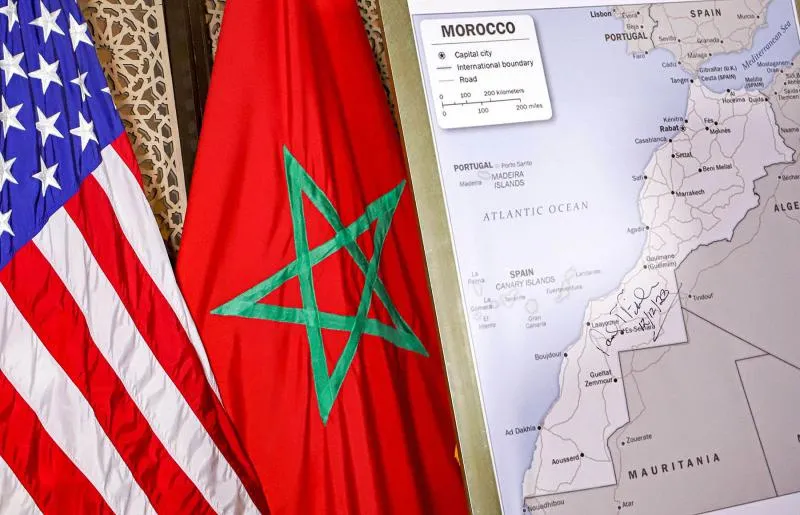

Reaffirming Morocco's Sovereignty: A Strategic Shift in Diplomacy
In the realm of diplomacy, repetition often carries significant weight, serving not merely as a reiteration but as a strategic reinforcement of geopolitical realities. The recent reaffirmation of the United States' recognition of Morocco's sovereignty over the Sahara is not an arbitrary statement; rather, it is a calculated move that seeks to reshape the dynamics surrounding this protracted dispute. The essence of this reaffirmation transcends mere phrasing, becoming particularly relevant in its timing and contextual backdrop.
Positioned within the framework of the latest United Nations resolutions, notably Security Council Resolution 2797, the U.S. is conveying a dual narrative. On one hand, it underscores its steadfast strategic partnership with Rabat, while on the other, it expresses a growing impatience with a diplomatic process that has extended well beyond conventional timelines. The language employed by Washington signals a critical shift; this is now viewed as a conflict that cannot be indefinitely managed but rather one that necessitates resolution within a practical political timeframe.
Economic Implications and Strategic Realignment
Central to this evolving position is a significant doctrinal transformation. By categorizing Morocco's autonomy initiative as the "only basis" for a fair and enduring solution, the United States is effectively narrowing the scope of acceptable resolutions. This stance represents more than just a passive endorsement; it actively reshapes the negotiation landscape itself. In doing so, the U.S. aligns itself with a growing coalition of international players who perceive autonomy under Moroccan governance not merely as one of several options, but as the singular, feasible route forward.
The economic implications intertwined with this diplomatic stance are equally noteworthy. American advocacy for investment in the Sahara is far from an ancillary aspect; it serves as a strategic tool designed to facilitate the territory's integration within Morocco's national framework and foster long-term stability in international markets. In the context of geopolitics, clarity often attracts capital, and Washington is providing just that through its clear stance.
This strategic evolution mirrors a broader recalibration of U.S. priorities across North and West Africa. The elements of stability, reliable alliances, and economic opportunities are increasingly overshadowing outdated diplomatic practices. As Morocco emerges as a pivotal regional ally, it stands to gain from this shift—not only through political endorsement but also through deeper integration into transatlantic strategic considerations.
Ultimately, the message emanating from Washington is both straightforward and transformative: the era of ambiguity has come to an end. By aligning legal frameworks, political backing, and economic initiatives, the United States is facilitating a transition of the Sahara issue from an indefinite dispute toward a clearly defined resolution. The pressing question is not whether the diplomatic paradigm is shifting, but rather how swiftly the broader international community will embrace this new reality.
As reported by thearabweekly.com.