
Ensuring Quality in Morocco’s Water Transfer System
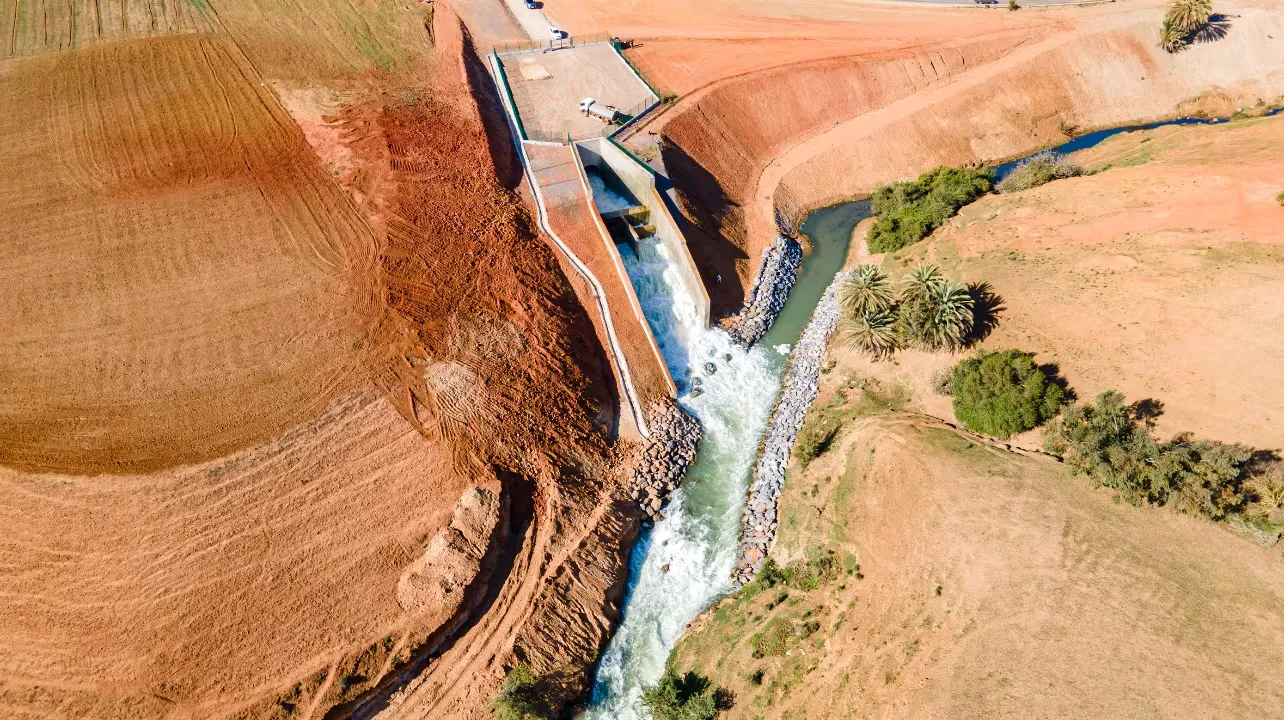
In a proactive approach to combat structural water stress, Morocco inaugurated the interconnection between the Sebou and Bouregreg basins on August 28, 2023. This ambitious project spans 67 kilometers and is now fully operational, featuring meticulous monitoring from upstream to downstream. With a focus on pollution detection and bacteriological analyses, the protocols in place are designed to assure the public of the quality of water being transferred.
Three years since its implementation, the Sebou-Bouregreg interconnection guarantees a steady supply of potable water for the vital Rabat-Casablanca corridor. Launched in response to the pressing issue of water scarcity, this "water highway" was technically completed by December 2022 and is now functioning continuously. The infrastructure facilitates the transfer of surplus water from the Sebou basin to the Sidi Mohamed Ben Abdellah dam, a quantity that was previously flowing into the Atlantic Ocean, estimated at around 340 million cubic meters for the year 2023. This initiative effectively addresses the needs of approximately 12 million residents in the Rabat-Salé and Casablanca-Settat regions while alleviating the pressure on the Al Massira dam.
Strict Monitoring Protocols for Water Quality
Since its launch, the water highway has demonstrated remarkable efficiency. Initially designed to handle an annual transfer of 400 million cubic meters, the system quickly escalated its capacity, achieving a flow rate of 15 cubic meters per second. Consequently, over 560 million cubic meters have been delivered to urban areas within just one year, providing much-needed relief to regions surrounding Morocco's capital and its economic hub, which were under significant resource pressure.
Monitoring water quality remains the linchpin of this operation, with constant vigilance throughout the entire route. Daily analyses commence at the water's source in the Sebou basin to catch even the slightest anomalies. A sophisticated computer model tracks the water's journey in real-time, identifying potential pollution sources before they become problematic.
Upon arrival in the Bouregreg basin, a second phase of quality control is initiated. The Bouregreg and Chaouia Hydraulic Basin Agency has established a stringent monitoring system to ensure the potability of the water resources. This framework includes seven strategic control points, six located at the Sidi Mohamed Ben Abdellah dam and one specifically for the incoming Sebou waters. To ensure the purity of the resource, samples are collected at three different depths: surface, mid-level, and bottom of the dam. This approach guarantees the health of the water regardless of the movements or temperature variations within the reservoir.
The analyses conducted—spanning physical, chemical, and bacteriological assessments—aim to detect any traces of pollution or heavy metals. The current results indicate that the transferred water qualifies as A1 category, the highest classification for surface waters, confirming its suitability for conversion into potable water for Moroccan households.
As reported by fr.le360.ma.