
The Paradox of Water Management in Spain
The water management policies under the government of Pedro Sánchez have spiraled into a labyrinth of contradictions that critically suffocate the agricultural sectors of southeastern Spain. As the regions of Murcia and Alicante anxiously await a ruling from the Supreme Court regarding a proposed reduction of 100 cubic hectometers (hm³) in the Tajo-Segura water transfer, the official data and historical records from May reveal a harsh reality that poses significant challenges for the agricultural community. The government, which signaled discontent back in January by promising support for water infrastructure projects and transfers to Morocco— a direct competitor to Spanish agriculture—now appears to be generously allocating water from the Tajo River to Portugal while simultaneously enforcing stringent cuts on national water users.
Contradictory Allocations and Rising Tensions
This contradiction is not a new phenomenon; however, it has intensified over recent months. The narrative began in January when Sánchez endorsed Morocco's water plans, and by April, it became evident that the Tajo River had already surpassed its water obligations to Portugal for the current hydrological year, exceeding the required amount by over 1,000 hm³. This generosity towards Portugal unfolds concurrently with the judicial struggles led by Castilla-La Mancha's president, Emiliano García-Page, who is fighting against his own party's government to demand an immediate reduction in water transfers to the Segura. García-Page's demands come despite the fact that reservoir levels in the Tajo headwaters are at their highest in decades.
As of this Monday, data from the Ministry for Ecological Transition presents a stark contrast to the narrative of scarcity upheld by Page. The Tajo basin is currently at 79.16% capacity, holding 8,752 hm³, a figure that significantly surpasses the ten-year average of 7,309 hm³. Specifically, the core of the transfer system, comprising the Entrepeñas (628 hm³) and Buendía (1,014 hm³) reservoirs, contains a total of 1,642 hm³. This reserve alone is nearly three times greater than the entire water volume stored in the Segura basin, which only reaches 666 hm³ (58.42%).
Despite this robust water availability, the Sánchez government has permitted Portugal to receive 113% of the annual flow required, transferring 3,054 hm³ compared to the 2,700 hm³ stipulated in the Albufeira Convention, with half of the hydrological year still remaining. Such external generosity starkly contrasts with the rigid restrictions imposed on southeastern Spain, where every cubic hectometer is contested in courts as if the headwaters were depleted.
Political tensions have surged this May, with García-Page successfully advancing his administrative litigation against the Ministry, alleging that the central government has been inactive regarding the proposed cuts. He demands accountability and compliance with ecological flow requirements that, in practice, would lead to the gradual dismantling of the transfer system. This stance has been labeled a “fictitious battle” by the opposition in Castilla-La Mancha, accusing the socialist leader of seeking electoral gain while allowing water to flow to Portugal.
The agricultural sector has expressed absolute outrage. Lucas Jiménez, president of Scrats, highlights the irony that while Spain debates water transfers based on climatic concerns, the bilateral agreement with Morocco from January entails Spain seeking funding for inter-basin connections in the neighboring country. “It’s a significant betrayal,” Jiménez asserts, indicating that taxpayer money is being used to bolster a commercial rival that fails to meet the social, labor, and environmental standards of the European Union.
The resolution of this conflict now rests in the hands of the Supreme Court, with water users from Alicante and Murcia anxiously awaiting a decision that will determine the legality of a planning process they deem arbitrary. For the Generalitat Valenciana, represented by Minister Miguel Barrachina, the situation is described as “infamous”: water is being withheld from the Tajo-Segura transfer to inundate Portugal, while financing is allocated for dams in Morocco, all while the survival of agricultural sectors in Valencia, Murcia, and Andalusia is being jeopardized.
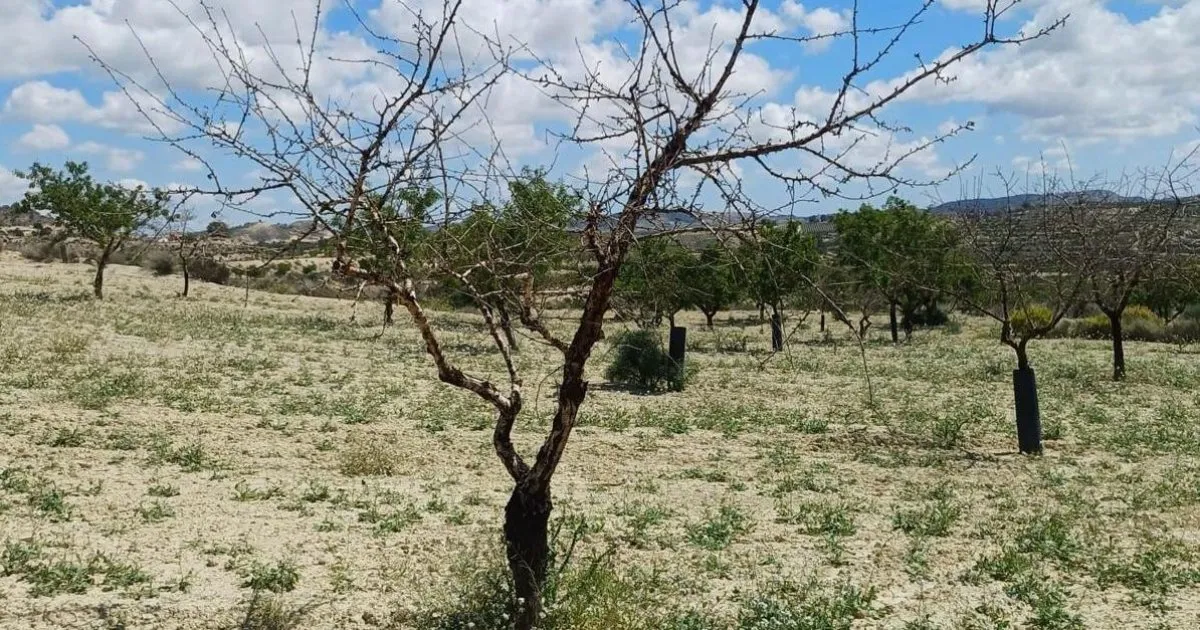
At stake is not only the anticipated cut of 100 hm³ but also the sustainability of a model that supports millions of trees and thousands of jobs. The judicial ruling will ultimately dictate whether Pedro Sánchez's water policy continues to prioritize external commitments and Page's demands over the statistical reality of reservoirs that, at this moment, are overflowing with water that is being denied to the southeast.
As reported by eldebate.com.