
West African Leaders Endorse Nigeria-Morocco Gas Pipeline Initiative
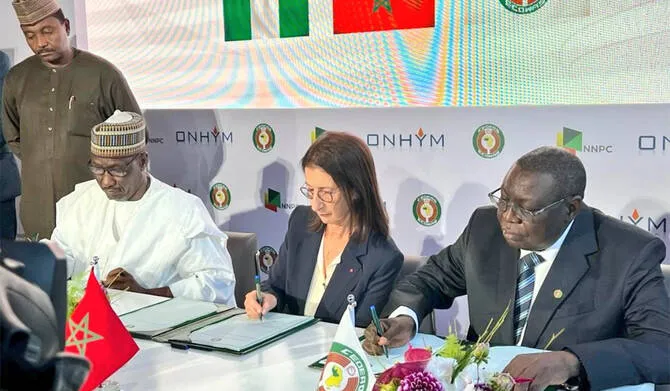
In a significant development for regional energy collaboration, leaders from West Africa convened in Freetown, Sierra Leone, to formally approve the construction of the Nigeria-Morocco Gas Pipeline (NMGP). This landmark agreement was reached during a summit of the Economic Community of West African States (ECOWAS), highlighting the commitment of member states to enhance energy connectivity and integration across the region.
The Nigeria-Morocco Gas Pipeline, which is set to span approximately 6,000 kilometers (around 3,700 miles), is designed to facilitate the transport of natural gas from Nigeria to Morocco, ultimately linking with the existing Maghreb-Europe pipeline. This ambitious project, initially proposed during King Mohammed VI of Morocco's visit to Nigeria in 2016, is projected to cost around $27 billion. According to Julius Maada Bio, the ECOWAS chair, the agreement is a testament to the region's strategic vision for energy security and market integration. He remarked, "We have already signed the West Africa-Morocco gas pipeline. Don’t be surprised when the gas comes your way."
The pipeline project aims not only to transport Nigerian gas to Morocco but also to channel it into broader European energy markets. The collaboration between Morocco's state hydrocarbons agency, ONHYM, and Nigeria's state oil company, NNPC, underscores the project's objective to strengthen the integration of African energy markets while creating a new development corridor that links West Africa, the Sahel region, Morocco, and Europe.
Moving forward, the next steps involve establishing a project company headquartered in Casablanca and a governing authority in Abuja. This structure will pave the way for attracting investors and making a final investment decision. Construction is slated to commence in 2027, with the first deliveries of gas expected by 2031. The revival of this project has gained momentum following Algeria's 2022 decision to halt gas supplies to Spain via Morocco, a move that has prompted greater urgency for alternative energy routes in the region.
As reported by arabnews.pk.