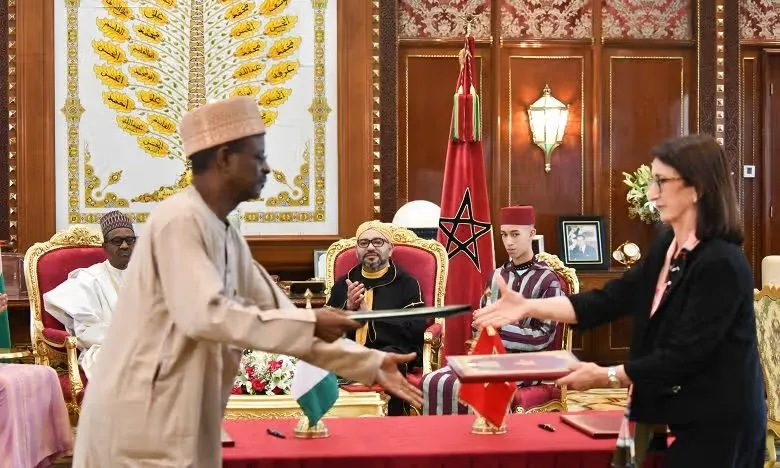

CEDEAO Leaders Sign Agreement for the African Atlantic Pipeline
In a significant development for the West African energy sector, leaders from the Economic Community of West African States (ECOWAS) convened in Freetown, Sierra Leone, on July 19, 2026, to sign the Intergovernmental Agreement (IGA) that will facilitate the advancement of the Nigeria-Morocco African Atlantic Gas Pipeline (AAGP). This ambitious project, which stems from a royal initiative, aims to create a robust energy infrastructure spanning nearly 6,800 kilometers, ensuring a stable and sustainable supply of natural gas to both West Africa and Europe.
Initially championed by King Mohammed VI of Morocco and the late Muhammadu Buhari, the former Nigerian President, the project has garnered continued support from current Nigerian President Bola Ahmed Tinubu. The African Atlantic Pipeline, estimated to cost around $25 billion, is being jointly developed by Morocco's National Office of Hydrocarbons and Mines (ONHYM) and the Nigerian National Petroleum Company Limited (NNPC Ltd.). Its completion is expected to not only enhance energy security but also stimulate economic growth through the establishment of a regional integrated natural gas market.
Significance and Future Prospects of the Pipeline
The recent signing in Freetown marks a pivotal moment for the AAGP, as it signifies the commitment of ECOWAS member states to the project initiated under the guidance of Morocco and Nigeria. The next steps will involve establishing a project company headquartered in Casablanca and a governance authority based in Abuja. This will set the stage for attracting investors and preparing for the final investment decision. Additionally, a separate signing ceremony will be held with the Islamic Republic of Mauritania to further solidify collaborations beyond ECOWAS member states.
Upon completion, the pipeline will traverse thirteen countries along the West African coastline and connect to the Maghreb-Europe Gas Pipeline in northern Morocco. It is designed to transport up to 30 billion cubic meters of natural gas annually, with potential exports of up to 15 billion cubic meters targeted towards Morocco and Europe, while the remainder will cater to regional markets.
The AAGP aims to bolster electricity production, industrialization, and the effective utilization of natural resources within Africa. The first sections of the pipeline are anticipated to come online by the early next decade. By fostering collective ownership among ECOWAS member states, the project strengthens its political and institutional foundations and underscores the belief that Africa's energy security is vital for sovereignty and shared prosperity. The Freetown summit reflects the project's African significance and its alignment with the continent's integration policies, paving the way for an interconnected economic future.
As reported by medias24.com.