
Progress in the Nigeria-Morocco Gas Pipeline Project
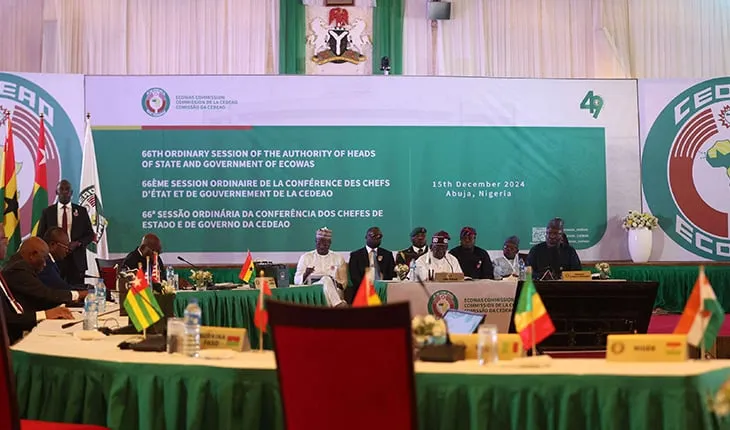
The recent summit of the Economic Community of West African States (ECOWAS) held in Freetown, Sierra Leone, marked a significant milestone for the Nigeria-Morocco gas pipeline project, also known as the African-Atlantic Gas Pipeline. During this pivotal meeting, a governmental agreement was signed to advance the development of this ambitious continental initiative, officially welcoming all ECOWAS member states into the project. This agreement is a culmination of a journey that began in December 2016 when then-Moroccan King Mohammed VI and the late Nigerian President Muhammadu Buhari announced the project during a royal visit to Abuja. The pipeline is envisioned as a strategic endeavor aimed at enhancing economic integration among West African nations while establishing a vital energy and developmental corridor connecting the region to Morocco and Europe.
Since its inception, the pipeline initiative has evolved from a mere political conception into a comprehensive technical, engineering, and environmental study phase, culminating in numerous agreements and memoranda of understanding signed among the involved countries. In recent years, the project has garnered increasing institutional support from ECOWAS countries. Notably, in 2022, a memorandum of understanding was signed between Morocco, Nigeria, and ECOWAS, marking the first regional framework for the initiative. As of 2024 and 2025, substantial portions of the technical and detailed studies have been completed, along with preliminary agreements being finalized, leading to the current stage in Freetown, regarded as one of the most crucial phases since the project's launch nearly a decade ago.
Strategic Implications and Economic Potential
The current Nigerian President, Bola Ahmed Tinubu, continues to champion the project, recognizing it as one of Africa's largest energy infrastructure ventures. The Moroccan Office of Hydrocarbons and Mines, alongside the Nigerian National Petroleum Corporation, is tasked with its development. According to Moroccan news sources, the Freetown agreement paves the way for the commencement of a new operational phase, which includes the establishment of a project company headquartered in Casablanca, as well as a governing body for the pipeline based in Abuja. This phase will also focus on attracting investors and financial partners in preparation for a final investment decision.
Stretching approximately 6,800 kilometers across 13 West African countries bordering the Atlantic Ocean, the pipeline is anticipated to connect northward to the Maghreb-European gas line through Morocco. With a capacity of around 30 billion cubic meters annually, half of this output is earmarked for export to Morocco and European markets, while the other half will cater to the energy needs of the participating African nations, enhancing their energy security.
With an estimated total project cost of around $25 billion, operations are expected to commence in the early years of the next decade. Both Morocco and Nigeria have previously announced the completion of primary technical, engineering, and environmental studies, qualifying the project for practical development as soon as necessary institutional and legal procedures are finalized.
The project transcends a mere gas transportation line; it is viewed as a strategic initiative with significant economic, developmental, and geopolitical dimensions. Since its announcement nearly ten years ago, it has been portrayed as a catalyst for regional integration in West Africa and a tool to bolster connections between African economies, stimulate investments, and promote cross-border infrastructure projects. Observers note that the confidence exhibited by West African nations towards the project stems from the anticipated benefits, including energy security, manufacturing support, and new economic growth opportunities.
Moreover, the initiative aims to establish a unified regional market for natural gas, bolster electricity production, stimulate industrial development, enhance the valuation of African natural resources, and strengthen the energy security and economic sovereignty of the participating countries. It is also viewed as a potential developmental corridor capable of generating new economic dynamics stretching from the Gulf of Guinea to North Africa and Europe.
Politically and geostrategically, the project aligns with Morocco's objective of strengthening South-South partnerships and reinforcing the African dimension of its foreign policy. This endeavor is part of King Mohammed VI's vision to transform Africa into a space for economic integration and joint investment as opposed to fragmentation and dependency, a vision that has been embodied in various Moroccan initiatives aimed at facilitating access for Sahel countries to the Atlantic Ocean.
In this context, many observers believe that the sustained diplomatic success of the project reflects the growing Moroccan presence within the African continent, particularly as more African nations express support for Morocco's sovereignty over Western Sahara and endorse the "autonomy" initiative in the region, viewing it as a credible basis for resolving the longstanding regional dispute. They argue that large-scale economic projects, particularly the African-Atlantic gas pipeline, represent a significant manifestation of Morocco's approach to linking development with stability and strategic partnership.
Liberian President Joseph Boakai described the project as a "great and necessary achievement" for West Africa, emphasizing its role as a strategic investment in the region's future and its economic stimulation. Similarly, Togo's Minister of Foreign Affairs, Robert Dussey, highlighted the project's capacity to enhance regional integration and alleviate the isolation of Sahel and West African nations, while reaffirming his country's full support along with other ECOWAS leaders for this strategic initiative. Gambian Foreign Minister, Serign Modou Njie, noted that the project represents a pioneering initiative that will greatly benefit the region through its role in linking West African economies and enhancing development opportunities. Ghana's Foreign Minister, Samuel Okudzeto Ablakwa, also praised the initiative as historical, affirming it as a fundamental driver for industrialization and economic revival across the continent.
Despite the challenges related to securing the necessary funding, ensuring the pipeline's route over thousands of kilometers, and guaranteeing long-term economic viability, the broad political support for the project and the inclusion of all ECOWAS member states in the governmental agreement signal a strong indication of increasing confidence in its success and its potential to effectuate a qualitative transformation in the energy and economic landscape of Africa in the coming years.
As reported by alquds.co.uk.