
Formation of Morocco's Historic Government
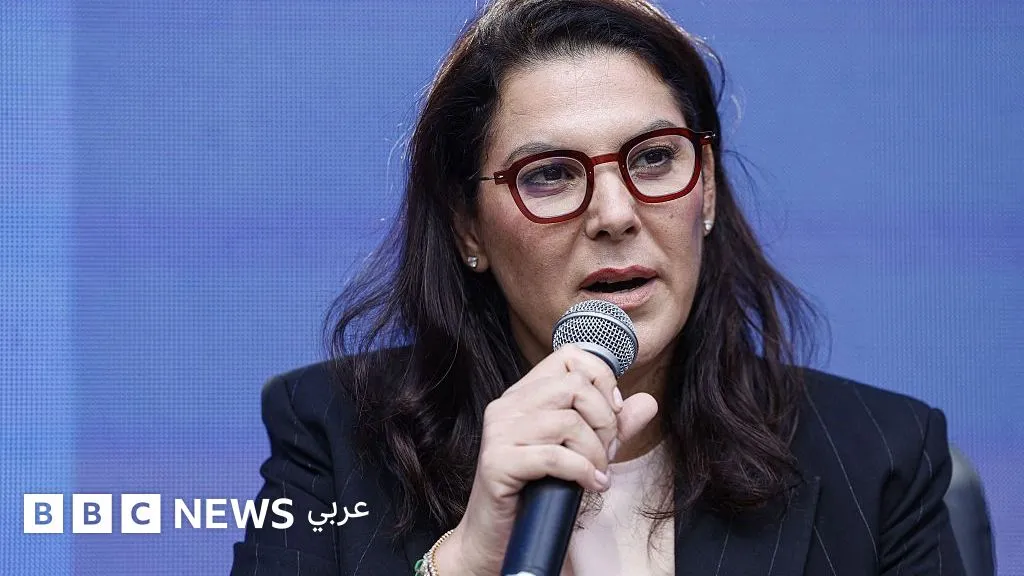
The winning party in Morocco's recent legislative elections, the Authenticity and Modernity Party (PAM), announced on Monday a coalition consisting of four parties to establish a government led by Fatima Zahra Mansouri. According to a statement released by the Moroccan News Agency, Mansouri has defined the contours of the upcoming government majority by "announcing a political agreement uniting four parties: PAM, the Istiqlal Party, the Socialist Union of Popular Forces, and the Progress and Socialism Party, following two rounds of consultations with several parties represented in Parliament." This agreement aims to form a "strong political government, based on intellectual and political proximity among its components, grounded in a shared reform vision capable of responding to citizens' expectations and facing internal challenges and external constraints."
As the Moroccan News Agency reports, "the four parties will propose candidates for ministerial positions based on criteria of competence, political acumen, integrity, and rectitude." The process of preparing the government program is expected to commence shortly, although the names of the candidates for ministry positions and the nature of the distribution of portfolios among the coalition's components have yet to be disclosed.
Challenges Ahead for the New Government
Mansouri began her political consultations immediately after being appointed by King Mohammed VI, under the provisions of Article 47 of the Constitution, following the PAM party's success in the legislative elections held on September 23. The coalition has identified several priorities that will guide the work of the upcoming government, primarily focusing on improving living conditions, enhancing rights and freedoms, achieving social justice, and bolstering economic prosperity while strengthening the productive capacities of the national economy. The allied parties emphasized the necessity of aligning with the royal ambition to build a rising Morocco through the consolidation of democratic construction, entrenchment of good governance principles, and ensuring balanced development across various regions of the kingdom.
The appointment of a woman to lead the government for the first time in the kingdom's history marks a significant historical moment with strong symbolic implications, reflecting a notable shift in Morocco's democratic trajectory. King Mohammed VI appoints government members proposed by Mansouri, although it is customary for ministers of strategic sectors such as interior and foreign affairs to be assigned from outside political parties. The new government is expected to gain parliamentary confidence per Article 88 of the country's Constitution after presenting the government program to both houses of Parliament: the House of Representatives and the House of Councillors.
The four parties, which include moderate socialist parties and the nationalist Istiqlal Party, hold a total of 207 seats in Parliament, surpassing the 198-seat threshold necessary to establish a majority. The announced majority represents 207 seats out of a total of 395 in the House of Representatives. The new government will face multiple political and social challenges, primarily restoring trust in political institutions and addressing youth unemployment. Moreover, it will oversee the final stages of a massive project costing $20 billion, aimed at preparing the country to host the 2030 World Cup, which Morocco will co-organize with Portugal and Spain.
The government will face pressure to tackle issues concerning youth related to job opportunities, education, and healthcare services—issues that were the driving force behind the "Generation Z" protests last year and the immigration crisis in Ceuta during July. King Mohammed VI has tasked Fatima Zahra Mansouri, a leading figure in the PAM party, with forming the government—making her the first woman to hold this position in the country—after her party topped the results of the election held on September 23.
As reported by bbc.com.