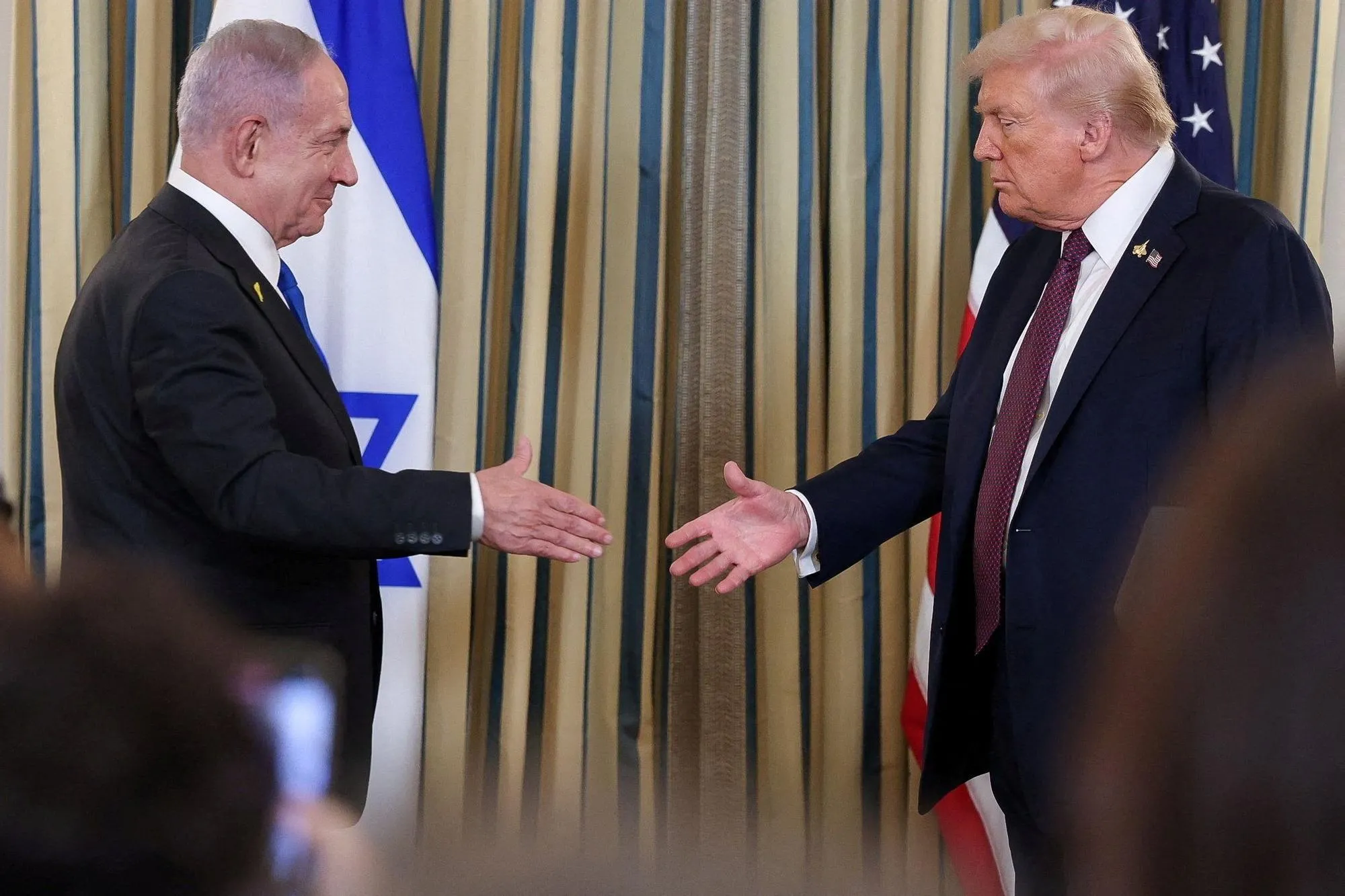

Understanding the Challenges of Netanyahu's Leadership
The ongoing crisis in the Middle East is significantly influenced by the actions of Israeli Prime Minister Benjamin Netanyahu, who has consistently pursued an aggressive ultranationalist and militaristic agenda in a bid to retain power and evade legal repercussions stemming from corruption charges. Following the tragic events in Gaza, where a military response was launched against Hamas, Netanyahu has drawn the United States into a more confrontational stance against Iran. This escalation has allowed him to further his expansionist objectives in the region, aiming to secure Israel's safety by dismantling its historical adversaries.
In tandem with military assaults on Tehran, Netanyahu has emboldened Israeli soldiers to support Jewish settlers in occupying additional territories in the West Bank. Concurrently, while the global media spotlight was fixed on the escalating tensions between Washington and Tehran, Israel initiated a brutal offensive against Hezbollah in Lebanon, which has resulted in significant civilian casualties—1,888 deaths and over 6,000 injuries since March 2nd—causing widespread panic and displacement among the Lebanese populace. Netanyahu's actions have crossed numerous red lines established by international law, leading the United Nations to classify them as war crimes. Consequently, during his foreign travels, he has only ventured into friendly nations, such as Trump's America or Orbán's Hungary, as other countries pose a risk of arrest and prosecution for his actions.
The Implications of Ongoing Conflicts
Currently, the most formidable obstacle to the fragile ceasefire brokered by the United States and Iran is Israel's ongoing military campaign in Lebanon, driven largely by Netanyahu's unilateral agenda, over which Trump appears to exert limited influence. The question arises: is Netanyahu genuinely willing to halt the offensive against Beirut? Is he sincere in his acceptance of diplomatic talks with Lebanon in Washington, while his Defense Minister, Israel Katz, openly declares that "the war will not stop"? It is crucial to remember that, as highlighted by Iranian Foreign Minister Abbas Araghchi, corruption trials against Netanyahu are set to resume soon, and a regional ceasefire—including Lebanon—might expedite his potential imprisonment.
This Friday is pivotal, as it will reveal whether international pressure can compel Israel to cease its actions in Lebanon, thereby offering a chance for peace. The concerted efforts from Asia, Europe, and Gulf monarchies to secure the Strait of Hormuz—vital for global oil and gas transportation—have been instrumental in persuading the United States to agree to a ceasefire and negotiate with Iran starting Saturday. This retreat is challenging to disguise. It remains to be seen if U.S. pressure is sufficiently forceful and effective to convince Netanyahu to cease his offensive in Lebanon; otherwise, the situation could reignite into conflict. Tehran is unlikely to engage in peace talks in Pakistan if the Israeli military continues its attacks unabated. Thus, this Friday will be crucial in determining whether Netanyahu will feel compelled to pursue a path towards de-escalation in the Middle East, potentially allowing for diplomatic avenues to facilitate broader global relief. As of now, there are few signs pointing towards optimism.
As reported by ara.cat.