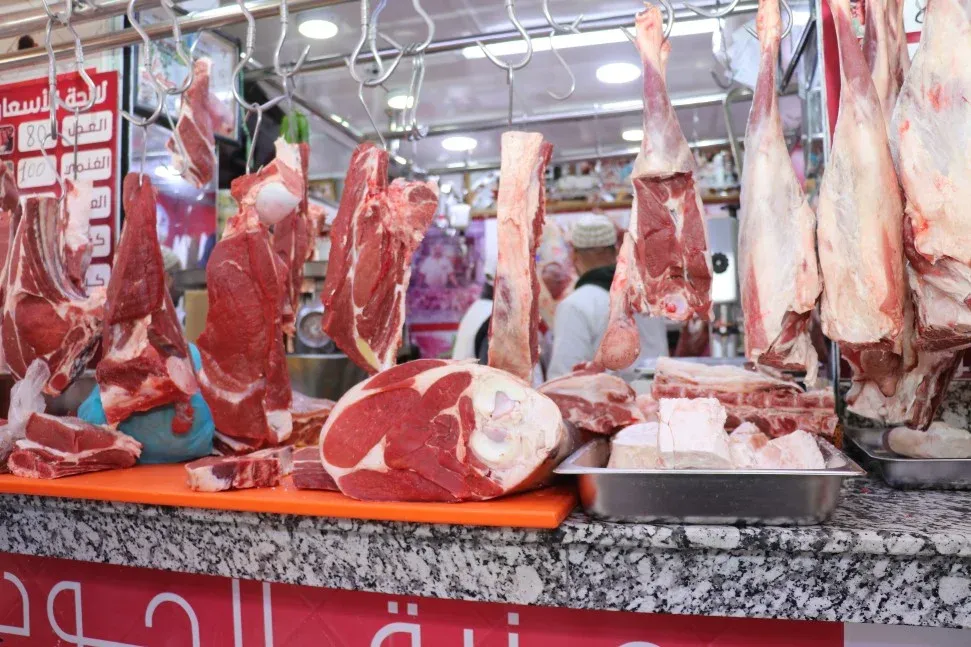
Understanding the Paradox of High Meat Prices in Morocco
Despite Morocco experiencing a season of abundant rainfall, which has significantly improved pastures and increased forage availability, the prices of red meat remain stubbornly high. This situation has raised concerns among consumers, particularly as the celebration of Eid al-Adha approaches. The underlying reasons for this paradox largely stem from a limited supply of livestock, a consequence of the lingering effects of previous droughts, and strategic decisions made by farmers regarding the management of their herds.
According to Mohamed Jibli, president of the Moroccan Federation of Livestock Sector Stakeholders, the benefits of rainfall do not manifest immediately. In a conversation with Yabiladi, he explained that with the abundance of grass and forage, farmers are opting to keep their livestock for fattening and breeding purposes, thus reducing the available supply in the face of growing demand.
Challenges in the Livestock Market
Field data supports this analysis. Hassan Sadiki, founder of the Association of United Butchers for Development in the Essaouira region, noted that meat prices have risen by approximately 10 dirhams since the onset of the rains. He emphasized that the increased availability of forage has altered the behavior of farmers compared to previous drought periods when they were forced to sell their livestock due to high feed costs. Furthermore, butchers, particularly in rural areas, are struggling to source local livestock, which has become scarce due to the prevalence of imported meat in urban consumption. This phenomenon is attributed to the loss of livestock during years of drought and the rising costs of feed, resulting in higher prices for consumers.
Adding to this complexity is the fact that the national herd has not yet recovered from seven consecutive years of drought, which has adversely affected animal production and limited supply. Agricultural expert Riad Ouahtita confirmed that the national herd remains in a precarious state, with farmers hesitant to sell their livestock, especially during the fattening phase. A census conducted by the Ministry of Agriculture, Fisheries, Rural Development, Water and Forests reveals that the herd exceeds 23 million sheep, with over 16 million being female. Approximately 6.5 million sheep are consumed during Eid al-Adha, placing the herd in a critical situation as the holiday approaches.
Furthermore, Morocco's partial dependence on imports, which are also affected by rising prices in foreign markets, directly impacts the national market, particularly for beef, which is especially scarce. Industry professionals do not anticipate a significant improvement in beef prices due to the high cost of imports. In Casablanca, wholesale beef prices range between 85 and 95 dirhams per kilogram, while lamb prices are between 100 and 120 dirhams. In the Chiadma region, local beef can reach around 110 dirhams, lamb 120 dirhams, and goat meat 140 dirhams, while imported meat prices remain relatively lower. The prices of livestock have also increased, with some animals valued between 20,000 and 30,000 dirhams.
In light of these circumstances, calls for enhanced support for small-scale farmers have emerged, aiming to alleviate market pressures. The distribution circuit for livestock, which involves intermediaries before reaching butchers, has been criticized for its significant profit margins. Ouahtita highlighted that intermediaries are reaping substantial profits at the expense of farmers and butchers, a trend that is also observable in the vegetable and fruit sectors. Farmers are bearing the brunt of production costs while receiving minimal profits.
While regulating prices is complex and subject to the laws of supply and demand, there are calls to support small farmers, particularly in terms of feed supply, and to promote low-cost alternatives such as sprouted barley. Ouahtita noted that the current support is limited, focusing more on the survival of livestock rather than enhancing their productivity. Industry professionals foresee a gradual improvement in prices starting in June, especially for sheep, with a more marked improvement expected next year if favorable precipitation continues. However, the livestock market is likely to face increased pressure due to shortages and rising import costs.
As reported by yabiladi.com.