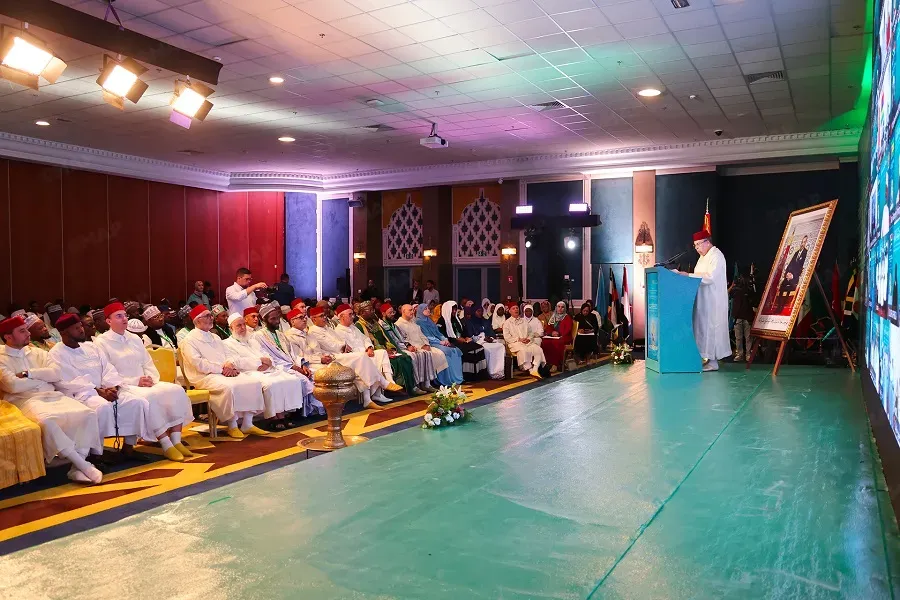

The 7th Annual Mohamed VI International Quran Competition for African Scholars concluded with readers from Niger, Nigeria, Mali, Somalia, Mauritania, Tanzania, Mauritius, Côte d'Ivoire, Liberia, Gambia, Guinea-Bissau, and Rwanda emerging victorious. The results were announced in a ceremony held in Fes on Sunday, highlighting the remarkable talents showcased during this prestigious event.
Professor Mohamed Maghraoui, the general coordinator of the competition, provided insights into the participants' performances through a detailed report. In the first category, which focused on memorizing the entire Quran with the recitation style of Warsh from Nafi, 26 competitors demonstrated exceptional proficiency. Their skills not only reflected their ability to memorize but also their command over the rules and principles of this particular recitation, showcasing the dedication and training provided by their mentors.
Competition Highlights and Results
Moving on to the second category, which included the complete memorization of the Quran with various other recitations, there were 42 participants. The overall level of performance was commendable, with all competitors reciting in the Hafs narration from Asim, except for one who opted for the Qalun narration from Nafi. Each contestant showcased their ability to recall the verses and deliver them with clarity and precision.
In the third category, which required participants to master Tajweed while memorizing at least five sections of the Quran, 46 competitors participated. This category was distinguished by the diverse age groups of the participants, with many young children and adolescents taking part. The quality of the performances was impressive, highlighting the importance of this category in encouraging younger generations to engage with Tajweed and discover their potential in Quranic recitation.
For each category, three readers were awarded from countries such as Niger, Nigeria, Mali, Somalia, Mauritania, Tanzania, and Mauritius. Additionally, the organizing committee decided to introduce extra awards to motivate competitors, which included three encouragement prizes—one for each category—along with awards for the youngest male and female participants, awarded to readers from Côte d'Ivoire, Liberia, Gambia, Guinea-Bissau, and Rwanda.
The winners of the first category were: 1st place, Abduallah Abubakar Ango from Niger; 2nd place, Basheer Younis from Nigeria; and 3rd place, Mohamed Jalo from Mali. In the second category, the winners included: 1st place, Abdurrahman Yusuf Mohammed from Somalia; 2nd place, Hamoud Lahbib Taleb Boubacar from Mauritania; and 3rd place, Ismail Yusuf Hamad from Tanzania. The third category saw Ahmed Ahmedou Sidi Mohamed Abou Ubaida from Mauritania take 1st place, followed by Abdullah Bah from Mali in 2nd place, and Yahya Ben Ali Malam Hassan from Mauritius in 3rd place.
The prize for the youngest female participant went to Hasna Bajou from Gambia, aged 10, while the youngest male participant was Abdurrahman Jalo from Guinea-Bissau, aged 7. Encouragement prizes were awarded to Diara Salima from Côte d'Ivoire in the first category, Abdulaziz Muhammad Diallo from Liberia in the second category, and Nirarokundo Muzdarifa from Rwanda in the third category.
A distinguished jury composed of scholars and expert readers from Morocco, Senegal, Tanzania, Mauritania, Nigeria, Cameroon, Côte d'Ivoire, the Central African Republic, Burkina Faso, and Sudan evaluated the competitors' performances in person from Fes. A central technical team from the city coordinated with the technical teams from the participating countries to ensure smooth remote connections and broadcast various stages of the competition using visual technology, enabling contestants to participate from their home countries.
The Mohamed VI Foundation for African Scholars aims to strengthen the connection between young Muslim Africans and the Quran, encouraging memorization, recitation, and Tajweed, while discovering and showcasing young Quranic talents across the continent. This initiative aligns with the esteemed attention given by His Majesty King Mohammed VI to the Quran and its scholars, and the commitment to fostering a deep relationship with the Quran among the youth.
The foundation had previously organized local qualifiers from March 29 to April 26, 2026, across its 48 branches, involving over 1,300 contestants, which resulted in 114 individuals qualifying for the final stage, including 16 females. The qualifiers saw extensive participation from African scholars, Quran memorization centers, and educational institutions, all working together to encourage the younger generation to engage with the Quran.
As reported by iqna.ir.