
Addressing Youth Distrust in Political Entities
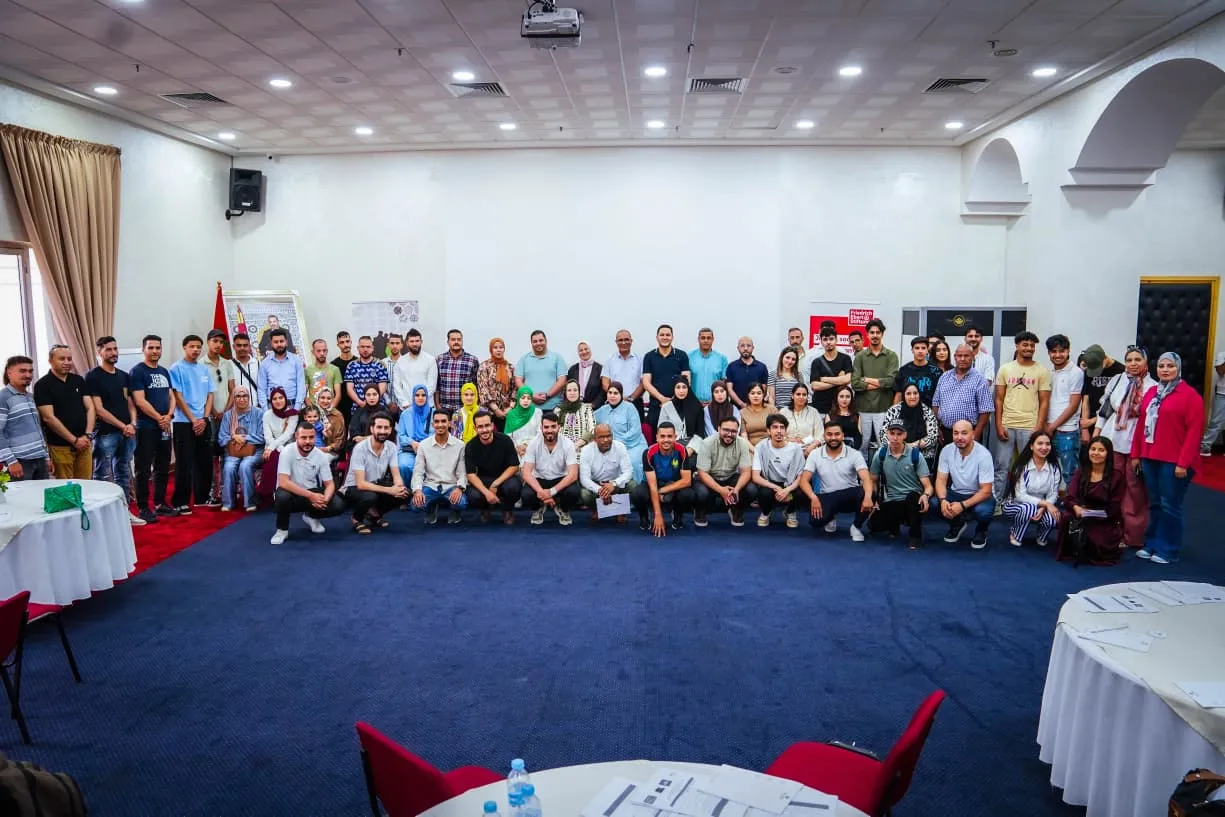
The first regional meeting held in Fes-Meknes has unveiled a pressing need to overcome the growing distrust among youth towards political actors and elected institutions. This event, which took place on May 23, 2026, was themed around 'Youth and the Legislative Elections of 2026: Pathways to Participation and Opportunities for Influence.' It was organized by the Moroccan Center for Youth and Societal Transformations, in partnership with the Citizen Street Association and with the support of the Friedrich Ebert Foundation. This initiative comes at a time when national discussions are increasingly focused on renewing political elites and enhancing the presence of youth in the political landscape.
Youssef Khlakhi, the president of the Moroccan Center for Youth and Societal Transformations, emphasized the current civil trajectory aimed at strengthening the presence of young individuals in public discourse. He highlighted the importance of equipping them with the tools for understanding and analysis, enabling them to become active participants in decision-making processes rather than remaining mere subjects of public policies. Khlakhi pointed out that political participation extends beyond mere voting; it encompasses advocacy on societal issues and monitoring and evaluating policies. He noted that the youth dynamic relies on framing and awareness-raising to encourage responsible engagement ahead of the crucial 2026 elections, which necessitate a collective responsibility to empower youth in building a Morocco characterized by democracy and equity.
Transforming Digital Participation into Institutional Engagement
Rehab Maziyati, the executive director of the Citizen Street Association, addressed the significant challenge posed by the lack of trust in political actors and institutions, which negatively impacts participation rates. She urged stakeholders not to interpret electoral abstention as a complete rejection of democratic processes, but rather as a reflection of disillusionment and anticipation for political practices and discourses that resonate more closely with the daily concerns of young citizens.
Dr. Zoubida Nakan highlighted the profound transformations affecting the concept of political participation, noting that youth are turning to digital platforms to express their views in innovative and novel ways. However, she cautioned that this extensive virtual presence does not equate to a corresponding physical presence in decision-making centers and elected institutions. This raises a significant issue regarding the necessity of transitioning from symbolic participation to organized and impactful involvement within political parties and institutions.
Expert in civil society and governance, Abd al-Kabir Jmaii, shed light on the depth of the political representation crisis, indicating that the limited registration on electoral rolls and the declining turnout at polling stations reflect a loss of confidence in the efficacy of elections and a feeling of helplessness in influencing public decisions. He linked this crisis to the diminishing roles of political mediation and the lack of renewal within political elites, as well as the dominance of narrow electoral calculations over societal projects. Jmaii asserted that socio-economic conditions such as unemployment and social injustice have not driven youth away from the public sphere; instead, they have contributed to their expressions being directed towards digital platforms and civil protests, necessitating the rebuilding of trust through tangible impacts of political participation in everyday life.
Ali Laqsab, a researcher in legal and political studies, argued that registration on electoral rolls is the primary gateway to enhancing youth presence within the public sphere and contributing to development. He stressed the importance of overcoming negative perceptions surrounding party work, noting that merely criticizing through social media does not achieve the desired reforms. Real engagement in political parties and contributing to their internal renewal is essential. Laqsab added that the rise of a young political elite capable of advocacy requires moving from a spectator role to proactive participation, especially since the democratic choice based on plurality and competition remains a steadfast direction for the Moroccan state. Thus, youth participation is a national necessity that demands the ethical revitalization of public life and the integration of politics with values of integrity and credibility in service of the public good.
The participants concluded that digital political expressions represent a significant opportunity to broaden the base of participation, provided they are positively framed and transformed into a proposal force. They reiterated that these digital expressions should complement institutional participation rather than serve as a substitute. The meeting culminated in the formulation of practical recommendations, foremost among them being the call to enhance political and legal training, integrate civic education into socialization processes, and disseminate it across various educational and university levels to instill democratic values.
The report emanating from this meeting explicitly urged political parties to renew their discourse and strengthen their internal democracies to facilitate youth access to positions of responsibility. It emphasized the necessity of transitioning from episodic interactions to sustained civil and political actions, marking the 2026 elections as an opportunity for youth to reposition themselves at the heart of political action as a social and proposal force capable of contributing to decision-making, rather than merely as a passive voting bloc.
As reported by al3omk.com.