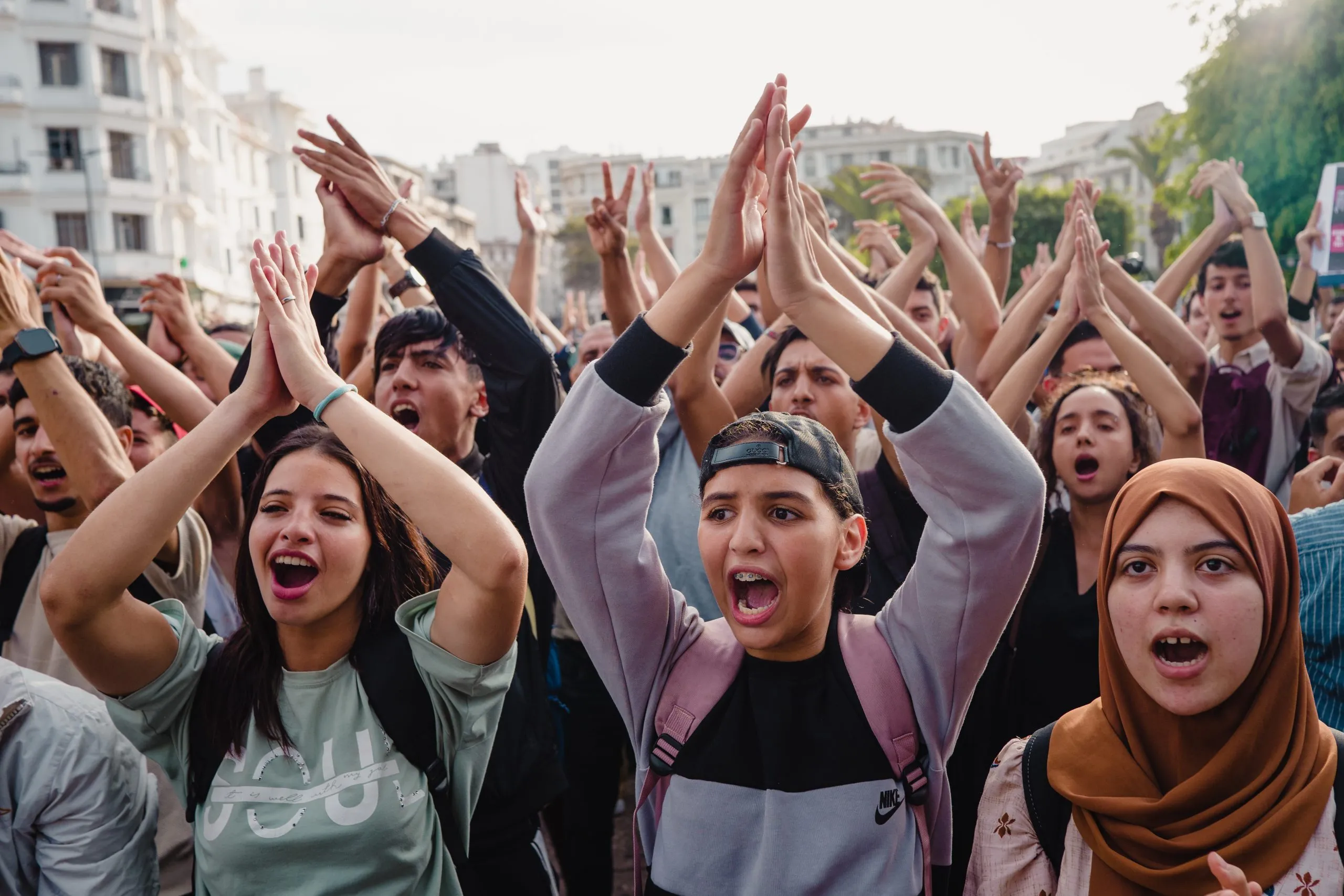

SIDI MOUSSA EL MAJDOUB, Morocco (AP) — In a surprising twist, a funeral in a rural Moroccan village has served as an unexpected campaign stop for political candidates eager to engage disillusioned young voters ahead of the parliamentary elections taking place on Wednesday. The event highlighted the pressing issues facing Morocco's youth, including their struggles to find meaningful employment and opportunities. These concerns were notably amplified during the Gen Z-led protests of the previous year and have contributed to a significant increase in migration attempts to Spain’s Ceuta this summer. Candidates like Yassine Moujane are placing youth issues at the forefront of their campaigns, recognizing the crucial role that young voters will play in shaping the future of Moroccan politics.
At 28 years old, attorney Yassine Moujane is one of the youngest candidates in this electoral race, representing the Democratic and Social Movement, a party aligned with the establishment. He expressed his commitment to advocating for the needs of young Moroccans, stating, “I used to plead for my clients in court, and now, the time has come to plead for Moroccans in parliament.” His visit to Sidi Moussa El Majdoub, the hometown of another candidate, served as an opportunity for him and his fellow candidates to express condolences, listen to the community's concerns, and solicit votes, albeit with a mix of welcome and skepticism from the mourners.
The upcoming elections are significant, with Moroccan voters having the choice of 7,288 candidates from 27 political parties vying for 395 seats in the House of Representatives. The results will determine the next prime minister, who will emerge from the party that secures the most seats. This election marks the first since the tragic youth-led protests and the mass attempts to migrate into Ceuta, which claimed the lives of many young Moroccans seeking better opportunities. Among those who lost their lives were a factory worker, a promising soccer player, and a hopeful high school student, all driven by the desire for a brighter future, as reported by their friends and families.
As Morocco prepares to co-host the 2030 FIFA World Cup, the new government will be under intense scrutiny, responsible for overseeing extensive infrastructure and development projects. However, it faces immediate domestic challenges, including rising inflation and unemployment rates, particularly among the youth. While Morocco has made strides in developing a robust automotive and aeronautics industry and expanding its high-speed rail network, the economic growth has not translated into sufficient job opportunities for young people. Current statistics reveal that while the unemployment rate stands at 13%, it skyrockets to 37% among individuals aged 15 to 24, and 19% for those with higher education degrees.
The stark contrast in voter registration and participation among young Moroccans is alarming. Although individuals aged 18 to 24 comprise roughly 12% of the population, they constitute only 4% of the 15.8 million registered voters. The process of registering to vote does not automatically occur when one reaches voting age; individuals must take the initiative to enroll. For many young Moroccans, their frustration is not rooted in political ideology but in everyday concerns such as securing employment, accessing quality education, and improving public services. These grievances resonate with the experiences of migrants attempting to reach Ceuta and echo those expressed during the recent protests.
Despite the prevalent disillusionment with political parties, there remains a belief among some young Moroccans that voting can effect change. They express hopes that electoral participation could lead to reforms in critical areas such as minimum wage laws, public sector employment, and family law. The protests led by Gen Z last year were characterized by a focus on holding the government and political parties accountable for inadequate healthcare and education, rather than targeting the monarchy itself. Many young people view King Mohammed VI as a stabilizing force and seek his intervention in implementing necessary reforms.
However, it is not easy for young candidates like Moujane to secure a position within the political landscape. He shared that he had volunteered to defend protesters arrested during the demonstrations, affirming that their demands align closely with the platform his party is promoting. Despite facing challenges in gaining his party's nomination, he persevered through persistent outreach to party leaders. Now, with a modest campaign budget, he aims to challenge the status quo in a parliament where the average age of lawmakers is 53. The upcoming elections present a pivotal moment for Morocco’s youth to voice their concerns and participate actively in shaping their country's future.
As reported by wtop.com.