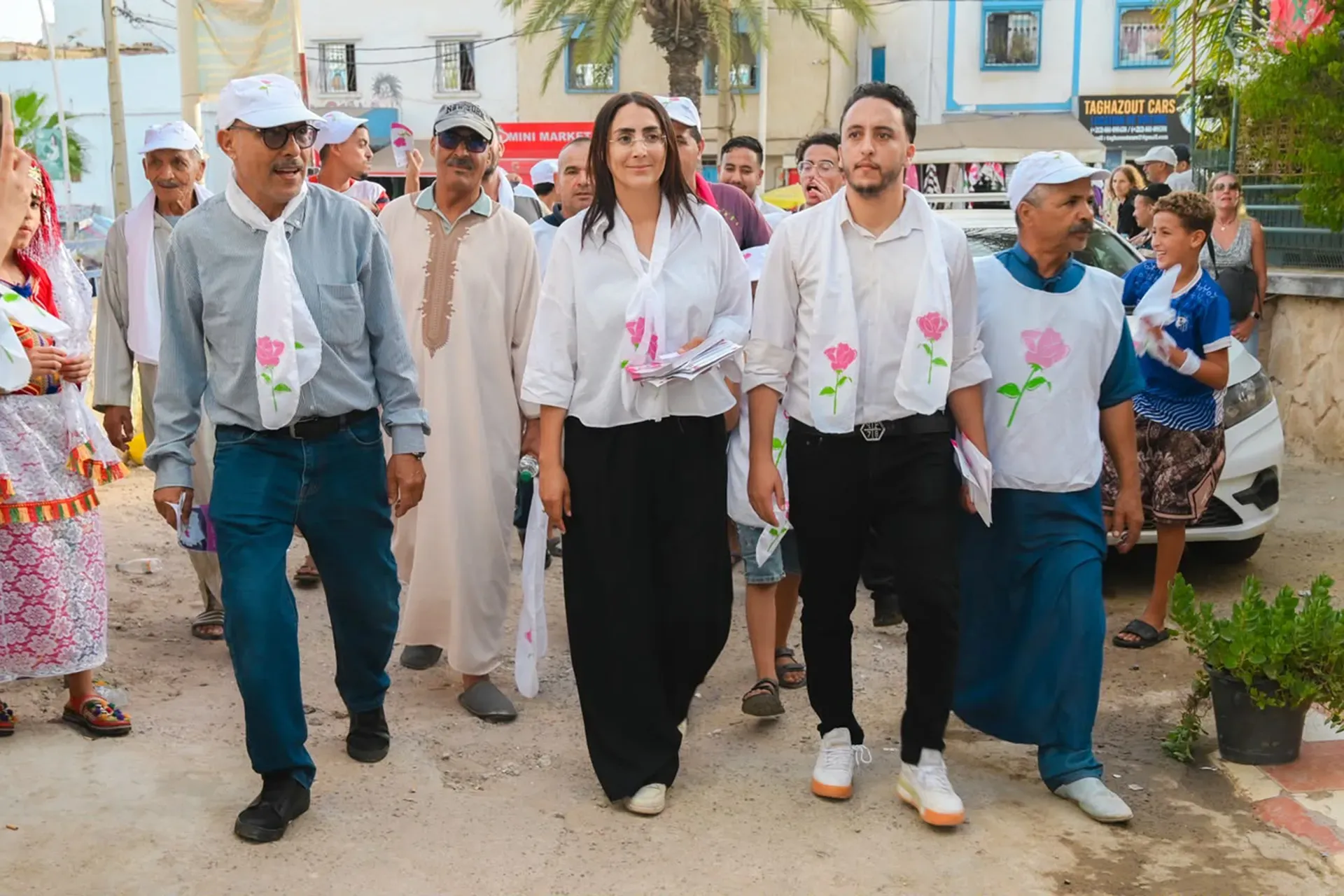

In the picturesque heights of the rural region of Talhaunt in the Essaouira province, Ahmed Ahrshan, a candidate for the upcoming legislative elections, is diligently campaigning with his sights set on the results of the ballot scheduled for September 23. Clad in a white jacket and a hat emblazoned with the emblem of the "Hope" party, this ambitious thirty-something seeks to traverse the extensive areas of his electoral district in his private vehicle, reaching out to voters far beyond the glitz and glamor typically associated with major urban centers. Instead of the usual podiums and bright lights, Ahrshan's approach is rooted in the everyday questions and concerns faced by the local populace.
Speaking to Al Jazeera, Ahmed emphasizes that he is the only young individual heading an electoral list in his district, bravely vying against well-known faces without any prior parliamentary seat or electoral experience. His primary goal is to "instill hope in citizens, particularly the youth, for the change they seek." Official data indicates that the age group between 18 and 24 constitutes only 4% of the registered voters (approximately 15.8 million), while those aged 60 and above represent over 29%. In the current electoral race, 27 parties are competing for 395 seats, with a staggering 1,850 candidacies comprising 7,288 nominations, averaging more than 18 candidates per seat.
The Challenge of Youth Representation
The Moroccan electoral system is striving to enhance youth participation through financial incentives for candidate lists that include individuals aged 35 and under. Under the new regulations, the financial support allocated for each seat won by a young candidate in local constituencies has been increased to six times the amount available for other nominations. However, despite these incentives, the actual presence of young candidates at the forefront remains limited, as evidenced by observations of the candidacy lists and testimonials from candidates and academics who spoke with Al Jazeera. In the absence of detailed official statistics delineating the youth representation among candidates, a consensus emerges regarding their continued minimal presence, despite the financial mechanisms instituted by the electoral framework.
Political science professor Abdelhafid El Younsi contextualizes this gap between incentives and reality within a broader framework related to the conditions for candidacy, stating that the youth's presence on party lists remains weak despite the incentives embedded in the regulatory law governing the election of members of the House of Representatives, particularly those of a financial nature. This observation is echoed in the lists of independent candidates, where the youth's representation is almost nonexistent due to what El Younsi describes as "daunting" conditions, including a requisite number and specific percentages of voter signatures needed to submit candidacies.
Obstacles on the Campaign Trail
Throughout the Essaouira province, Ahmed Ahrshan is making strides to connect with residents in various locales, stating that his campaign experience has revealed a community eager for change, although he acknowledges that challenges persist. The province comprises 57 municipalities, each with its unique circumstances and local needs. Ahrshan has identified pressing issues during his campaign tours, such as the urgent need for potable water services, enhanced healthcare, and support for associative work. His candidacy also responds to the necessity for a rejuvenation of parliamentary work.
Fellow candidate Rajaa Miso from the Socialist Union of Popular Forces articulates that her candidacy is not coincidental but rather a culmination of continuous activism and a solid organizational dynamic within her party, traversing from youth work to her current roles in various party and elected institutions. Miso highlights the challenges faced by youth, including the dominance of traditional elites and business figures, along with the high costs associated with electoral campaigns, compounded by a political culture that prioritizes seniority and field experience.
In this context, candidate Noah Aarab from the same party describes his participation in the elections as a "mission of activism and political candidacy," affirming that youth encounter significant barriers to achieving equal opportunities during the electoral campaign. These firsthand accounts align with El Younsi's academic assessment, noting that Moroccan political parties exhibit a "phenomenon of aging" in their demographic structure, which threatens youth participation and the efficacy of political parties. He links this observation to the absence of "real stakes" concerning youth issues, particularly in education, health, employment, and recreation.
The youth's candidacies extend into the content of the electoral programs themselves and the methods through which these programs reach young voters. Higher education professor Hassan Boulaasir notes that empowering youth and reforming the health and education sectors are among the top priorities in electoral platforms. He differentiates between party orientations that address these issues through an investment lens versus those that emphasize social justice and public service protection, linking the implementation of these programs to the "democratization of public services" and the "linking of responsibility to accountability."
In the run-up to the elections, discussions among the youth also revolve around purchasing power, rising living costs, and job availability, underscoring the need for their voices to be heard. Zakaria, a 29-year-old university student and employee from Settat, exemplifies these concerns, placing purchasing power and the high cost of living at the forefront of his expectations, calling for increased support for farmers and food security. To engage the youth effectively, Miso is overcoming barriers by directly communicating with voters, utilizing social media platforms to disseminate her electoral program and address youth directly, alongside organizing dialogue sessions in neighborhoods to hear their demands firsthand. This approach aims to treat young individuals as "decision-makers capable of engendering change from within institutions," rather than merely as a voting bloc.
In contrast to the candidates seeking trust, young voters express a spectrum of opinions regarding their electoral participation. In Al Haouz, merchant Ibrahim, 22, notes that while his voting papers are ready, he has yet to decide whom to support, questioning, "Who should I trust?" His hesitation not only stems from a lack of allegiance to a specific party but also from his critique of candidates who do not hail from the region. Conversely, Abdul Ilah, a 35-year-old contractor from Taroudant, views the elections as a "decisive station in the democratic process in Morocco" and an opportunity for course correction. In a more optimistic tone, Wiam, a 21-year-old student from Nador, expresses her hopes for genuine change in the daily lives of the youth resulting from this electoral process.
These individual testimonials do not reflect a unified stance among the youth towards the elections but rather illustrate the diverse relationships between young voters and the electoral process. The presence of young candidates on the lists does not automatically guarantee that young voters will support them, nor does indecision in party selection signify an outright rejection of participation. Various factors influence attitudes towards elections, from proximity to candidates to the substance of their programs and the level of trust in institutions, as noted by Boulaasir. Aarab urges voters to cast their ballots based on competence and integrity, in an effort to combat unacceptable behaviors that may mar the electoral process.
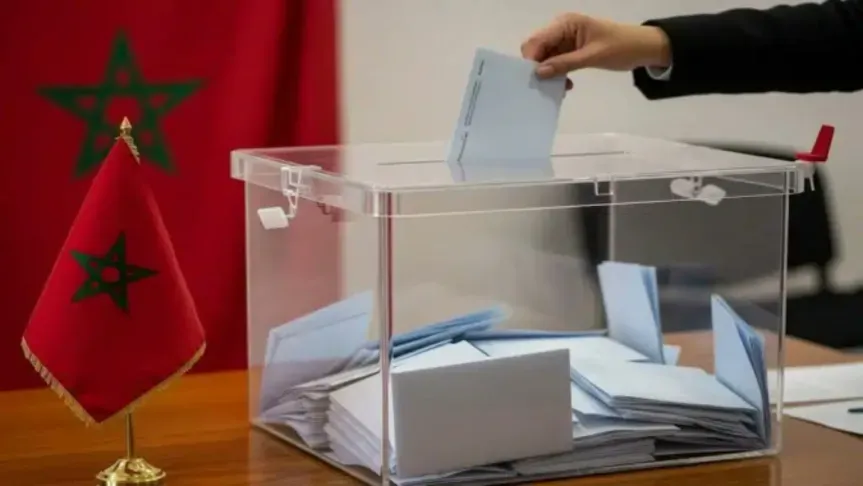
In Essaouira and beyond, the outcome of the elections will determine who ascends to the parliament. Yet, financial incentives alone do not dictate the political engagement of youth. Considering the costs of campaigns, party structures, candidacy conditions, and local power networks, the ability of youth to access institutions remains intertwined with their positions within political organizations and their capacity to foster trust with voters.
As reported by aljazeera.net.