Algerian Defense Ministry's Use of Moroccan Monuments Sparks Debate
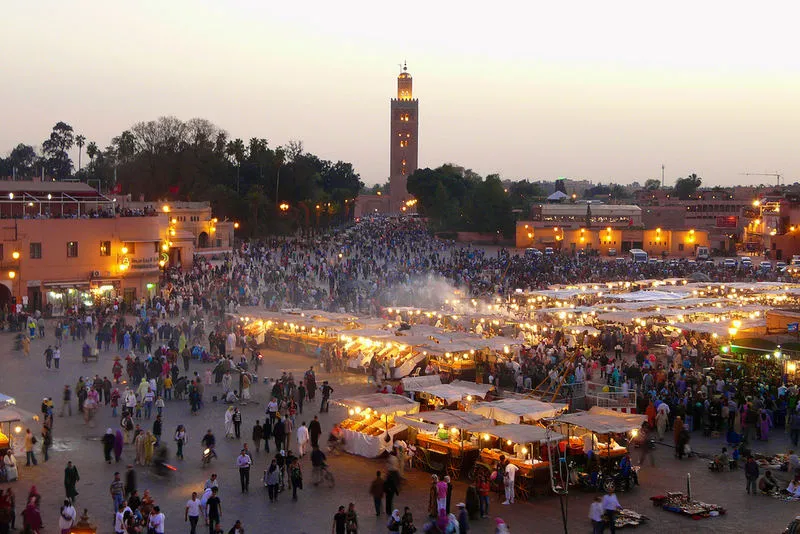
A promotional video released by the Algerian Ministry of National Defense on its official X platform has ignited a fresh controversy regarding the use of Moroccan historical and cultural monuments in Algerian official communication materials. The video montage prominently features images of the iconic Jemaa el-Fna square and the Koutoubia Mosque minaret, both located in Marrakech. This sequence is presented as part of Algeria's narrative on its contributions to supporting African nations, fostering continental development, and ensuring regional security and a promising future.
The inclusion of these specific landmarks raises significant questions that extend beyond mere imagery. Given the ongoing disputes between Morocco and Algeria regarding the documentation and attribution of certain cultural heritage elements, the choice to showcase such recognizable Moroccan sites in a promotional context is particularly provocative. Jemaa el-Fna square holds a special place in Marrakech's history, having served as a vibrant hub of daily life for centuries. It is renowned as a gathering place for commerce, storytelling, music, and popular arts. In recognition of its cultural importance, UNESCO designated Jemaa el-Fna as a Masterpiece of the Oral and Intangible Heritage of Humanity in 2001, further listing it on the Representative List of the Intangible Cultural Heritage of Humanity in 2008.
Similarly, the Koutoubia Mosque minaret, which dates back to the 12th century, is one of Marrakech's most significant historical and architectural landmarks. It is closely associated with the old city, which has been recognized as a UNESCO World Heritage site since 1985. The images disseminated by the Algerian Ministry of Defense are thus not of obscure or difficult-to-identify locations, but rather two major symbols of Morocco's historical and architectural memory. This fact explains the attention garnered by their presence in such a context.
This incident, documented in an institutional video from one of Algeria's key state institutions, highlights the ongoing fascination exhibited by President Abdelmadjid Tebboune—who also serves as the Minister of Defense—and Army Chief of Staff Saïd Chengriha, who holds the position of Minister Delegate to the Minister of Defense, towards Moroccan heritage. This situation is part of a broader series of controversies surrounding cultural heritage between Morocco and Algeria, as disputes have expanded in recent years beyond political and diplomatic realms to encompass elements of popular, artistic, and artisanal heritage, including zellige, caftans, couscous, and traditional music.
One notable episode occurred in 2022, when a controversy erupted over a design featured by Adidas in a clothing collection associated with the Algerian national football team. The company clarified that the design was inspired by the El Mechouar Palace located in Tlemcen. In response, the Moroccan Ministry of Youth, Culture, and Communication protested against the use of motifs inspired by Moroccan zellige and engaged a lawyer to send a formal notice to the company. Following discussions with the Moroccan Ministry of Culture, Adidas announced that it had reached a positive settlement regarding the dispute, affirming its respect for the Moroccan people and their artisans.
Although this incident did not escalate into an international legal dispute between the two states, it marked a significant moment in which the controversy surrounding zellige transitioned from social media to a formal legal approach, accompanied by a debate on cultural identity, traditional artisan crafts, and the rights to utilize heritage motifs. The issue resurfaced in 2024 when the Moroccan Ministry of Youth, Culture, and Communication announced that it had lodged a complaint with UNESCO regarding an Algerian dossier dedicated to a ceremonial women’s garment and the related skills of its decoration. This dossier included a photograph and video featuring the Moroccan caftan known as "Ntaâ," recognized for its connection to traditional craftsmanship in Fez. In December of the same year, the Moroccan Ministry announced that the Intergovernmental Committee for the Safeguarding of the Intangible Cultural Heritage of UNESCO had accepted Morocco's objection and decided to remove the photograph of the Moroccan caftan from the relevant Algerian dossier.
This decision followed a protest from the Moroccan delegation, supported by evidence regarding the origins of the image used. The latest controversy triggered by the Algerian Defense Ministry video thus adds to a series of disputes that illustrate the increasing sensitivity surrounding issues of attribution and representation of cultural heritage in the relations between Rabat and Algiers.
As reported by lareleve.ma.