Morocco's Financial Law Proposal for 2027
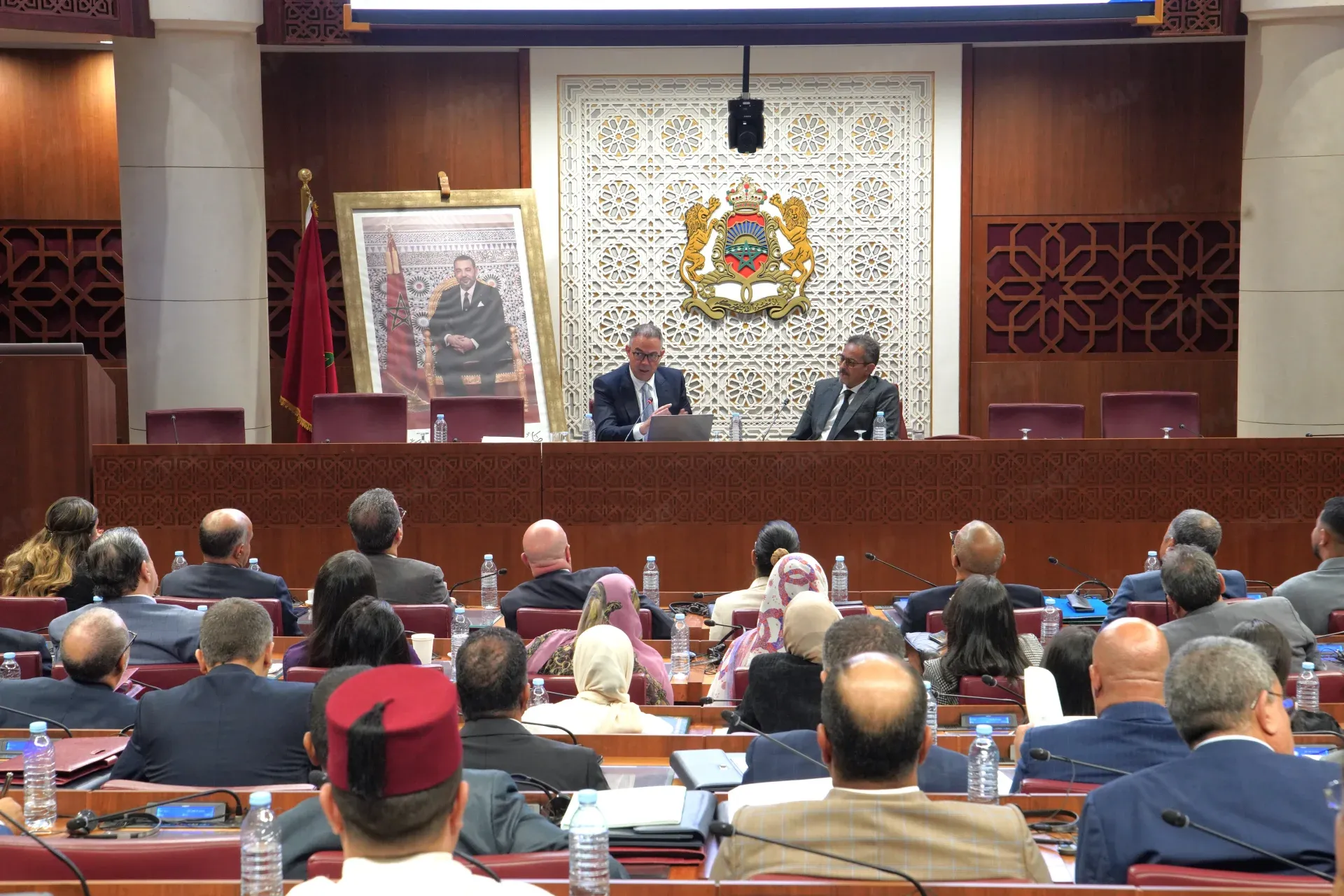
On Friday, the Minister of Economy, Finance, and Public Administration, Fawzi Lekjaa, presented the financial law proposal for the fiscal year 2027 before the Finance and Economic Development Committee of the House of Representatives in Morocco. The proposal is designed around five key priorities aimed at restoring purchasing power and reinforcing the foundations of a sustainable social state. This includes measures to support household income and continue implementing the royal project for social protection, which has allocated 44.2 billion dirhams for the year 2027. Additionally, the proposal seeks to enhance the health system, improve the national education system, and increase access to adequate housing.
The second priority focuses on integrating youth into education, training, and decent employment by reducing school dropout rates and guiding young people towards suitable integration solutions, whether through returning to education, vocational training, employment, or entrepreneurship. This initiative is framed within a unified path and strong governance.
The third priority revolves around accelerating the implementation of advanced regionalization and a new generation of integrated territorial development programs, with a mobilization of 210 billion dirhams over eight years. This plan aims to promote employment, strengthen essential services, and ensure integrated territorial rehabilitation, alongside establishing an institutional framework for the contract between the state and the regions while hastening the execution of the National Charter for Administrative Decentralization.
The fourth priority addresses enhancing strategic sovereignty in water, energy, food, and digital sectors. In the water aspect, the goal is to increase the national dam storage capacity to over 24 billion cubic meters by the end of 2027 and accelerate the establishment of seawater desalination plants to achieve over 1.8 billion cubic meters by 2031, along with the reuse of treated wastewater. In terms of energy, this priority includes raising the share of renewable energies to 52% of installed electrical capacity by 2030, implementing a natural gas roadmap, and developing green hydrogen.
Regarding food security, upcoming measures will involve proactive interventions to secure the domestic market's needs for essential food products, develop national sovereignty in seed and fertilizer production, and support the restructuring of the national livestock.
The fifth priority is centered on building a strong economy capable of financing social and sovereign ambitions, while simultaneously accelerating institutional reforms and ensuring macroeconomic and financial stability. This includes enhancing investment in road, rail, and port infrastructure, reinforcing the dynamics of national industry and production sovereignty by replacing imports, and deepening the local integration of industrial systems. Furthermore, this priority aims to boost the contribution of private investment in wealth and job creation by expediting projects outlined in agreements with the state as part of the investment charter's implementation, simplifying the investor pathway, and enhancing support for very small, small, and medium-sized enterprises. Additionally, it involves restructuring the public portfolio to strengthen its investment capacity and attract the private sector.
As reported by agadirinfo.ma.