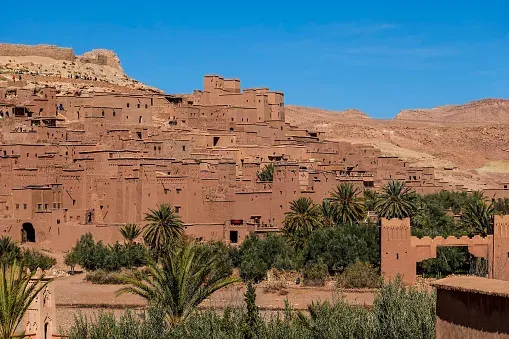
Nestled above a river valley in southern Morocco, the enchanting village of Aït Benhaddou stands as a remarkable testament to architecture harmoniously shaped by its natural surroundings. Characterized by its striking ochre walls, fortified towers, and winding lanes, this ancient village was built using earth and other locally sourced materials, creating a settlement that appears to emerge organically from the hillside itself. This UNESCO World Heritage Site, recognized since 1987, not only showcases the ingenuity of traditional Moroccan building practices but also serves as a living chronicle of the communities that once traversed the trading routes linking the Sahara Desert with Marrakech. Today, the preservation of Aït Benhaddou's unique earthen architecture is as crucial as understanding the rich history encapsulated within its walls.
Aït Benhaddou: An Earthly Masterpiece
Located in the Ouarzazate province, on the southern slopes of the majestic High Atlas Mountains, Aït Benhaddou is one of the most celebrated examples of a _ksar_, a fortified village commonly found in Morocco's pre-Saharan regions. The buildings here are primarily constructed from earth, with timber and other natural materials utilized where necessary. Traditional techniques include molding mud into sun-dried bricks and building with compacted earth, resulting in thick walls that provide insulation against the region's scorching days and cooler nights. This architectural method creates a harmonious palette of warm browns, reds, and ochres that seamlessly blend with the surrounding landscape, allowing the village to complement rather than contrast with its environment.
The architectural landscape of Aït Benhaddou is remarkably diverse, featuring modest homes alongside larger, more elaborate residences, some adorned with tall corner towers and intricate patterns crafted from earthen brickwork. These architectural details not only reflect practical construction methods but also signify a distinctive style that has evolved over centuries. UNESCO acknowledges Aït Benhaddou as an exemplary representation of traditional earthen construction in southern Morocco, highlighting the techniques that have been employed across the region for generations.
The Historical Significance of Aït Benhaddou
Aït Benhaddou's strategic location in the Ounila Valley positioned it within a broader network of historic trade routes connecting the southern Sahara with Marrakech. These routes facilitated the movement of goods and ideas across challenging terrains and mountain passes, making the village a vital trading post within this intricate network. The fortified design of Aït Benhaddou reflects the necessity for protection, with its high defensive walls, corner towers, and carefully arranged entrances creating a well-defined boundary around the settlement.
While many of the existing buildings date back to the 17th century or later, the architectural traditions they embody are considerably older. Variants of earthen construction have been utilized throughout southern Morocco, adapting to the availability of local materials, climate conditions, and social structures. Within the protective walls of Aït Benhaddou, the settlement was not merely a collection of houses but included communal areas and religious structures, while spaces outside the ramparts were utilized for various activities, such as threshing grain. A caravanserai, which provided shelter for traveling merchants and their animals, was an integral part of this extensive network of facilities.
As the significance of traditional caravan trade waned, the role of settlements like Aït Benhaddou transformed. Over time, many residents migrated to more modern housing across the river, leaving parts of this historic village increasingly reliant on maintenance and conservation efforts.
For those who wish to explore Aït Benhaddou, the experience is enriched by walking through its narrow lanes, where the buildings closely fit together. The compact layout creates shade and shelter, while the defensive walls and towers contribute to the settlement's distinctive silhouette. Some of the larger homes resemble fortified castles, complete with multiple levels, projecting towers, and geometric decorations. This contrast between the grandeur of some residences and the simplicity of others highlights the variety of architectural styles within the ksar.
The breathtaking views from the higher points of Aït Benhaddou extend across the valley, vividly illustrating the relationship between the settlement and its environment. The earth-toned buildings, the winding river valley, and the arid hills create a scene of remarkable harmony.
Aït Benhaddou has also gained recognition in international cinema, serving as a backdrop for numerous film and television productions. However, its significance transcends its appearances on screen; the true value lies in its surviving architecture, the traditional knowledge embedded in its construction, and the historical narrative of the communities that have shaped it over the years. Visitors are encouraged to take their time, observing the intricate details of the walls, tower patterns, and textures, which provide a deeper appreciation of this remarkable village.
Preserving Aït Benhaddou's fragile architectural heritage is of paramount importance. Earth, while abundant and versatile, necessitates regular maintenance to prevent deterioration. Unlike fired brick or stone, exposed earthen walls can quickly succumb to damage from rainfall, flooding, erosion, and neglect. The settlement has also faced challenges from earthquakes, complicating conservation efforts.
Recognizing the vulnerability of Aït Benhaddou, UNESCO has underscored the importance of maintaining traditional repair practices and the need for proper restoration methods. Preservation involves more than merely keeping the walls standing; it requires the retention of the materials, construction techniques, and architectural details that define the settlement. The Centre for the Conservation and Rehabilitation of Architectural Heritage of Atlas and Sub-Atlas Zones (CERKAS) has played an instrumental role in monitoring and supporting the protection of this architectural heritage.
Following the earthquake that struck Morocco on September 8, 2023, assessments were conducted to evaluate the damage to historic structures in Aït Benhaddou. As conservation planning progresses, the focus has been on stabilizing vulnerable buildings and initiating restoration efforts. UNESCO's 2026 decision welcomed technical assessments and the establishment of a framework for intervention, emphasizing the need for coordinated conservation projects and improved visitor management.
Visiting Aït Benhaddou is an enriching experience, located approximately 30 kilometers northwest of Ouarzazate. Visitors can explore the narrow lanes, closely examine the traditional construction, and admire the panoramic views across the Ounila Valley. Comfortable walking shoes are recommended for traversing uneven paths and climbing the hillside. It is essential to approach the experience with patience, allowing time to appreciate the intricate details of the earthen walls and the settlement's alignment with the land's contours.
As restoration efforts continue, visitors are urged to respect barriers, adhere to local guidance, and avoid entering closed or potentially unstable structures. Supporting local guides and businesses will ensure that tourism positively impacts the surrounding community. The enduring appeal of Aït Benhaddou lies in its architectural connection to the environment. Built from the very materials of its landscape and shaped by centuries of regional tradition, it stands as a testament to how practical building knowledge can create a settlement of extraordinary character. The ongoing effort to preserve Aït Benhaddou necessitates the same sensitivity that originally shaped it, recognizing that earth, craftsmanship, community, and place are intrinsically linked.
As reported by getaway.co.za.