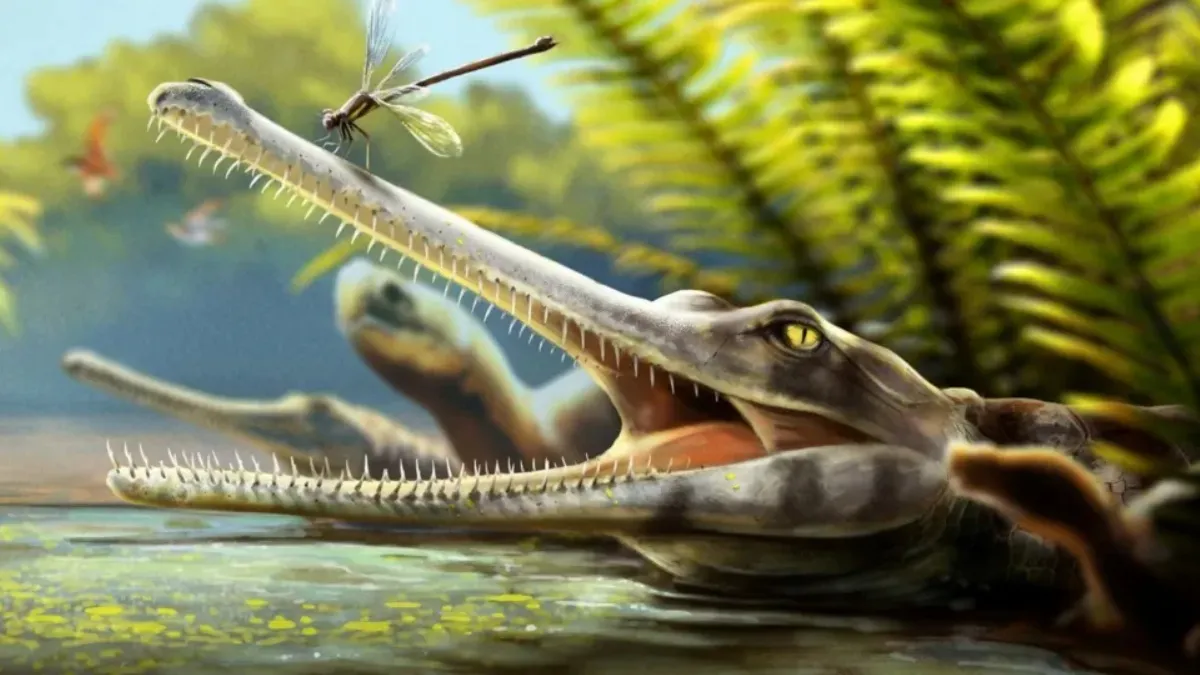
Unveiling the Ctenosuchus tenuidens: A Remarkable Find
Researchers from the University of Portsmouth have made a groundbreaking discovery in Morocco, identifying the remains of a previously unknown relative of the crocodile that roamed the Earth approximately 170 million years ago. This remarkable creature, named Ctenosuchus tenuidens, is characterized by its extremely narrow snout and needle-like teeth, suggesting a highly specialized lifestyle. The fossils of this ancient reptile were unearthed in the Atlas Mountains, where the researchers derived its name from the Greek term for 'crest crocodile' and the Latin word for 'thin teeth.'
Significance of the Discovery in Evolutionary Biology
The morphological features of Ctenosuchus tenuidens' skull exhibit striking differences from all known relatives of its time, particularly in the delicate structure of its dentition. This distinctive arrangement indicates that Ctenosuchus tenuidens occupied an ecological niche that was atypical for crocodiles. According to paleontological analyses, the fine teeth were not suited for preying on large or robust animals; in fact, they would likely have broken if the reptile attempted to hunt substantial fish that could put up a struggle.
Instead, experts hypothesize that this reptile primarily fed on softer prey such as shrimp, worms, or very small fish. These specific dietary habits not only enhance our understanding of the species but also provide valuable insights into the evolutionary pathways of crocodilians. As reported by the BBC, this newly discovered species belongs to the Thalattosuchia group, a category of marine and freshwater reptiles that coexisted with dinosaurs.
The fossil site in the present-day Atlas Mountains was once part of a complex system of rivers and lakes millions of years ago, which preserved the remains of these creatures in exceptional condition across epochs. Lead researcher Hamzah Imran from the University of Portsmouth emphasized the significance of this discovery in understanding the supercontinent Gondwana. He noted, "Had it caught a large fish that was thrashing about, these sensitive teeth would have been shattered," illustrating the functional dynamics of the jaw structure.
Interestingly, the jaw structure shows similarities to certain Jurassic pterosaurs, which likely filtered their food from the water, indicating that various animal groups independently developed similar adaptations to their environments. Morocco is renowned among paleontologists as one of the richest fossil sites worldwide, yet experts believe it still harbors countless secrets. This current study underscores the vast amount of research that remains to be conducted in the region.
As reported by nordisch.info.