Revitalization of Moroccan Language Program in Talayuela
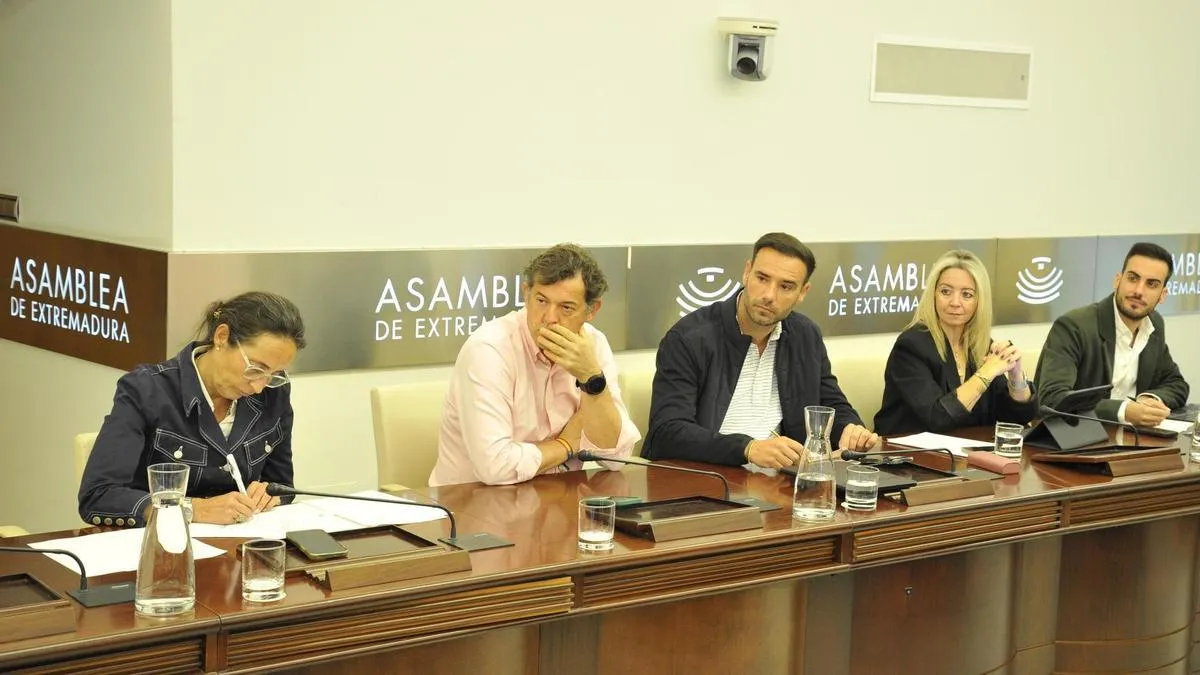
In a recent session of the Education Commission held at the Extremadura Assembly, representatives discussed the pressing issue surrounding the Moroccan Arabic Language and Culture Program (PLACM) in Talayuela, Spain. The program, which has been suspended this academic year, is crucial for approximately 200 students in the region. The Extremadura government is currently awaiting a meeting with officials from the Ministry of Education and the Moroccan Embassy to seek solutions for continuing this educational initiative. This was confirmed by the Popular Party (PP) during the commission meeting, where they highlighted that Moroccan authorities have expressed their willingness to engage in discussions, although a specific date for the meeting has yet to be established.
Isabel Sánchez Torremocha, a prominent figure in the PP, shared that on October 23, the regional department received communication from the Ministry indicating that the Moroccan Embassy responded positively to the request for a joint meeting. "We are now waiting for a date to be set," she stated, while refraining from detailing the contents of the response. The regional government's objective is to identify a viable approach that allows for the continuation of these lessons outside traditional school settings, a decision stemming from an agreement between the PP and Vox political parties. Despite attempts to collaborate with the Talayuela City Council and affected educational institutions over recent months, progress has been hampered due to the Ministry of Education's refusal to authorize a transfer of the program to municipal facilities, citing that the bilateral agreement between Spain and Morocco mandates its operation within school environments.
Political Perspectives on the Program's Future
In the assembly, Vox parliamentarian Marta Garrido Moreno addressed the issue, asserting that the elimination of the program was a commitment made in the agreement between Vox and the PP, and has since been fulfilled. She controversially labeled the program as a form of "indoctrination," suggesting that it places the responsibility for hiring teachers and determining educational content in the hands of the Moroccan government. Moreover, she questioned the program's goal of preserving the identity and culture of students, arguing that true integration necessitates assimilation, which she believes should involve speaking Spanish and adopting Spanish customs.
Garrido Moreno also opposed the transfer of classes to municipal facilities, arguing that it would divert public resources toward an initiative linked to Morocco. "Our priorities should come first, with not a single euro allocated to programs associated with Mohamed VI," she declared. She emphasized that the coalition agreement did not include provisions for relocating the program, stating, "The deal specifies elimination, not relocation." In contrast, Sánchez Torremocha later defended the political consensus aiming to remove these teachings from the classrooms of Extremadura's educational institutions, clarifying that this does not prevent interested families from accessing them voluntarily in alternative spaces.
The discussion was sparked by a proposal from Unidas por Extremadura to reinstate classes this academic year at the Cultural Center in Talayuela. Their representative, Nerea Fernández Cordero, attributed the program's discontinuation to the actions of the PP and Vox while urging the Spanish government to reinterpret the bilateral agreement to facilitate instruction outside of schools. She maintained that the extracurricular nature of the program permits its transfer to municipal facilities without compromising its educational essence. Fernández Cordero insisted that finding a solution for the affected 200 students should take precedence over political and administrative disagreements, stating, "We do not want this proposal to turn into yet another standoff between the Ministry and the Council." She called for the Ministry to avoid using a restrictive interpretation of the agreement to obstruct viable alternatives, advocating for a creative approach to problem-solving.
Furthermore, she noted that Moroccan teachers provided essential support beyond language instruction, acting as interpreters and mediators for newly arrived families who are still mastering Spanish. She warned of the potential risk that the absence of this educational resource could lead to the teaching of language and culture falling into less educational, more religious domains. Despite sharing the goal of reviving the program outside school settings, the PP ultimately voted against the initiative, citing that the regional government has already undertaken the necessary actions requested by Unidas por Extremadura. Sánchez Torremocha reminded that a collaborative proposal exists with educational centers and the City Council, which includes afternoon classes in municipal facilities, yet the Ministry expressed its disapproval of this relocation as early as June.
As reported by elperiodicoextremadura.com.