Europe's Satellite Imagery Reveals a Stunning Red Mark in Morocco
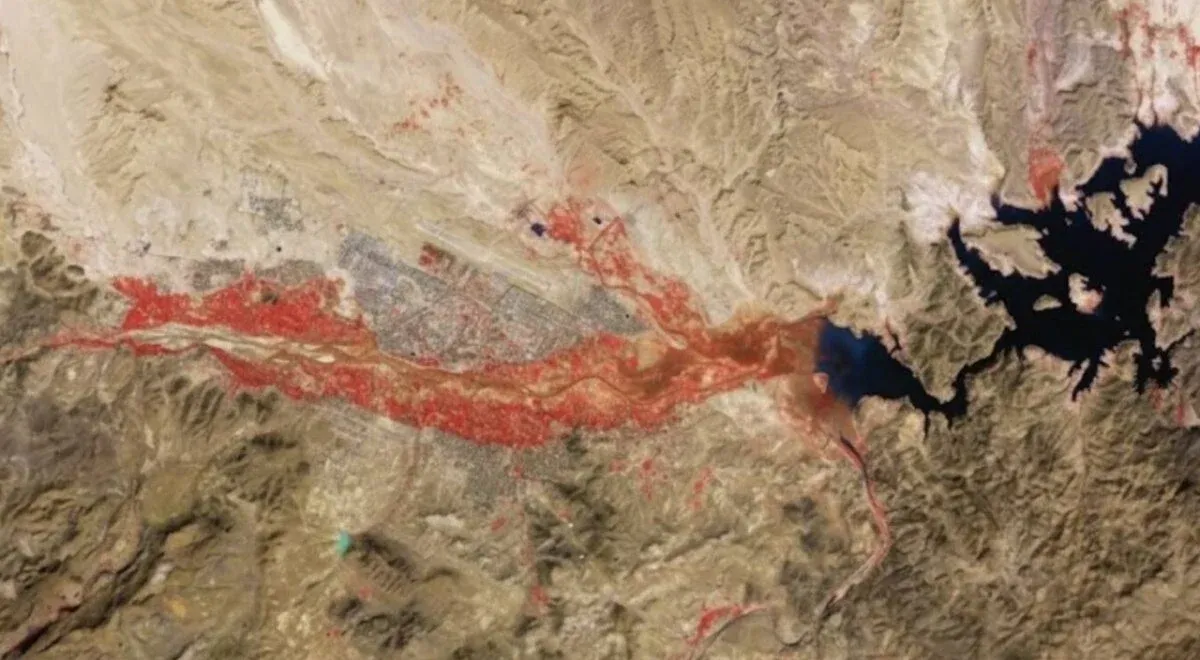
On February 20, 2026, the European Space Agency (ESA) shared an awe-inspiring image of southern Morocco, showcasing a striking scarlet streak across the desert landscape near Ouarzazate. This captivating visual is not a harbinger of disaster but rather a revelation of the region's vibrant vegetation, brought to light through infrared imaging technology. The ESA consistently releases breathtaking views of Earth, but few display colors as vivid as this.
The image captures the area around Ouarzazate, which is located at the gateway to the Sahara Desert. The remarkable red coloration observed is attributed to the way the satellite detects infrared light, which is invisible to the human eye. Healthy plants reflect this infrared light, appearing bright red in the satellite imagery, while absorbing the visible red light. Consequently, regions with dense vegetation present as vibrant red patches, contrasting sharply with the beige hues of bare soil.
Understanding the Seasonal Waterways of Morocco
Captured in January 2026, during the wet season, this image demonstrates Morocco’s agricultural parcels and groves that thrive during this time. The resolution of the image allows viewers to discern smaller tributaries and tightly cultivated bands adjacent to riverbanks. The seasonal rivers that nourish these banks flow abundantly in the winter and spring months but typically dry up during the summer. Consequently, the red areas depicted in the imagery delineate the pathways of available water rather than indicating any form of geological anomaly. Beyond these corridors of life, the dominant landscape consists of rock and sand.
To the north of the expansive red area lies the urban fabric of Ouarzazate, the provincial capital situated in the Assif n’Tidili valley, also known as the Ouarzazate River. This city is nestled at the foot of the Anti-Atlas Mountains, which run parallel to the High Atlas, a vital geographical feature in Morocco's diverse terrain. The interplay of seasonal water availability and vegetation is crucial for understanding the ecological dynamics of this region, showcasing the delicate balance within Morocco's arid landscapes.
As reported by science-et-vie.com.