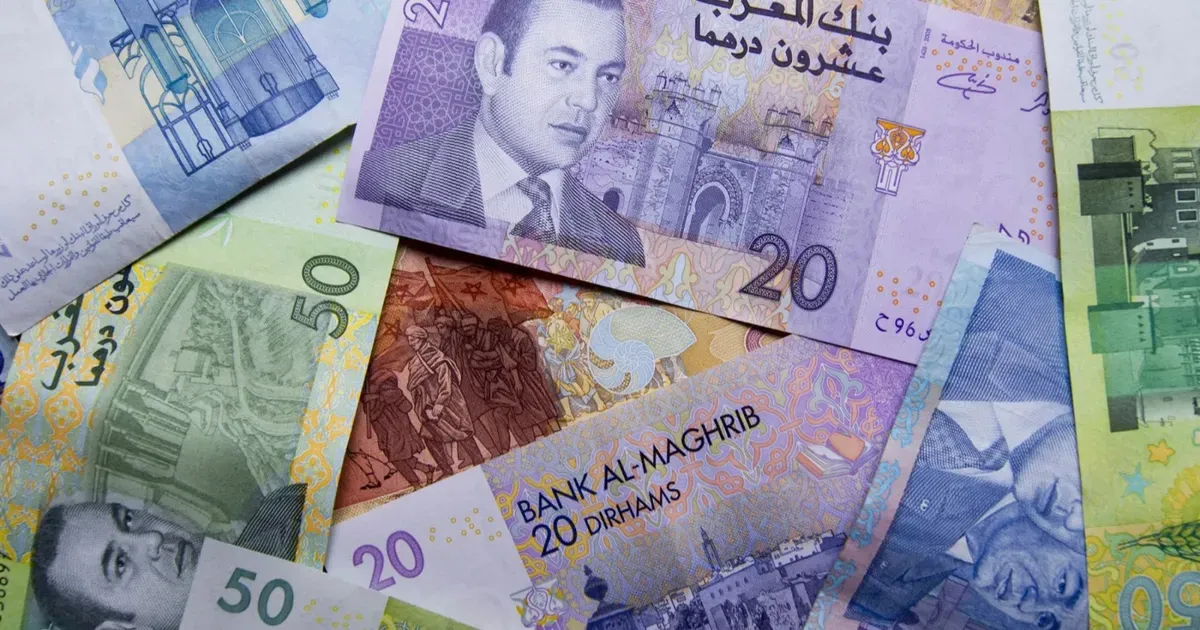
Exploring the Digital Dirham in Morocco
The digital dirham project in Morocco is currently facing a multifaceted challenge that extends beyond its technical issuance capabilities. It must also influence payment behaviors among individuals and businesses in an economy still heavily reliant on cash transactions. While the Central Bank Digital Currency (CBDC) is viewed as a significant step towards enhancing financial inclusion and reducing payment costs, a recent study raises concerns about the potential risks associated with bank deposits if the digital dirham emerges as a direct competitor to traditional bank accounts. Experts believe that the success of this initiative hinges on building trust and offering tangible benefits to users.
A study titled "Central Bank Digital Currency: Stakes and Lessons for Morocco," authored by Shaimaa El Shaoui, Kamal Lahlo, and Mohamed Miko, and published by Bank Al-Maghrib this month, outlines the available technical and economic options, drawing from international experiences. It is crucial to note that this study does not signify an official decision to issue a digital dirham; rather, it explores options that could be advantageous if the project proceeds.
Cash Dominance Despite Card Proliferation
The study emerges at a time when the amount of cash in circulation in Morocco has surged from approximately 70 billion dirhams in 2001 to over 500 billion dirhams (around 50 billion USD) projected for 2025, despite the number of bank cards surpassing 22 million. However, the primary use of these cards remains for cash withdrawals rather than payments. Additionally, the uptake of mobile payment services, which were launched in 2019, remains limited. These indicators highlight the significant challenges that lie ahead for any transition towards digital payments, especially considering that the percentage of residents with bank accounts has not exceeded 62% in 2025. The informal economy constitutes about 30% of the GDP and accounts for roughly 75% of employment, while only 2% of heads of informal production units have dedicated bank accounts for their activities.
According to Souleiman El Omrani, Director of the "Digital Transformation Observatory" based in Rabat, the digital dirham could serve as a lever for digital transformation and the integration of informal economic activities into the formal economy, in addition to its potential benefits for individuals, the private sector, and public finances. El Omrani emphasized that the adoption of digital currency is essential in a global context moving towards this type of payment method, but he stressed that the transition requires addressing existing imbalances in the relationship between banks and their clients, combating financial fraud, and evaluating the reasons behind the limited adoption of digital payment experiences.
The recommendations from the study advocate for a digital currency tailored for individuals and businesses that targets everyday payments and complements existing payment methods instead of replacing traditional cash. This model necessitates that the digital dirham be user-friendly and low-cost, integrating seamlessly with current payment systems while allowing for transactions offline.
However, simply issuing a digital currency will not suffice to persuade Moroccans to abandon cash or to adopt digital payment methods on a wider scale, especially given the ongoing challenges.
Badr Blaj, a blockchain and digital currency expert, highlighted that the primary challenge lies in establishing a system that renders the digital dirham attractive, secure, and reliable by lowering payment costs, simplifying access to financial services, and providing guarantees to protect privacy. He noted that the mobile payment experience in Morocco raises questions about users' readiness to adopt new digital methods, emphasizing that the success of the digital dirham depends on delivering genuine added value rather than merely providing an alternative payment method.
The potential impact of the digital dirham on bank financing is one of the most significant risks discussed in the study. If its use is limited to payments currently made in cash, its effects on the banking sector may remain minimal. However, if it becomes a direct substitute for bank deposits, banks may face increased financing costs and decreased profitability, possibly affecting the transmission of monetary policy to the economy.
Simulations conducted with the assistance of the International Monetary Fund and the World Bank suggest that the Moroccan banking system has some capacity to absorb a partial shift of deposits, provided that the uptake of digital currency remains moderate according to the study.
To mitigate these risks, the study suggests initially issuing the digital dirham without interest, imposing limits on custody and transaction volumes, and adopting a gradual rollout. It also emphasizes the need for a clear legal framework that defines the responsibilities of involved parties, ensuring cybersecurity, data protection, and service continuity. Bank Al-Maghrib has conducted a technical test for a prototype of the digital currency aimed at individuals in collaboration with the International Monetary Fund and the World Bank. The test involved the issuance, distribution, and retention of currency through digital wallets, peer-to-peer payments, and interoperability with the existing financial infrastructure.
The test confirmed the technical feasibility of issuing a digital currency for individuals in Morocco while highlighting challenges related to cybersecurity, data protection, and the ability of the infrastructure to accommodate increased usage. However, Blaj contends that the study does not provide a comprehensive implementation plan for launching the digital dirham, calling for more detailed results from the technical experiments conducted by the central bank to better understand the challenges revealed and assess the suitability of the proposed options for customer needs.
Beyond technical and banking obstacles, user concerns related to privacy and the traceability of digital transactions also loom large. Blaj warns that apprehensions regarding data use for tax purposes may lead some individuals and economic activities to continue preferring cash, particularly in the informal economy. The study suggests the possibility of providing a certain degree of privacy for small transactions based on user identification levels while adhering to anti-money laundering and counter-terrorism financing requirements. Striking a balance between data protection and transaction oversight remains a fundamental condition for building trust in the new system.
El Omrani stressed the importance of communication and dialogue to prepare users for this transition, alongside collaborative efforts between Bank Al-Maghrib, government sectors, the private sector, media, civil society, and academic circles. He noted that the continued dominance of cash poses a challenge that can be mitigated through the mobilization of various stakeholders, warning that significant shifts in payment methods may face resistance if the conditions for their success are not adequately prepared.
Alongside domestic payments, the digital currency presents opportunities for developing cross-border remittances, which represent a vital area for the Moroccan economy, with expatriate remittances averaging around 8% of GDP in recent years. The study indicates that reducing the number of intermediaries and improving connectivity between payment systems could lower remittance costs and expedite their arrival. It cites the "mBridge" project, involving several central banks, which has, in some cases, reduced remittance costs by up to 50%, enabling transactions to be completed in seconds instead of days. The study also refers to a pilot project for cross-border payments currently underway in partnership with the Central Bank of Egypt and supported by the World Bank, aimed at exploring ways to reduce costs and time while enhancing connectivity between payment systems.
The study concludes that the introduction of the digital dirham should be approached gradually and over the long term, as part of a broader strategy to develop the payment ecosystem. While technical experiments provide a foundation for exploring issuance possibilities, the project's success remains contingent upon its ability to win user trust and provide substantial added value.
As reported by asharqbusiness.com.