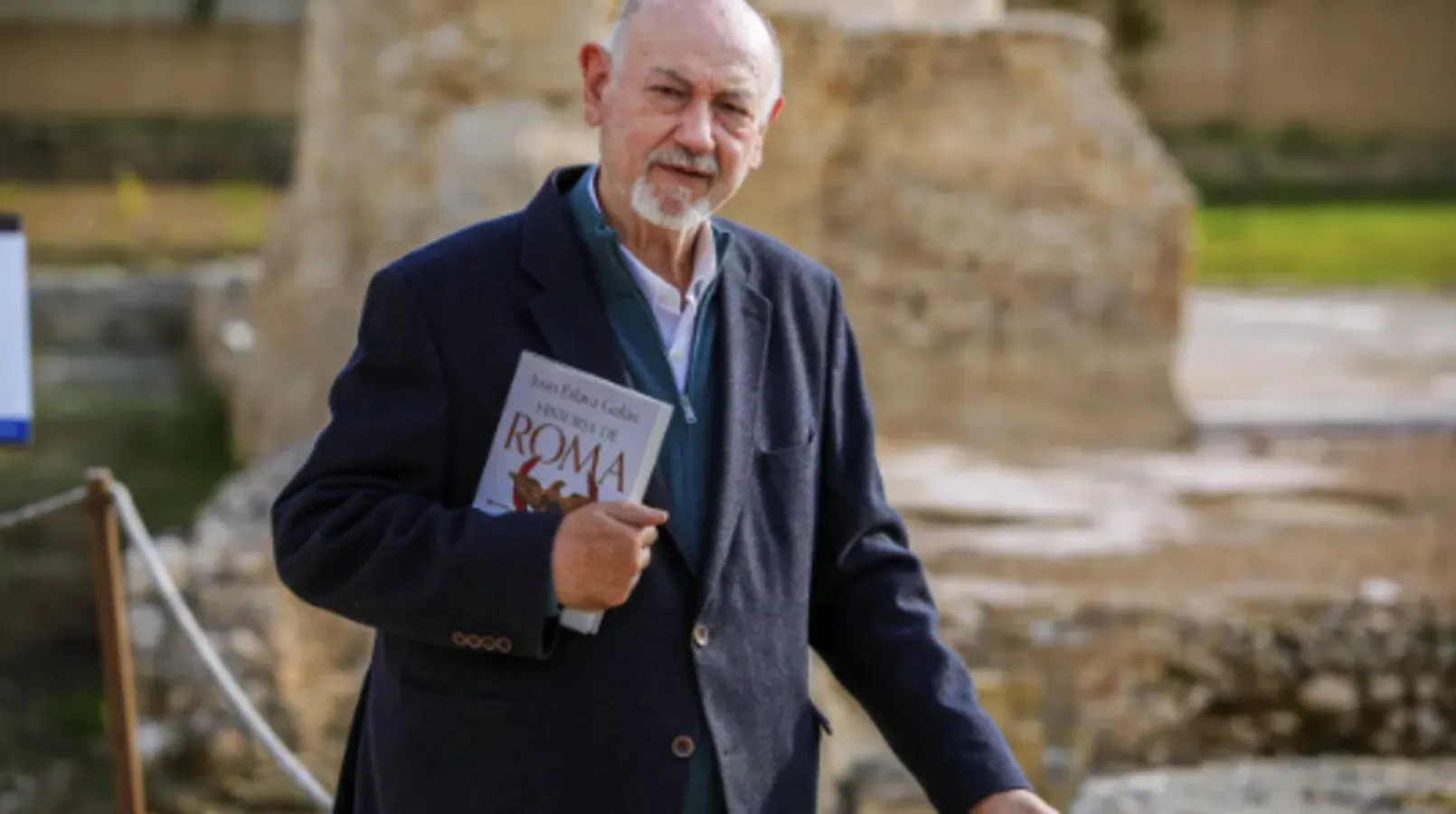
Juan Eslava Galán's Perspective on Ceuta and Melilla
Renowned writer and historian Juan Eslava Galán has recently turned his attention to the future of the Spanish autonomous cities of Ceuta and Melilla, suggesting that they could potentially fall under Moroccan sovereignty. This possibility was articulated during the launch of his new book, The Cold War Explained for Skeptics, where he also delves into international relations and Spain's position against other global powers.
During an inquiry about the relations between Spain and Morocco, Eslava Galán remarked that such a scenario could unfold "practically without us realizing it." His comments reflect a broader contemplation on the geopolitical balance in North Africa, where he believes that the United States and Morocco may exert significant influence over the future of these two Spanish cities. This perspective captures a growing concern regarding the shifting dynamics in the region and the potential implications for Spanish sovereignty.
The Role of the United States in Ceuta and Melilla's Future
One of Eslava Galán's key arguments revolves around the relationship between Washington and Rabat. He posits that the United States will continue to support Morocco, even in the event of a conflict with Spain. He stated, "In any conflict, the United States will always side with Morocco," emphasizing that this allegiance would extend even to a clash involving Spain. Eslava Galán referenced the Ifni War of 1957 as a historical instance, recalling that the U.S. prohibited Spain from utilizing arms that had been provided or sold by them, which forced Spain to rely on outdated equipment from the Civil War supplied by Germany.
Furthermore, Eslava predicts that Morocco and Egypt will emerge as the representative nations of Africa in the near future, suggesting that this shift will lead to an even closer alignment between Washington and Rabat, while Spain's position may become increasingly precarious. He foresees a time when discussions about a potential "shared sovereignty" over Ceuta and Melilla will arise, influenced by the demographic changes characterized by a growing Muslim population and a diminishing Christian and Spanish demographic.
In his presentation, Eslava Galán did not shy away from addressing the matter of alleged espionage on the communications of the Spanish government, affirming, "It is indeed true," and highlighting that "Morocco has an excellent information system."
This discussion unfolded during the presentation of The Cold War Explained for Skeptics, published by Planeta. The book belongs to a series through which Eslava reviews various historical episodes, focusing on the confrontation between the United States and the Soviet Union and its consequences for the international order.
In addition to his reflections on Ceuta, Melilla, and Morocco, Eslava Galán addressed the current political situation in Spain, the functioning of democracy, and the role of major powers. He noted China as a significant player likely to gain influence on the global stage and emphasized the impact that artificial intelligence and misinformation may have on current conflicts.
As reported by elfarodeceuta.es.