In a significant move to bolster its armored forces, Morocco has initiated a comprehensive modernization program for its M60 main battle tanks, upgrading them to the Israeli Sabra standard. This ambitious project, which began over a year ago, aims to enhance the operational capabilities of the entire fleet of M60 tanks, marking the most substantial upgrade since the introduction of Abrams tanks into the Moroccan military arsenal. Notably, the modernization work is being conducted on Moroccan soil in collaboration with Israel Military Industries (IMI), a firm renowned for its extensive experience in modernizing this American tank model, which has served for more than fifty years.
The modernization initiative aligns perfectly with Morocco's defense strategy, particularly following the resumption of diplomatic relations with Israel in 2020 and the subsequent signing of a military cooperation agreement in 2021. This agreement emphasizes joint production efforts, indicating that Morocco has identified Israeli military industries as a vital partner that not only offers expertise in modernizing Western defense systems but also demonstrates a willingness to transfer technology. Such collaboration is essential for Morocco as it seeks greater autonomy in its defense manufacturing capabilities.
The Comprehensive Transformation of the M60 Tanks
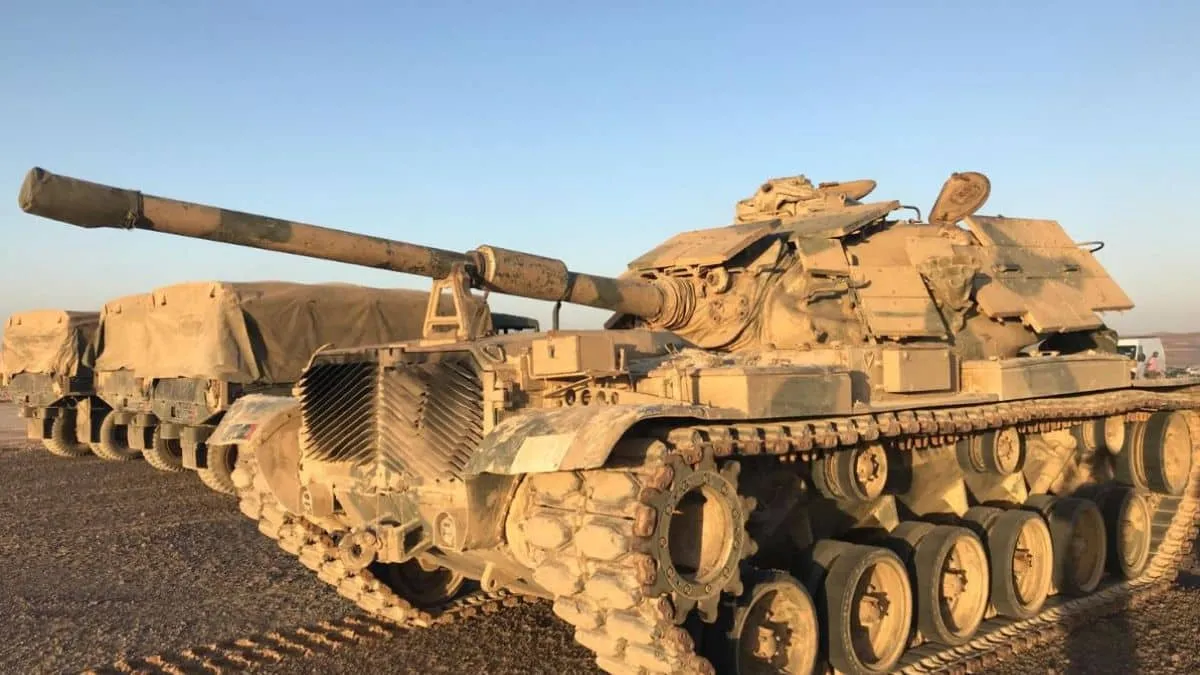
Recent disclosures regarding the Sabra Mk2 modernization package reveal that the transformation of the M60 tanks is extensive, extending far beyond a mere partial upgrade. One of the most striking enhancements is the replacement of the original 105mm gun with a more powerful 120mm L44 MG253 smoothbore gun, which is also utilized in the M1A1 Abrams. This upgrade significantly boosts the firepower of the tanks, enabling them to deploy advanced anti-tank munitions and penetrate armor that was previously inaccessible. Additionally, a new 1,000 horsepower engine compensates for the limitations of the original propulsion system, as evidenced by photographs showing the new powerplants already installed.
The modernization package also includes a redesigned turret, enhanced armor, FLIR thermal vision systems, a modern ballistic computer, advanced fire control equipment, and updated communication links. This array of modifications indicates a thorough intervention spanning from the chassis to the turret. However, visual documentation suggests that the process is still at an intermediate stage, with the observed units currently outfitted only with the new gun and engine, while upgrades to the turret and additional protective modules are still pending.
Israel's Expertise in M60 Modernization
To fully appreciate the scope of Morocco's project, it is essential to consider Israel's extensive track record in the modernization of the M60 tanks. The Israeli defense industry has a wealth of experience in this area, having developed programs such as the Magach for its military and the Sabra for international markets. Much of this work has been carried out by IMI at its facilities in Slavin, where the Sabra package was designed using a modular approach that allows each user to select configurations tailored to their specific needs and budget, whether that includes the 120mm gun, supplemental armor, or new engines. Following IMI's integration into Elbit Systems, the latter has taken the lead on these international initiatives.
A notable precedent in this domain is Turkey, which in 2002 contracted the modernization of 170 M60A1 units for $687 million. This work, conducted between 2007 and 2009, resulted in the M60T variant, which features a 120mm gun, reactive and composite armor, a 1,000 horsepower engine, and advanced targeting systems. These tasks were carried out at Turkish military facilities with technology transfer, except for the specific formulation of the armor. Subsequently, Turkey enhanced its fleet with the local Firat package, which included the Pulat active defense system and new sights for the commander. This historical context illustrates why the Israeli proposal has been adapted to meet Morocco's requirements. The modifications to the M60 chassis demonstrate that it can accommodate changes that increase its weight while restoring the agility and power of the armored vehicle.
Moreover, the model of sending kits for local assembly can be easily implemented in Moroccan centers experienced in major armored maintenance, such as the 3rd Material Support Establishment in Nouaceur, located south of Casablanca. The Moroccan case is further supported by direct industrial and institutional involvement, with Elbit Systems establishing a local entity known as Moroccan Military Industries (MMI). This partnership, formed as a strategic collaboration with Morocco, serves as the national productive arm, comprising two facilities: one in the Midparc industrial zone of Nouaceur, focused on weapon systems, combat towers, and guns, and another in Sidi Yahya, north of Rabat, dedicated to medium and large caliber ammunition.
According to company statements, MMI plans to deliver the first equipment to the Royal Armed Forces by March 2027, employing a workforce that is 99% composed of Moroccan engineers and technicians. This underscores the initiative's commitment to local training rather than merely establishing a simple assembly line. Initial formal announcements focused on towers for 8x8 transport vehicles assembled in partnership with Indian firm Tata; however, defense sector sources indicate that MMI is at the forefront of the M60 tank program. This modernization includes the installation of the new 120mm turret, a digitized control station replacing analog equipment, an engine group adapted to the new weight, and supplemental armor to enhance survivability in modern combat scenarios.
Morocco currently operates approximately 220 M60A1 Patton tanks and around 120 units of the M60A3 version. Both models play essential roles within the military operational structure, justifying the investment in their modernization. In the organizational scheme of armored brigades, the main combat force relies on two regiments of Abrams tanks, supplemented by an M60 regiment tasked with tactical support missions, positioning these vehicles at the forefront of operational support.
Geographically, the M60 tanks are deployed to protect key sectors in the southern and eastern regions of the country, where independent units such as the 13th Tank Regiment operate in areas of Western Sahara close to the borders with Algeria and Mauritania, where the operational capability of armored vehicles is critical. The incorporation of Abrams tanks has necessitated a reorganization of the armored deployment, moving M60A1 units from eastern bases to Western Sahara for surveillance and coverage tasks, while the main installations accommodate the new American tanks. Additionally, the M60 model continues to be utilized for training and refinement of crews, undergoing comprehensive overhauls in Nouaceur to maintain their operational capabilities, thus making their upgrade beneficial to the core operational deployment in the south.
Analyzing the project reveals broader objectives stemming from the 2021 defense agreement. Prior to 2020, the most feasible option for renewing Morocco's M60 fleet was Leonardo DRS, a subsidiary of the Italian group Leonardo, offering a package conceptually similar to IMI and Elbit's Sabra development. On the military front, replacing the 105mm gun with a 120mm variant empowers the tanks to engage modern armored vehicles using contemporary munitions and the LAHAT guided missile, which has an 8 km range, thereby reducing the technological gap between the Abrams regiments. The caliber alignment also opens the door to standardizing the ammunition across the entire armored force, providing significant logistical advantages for prolonged operations.
From an industrial perspective, participation in the program provides technical training to local specialists in weaponry, protection, and military electronics, capabilities that can be applied to future projects and reinforce the country’s technical autonomy in the maintenance and modernization of equipment.
As reported by defensa.com.