Moroccan Government's Vision for Economic Growth and Integrity
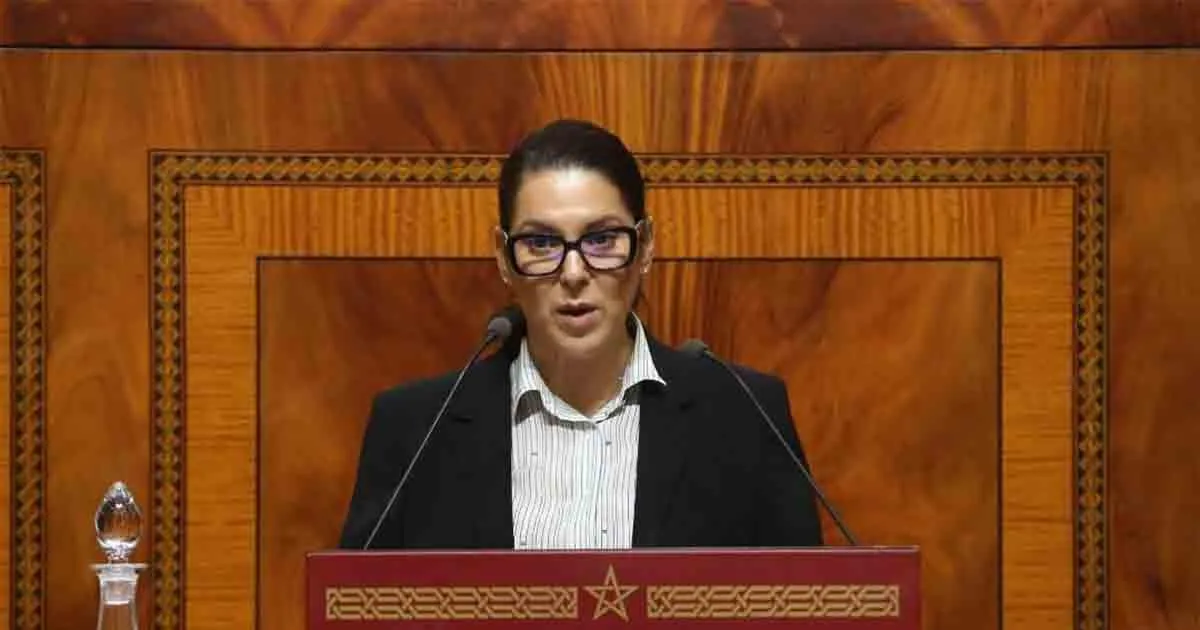
In a significant move to reshape the economic landscape of Morocco, the Head of Government, Fatima-Zahra Mansouri, has presented a comprehensive policy programme to Parliament, aimed at promoting integrity within public life, enhancing oversight on public contracts, stimulating investment, and accelerating economic growth. This agenda is designed to run parallel with the structural reforms initiated by the previous administration, raising pertinent questions about the extent of the promised changes, particularly in areas such as employment, purchasing power, and social equity. During her inaugural address to both the House of Representatives and the House of Councillors, Mansouri unveiled a strategic plan extending to 2031 that seeks to harmonize the continuity of vital state projects with new initiatives aimed at combating corruption and bolstering economic performance.
Strategic Measures to Foster Growth and Combat Corruption
Among the key commitments outlined, the head of government emphasized that restoring public trust in institutions is fundamentally linked to the confrontation of corruption, rent-seeking behaviors, and conflicts of interest. To address these issues, Mansouri announced ambitious plans to complete the national integrity framework by criminalizing illicit enrichment, enforcing penalties for conflicts of interest, enhancing mandatory asset declarations, and mitigating leaks of confidential information that could lead to unwarranted privileges. Furthermore, the government has pledged to establish a dedicated mechanism in collaboration with the Competition Council to oversee public procurement rigorously and investigate any suspected collusion during competitive bidding processes. As part of this initiative, 30 percent of the value of public procurement is to be reserved for Moroccan small and medium-sized enterprises (SMEs), thereby broadening their participation in the domestic economy and reducing the concentration of commercial opportunities among larger firms.
These initiatives reflect a commitment to align economic reform with principles of integrity and equality of opportunity; however, their effectiveness will hinge on the establishment of robust enforcement mechanisms, the efficacy of regulatory oversight, and consistent application of rules across institutions. The introduction of a quota for SME procurement also presents challenges, particularly concerning the technical and financial capabilities of smaller enterprises to meet the necessary tender specifications and successfully access these opportunities.
In her address, Mansouri projected an optimistic outlook for the economy, forecasting an average annual growth rate of 5 percent from 2027 to 2031, while keeping inflation around 2 percent and capping the budget deficit at 3 percent of GDP. The government aims to reduce public debt to 62 percent of GDP by 2031, with strategies to broaden the tax base, enhance the efficiency of public spending, and increase the role of state-owned enterprises in financing the economy. Additionally, the government is focused on raising the private sector's share of total domestic investment to two-thirds by advancing the Investment Charter, expediting contracted projects, reforming Regional Investment Centres, and facilitating enterprise financing and credit guarantees.
In the tourism sector, Mansouri has laid out a strategic roadmap for the years 2027 to 2030, with a goal of attracting 26 million visitors by the end of the decade. This includes initiatives aimed at promoting the social economy and the sports industry, which are integral to diversifying growth drivers, generating added value, and fostering sustainable employment. However, achieving these ambitious targets will necessitate aligning new investments with labor market demands and ensuring the integration of youth into the workforce.
Employment remains a critical challenge, and the proposed plan notably lacks a specific commitment to creating one million net jobs during the legislative term, a key pledge made by the Authenticity and Modernity Party (PAM) during the campaign. Furthermore, essential targets, timelines, and financial implications for commitments such as stabilizing basic commodity prices and reducing wage taxes remain inadequately specified.
Mansouri has also committed to advancing reforms in healthcare and education while strengthening social safety net programs, alongside significant investments in housing, water security, renewable energy, and infrastructure. The government has set an ambitious goal of achieving “zero school dropouts” by 2030 in primary and secondary education, with the aim of having at least 80 percent of pupils mastering foundational competencies by 2031. This will be supported by expanding the
As reported by middle-east-online.com.