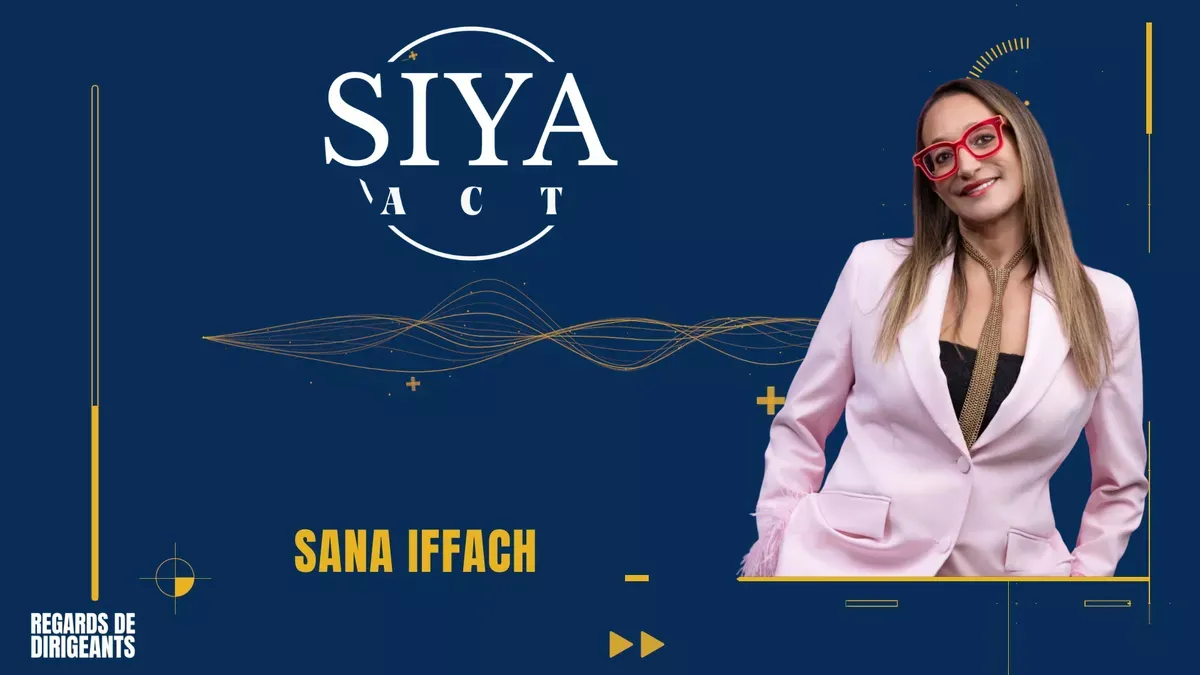
Morocco is once again capturing the attention of French companies seeking to expand their markets. However, there remains a significant gap between the desire to enter this growing market and the ability to establish a sustainable business presence. Sana Iffach, founder of SIYA ACT, asserts that success hinges less on having an extensive network and more on understanding the ecosystems, territories, and economic codes of the Kingdom.
There is often a vast difference between wanting to enter a market and knowing how to conduct business successfully within it. Morocco serves as an intriguing case study today. French inquiries are proliferating in sectors such as digital technology, telecommunications, data centers, energy, hospitality, and infrastructure. However, the era in which merely establishing a subsidiary in Casablanca was considered sufficient for market entry is long gone.
“The question is no longer, 'What do you come to sell?' but rather, 'What do you come to build?'” summarizes Sana Iffach. After over twenty-five years in telecommunications and new technologies, the founding president of SIYA ACT now assists French and Francophone companies in their commercial development in Morocco and, more broadly, in Africa. Her role involves understanding a need, identifying the right contacts, facilitating meetings, and, most importantly, creating the conditions for a relationship that can lead to concrete projects.
The Franco-Moroccan Thaw Changes the Game
This activity commenced during a time when relations between Paris and Rabat were fraught with significant diplomatic tensions, particularly marked by visa crises and the Sahara issue between 2021 and 2023. However, the political rapprochement that began in 2024 has undoubtedly injected a new momentum into these interactions.
According to Iffach, this dynamic should not be solely attributed to the diplomatic thaw. Morocco has been undergoing a profound transformation of its infrastructure, industry, logistics capabilities, telecommunications, and renewable energy for several years. The realms of digital technology, data, and artificial intelligence have now become integral to this equation.
While the improved relations with France have given additional impetus to this momentum, they did not create it. For Iffach, the critical issue is ensuring that this new economic relationship does not solely benefit large corporations. “A CAC 40 company already has the teams and networks needed to develop internationally. A small or medium-sized enterprise (SME) or intermediate-sized enterprise (ETI) looking to expand in Morocco needs to understand where opportunities lie, who the decision-makers are, and how local ecosystems operate,” she emphasizes.
For such businesses, the initial challenge is not necessarily to find support for establishment or office space. Rather, it begins with comprehending the market as it actually functions from France, followed by identifying partners capable of advancing the project. This seemingly subtle difference fundamentally alters the approach to market entry.
Morocco Extends Beyond Casablanca
The nature of the projects that come across Iffach's desk has also evolved. They are now more mature, targeted, and free from traditional frameworks. Some companies no longer prioritize major metropolitan areas. She cites the case of a French company that approached her for establishing operations in Oujda, in the eastern part of the country, with a well-defined industrial and technological project. This decision was driven by economic realities and the ambition to anchor the business locally by training young people from the region.
Thus, the approach to the Moroccan market is also evolving. Companies are no longer merely looking for a landing spot; they seek a territory and an ecosystem compatible with their operations. “For a French company, the question is no longer where to set up shop in a major city, but rather where its market is located,” summarizes Iffach.
The timeline also necessitates acceleration. The upcoming 2030 World Cup highlights the infrastructure needs, but the economic benefits are already taking shape, far exceeding the scope of a mere sporting event. Telecommunications, fiber optics, data centers, cybersecurity, energy transition, mobility, hospitality, and training needs are all materializing today. Waiting until 2029 to engage with the market would, according to her, risk arriving after the initial commercial battles. “2030 is built now,” she reminds us.
Merely submitting a hundred-page report or sharing a list of prospects does not resolve issues. “A company established in Morocco for ten years may very well manage its operations yet struggle with specific hurdles: access to a key decision-maker, integration into a very closed ecosystem, or understanding local arbitration,” analyzes Iffach.
This encapsulates the dilemma of foreign establishments. A subsidiary can manage day-to-day operations without having a comprehensive understanding of all networks and ecosystems. A company can know its sector, clients, and regulatory environment without knowing whom to approach for advancing a specific project.
Even a well-established company may require external connections. Iffach specifically mentions Tessi, which, despite knowing the Moroccan market, sought access to a targeted ecosystem and contacts.
The value of a network is not measured by the number of business cards collected but by the ability to connect two people at the right place, at the right time, with the right level of information. This targeted networking is precisely the work SIYA ACT undertakes. It is not about randomly opening doors but rather understanding what a company truly seeks and determining who can help it move forward.
This philosophy has led to the creation of Let’s Connect Africa, developed with partners, aiming to renew the model of major economic events. The principle is not to wait for the right people to meet by chance. Interviews, media visibility, and B2B meetings are organized around a prepared matchmaking logic.
In Marrakech, this initiative successfully brought together businesses, investors, and entrepreneurs. In one operation, 118 companies were gathered, resulting in 147 organized B2B meetings, 12 agreements concluded, and over 30 interviews conducted. The ambition is now to deploy this model in other Moroccan territories, particularly with an innovative concept named “Generation(S) TECH.”
For Iffach, economic interactions can no longer be envisioned solely between companies. “It is essential to connect businesses to territories, institutions, universities, investors, and talents.” Her conviction lies in the belief that in a transforming market, international development is not just about circulating products and capital. It is also about circulating skills, ideas, and connections.
With Generation(S) TECH, “I believe in a human-centric digital landscape, rooted in our territories, driven by our talents, where Africa is no longer just following but leading the way.”
This approach also explains why Iffach prefers to describe Morocco as a bridge to Africa rather than just a gateway. The distinction is far from semantic. The continent does not represent a homogenous market. The economic realities of Senegal, Côte d'Ivoire, Cameroon, or Benin differ profoundly.
“There is not one Africa. There are multiple Africas,” she reminds us. Nevertheless, Morocco possesses unique advantages: its proximity to Europe, its infrastructure, its air connections, its companies operating in various African countries, and its industrial and technological positioning. This combination gives Morocco a distinctive capacity to facilitate the movement of companies, capital, and skills between the two shores of the Mediterranean and the rest of the continent.
However, this position does not exempt businesses from understanding the markets they are targeting. A company relying on Morocco to expand its activities in Africa must navigate the specific realities of each country and collaborate with local partners. Morocco can serve as a bridge; it cannot become a shortcut.
Iffach herself hails from this Moroccan diaspora, having built part of her career in France before returning to Morocco. She views these international journeys as an economic resource that remains largely underexploited. She advocates for the idea of a “13th Region” to complement the twelve administrative regions of the Kingdom: that of Moroccans living abroad, whether in France, Canada, Belgium, Africa, or elsewhere.
Their value lies not only in the capital they can invest but also in their roles as engineers, entrepreneurs, leaders, researchers, salespeople, and investors, carrying skills and, importantly, international networks. “A Moroccan based in Paris, Montreal, Brussels, Dakar, or Dubai can bring technology, open a market, invest, share knowledge, support a young entrepreneur, or connect a Moroccan company to an international ecosystem,” she emphasizes.
Her own journey exemplifies this: returning to Morocco while maintaining connections built in France and Europe, and, indeed, facilitating relationships between them. This logic aligns with her commitment to young entrepreneurs and her interest in knowledge transfer.
Beyond sectoral opportunities, Iffach identifies four essential conditions for approaching the Moroccan market with greater chances of success. The first is to understand the market as it truly exists, rather than relying on a perception formed from France. The second involves finding the right local partners. The third emphasizes the importance of human relationships and trust in business. The fourth relates to the capacity to create local value.
This last dimension is becoming increasingly significant. For her, Morocco has become more demanding. The question is no longer merely what a company comes to sell, but what it can contribute to the territory: jobs, training, skill transfer, technology, or investment.
This shift in perspective is particularly critical for SMEs and ETIs, which may not have the resources of large corporations to decode a foreign market. A successful establishment, therefore, does not merely hinge on legal or financial frameworks. It requires understanding local practices, building trust, and knowing why the company should be present in this territory rather than another.
“What can you build with Morocco?” is ultimately the question that encapsulates her vision of economic development between the two shores of the Mediterranean. Morocco is no longer just a territory for cheaper production or a location near Europe. It seeks to attract skills, develop its territories, upgrade its businesses, and strengthen its connections with the rest of the African continent.
For French companies, this shift in perspective is monumental. It is no longer sufficient to simply inquire about available assistance, which city to choose, or what implantation costs to anticipate. They must understand the market, identify the right partners, create local value, and accept that human relationships are integral to commercial development. Iffach articulates this succinctly: “Do not come solely to ask what you can sell in Morocco. Ask yourself what you can construct with Morocco.”
As we approach 2030, the difference between these two approaches may well determine which French companies remain mere observers and which will successfully establish themselves within the new Moroccan ecosystem.
As reported by lefigaro.fr.