News
•
October 27, 2026
•
5 min read
Morocco's Strong Bid for Permanent UN Security Council Seat Amidst African Representation Debate
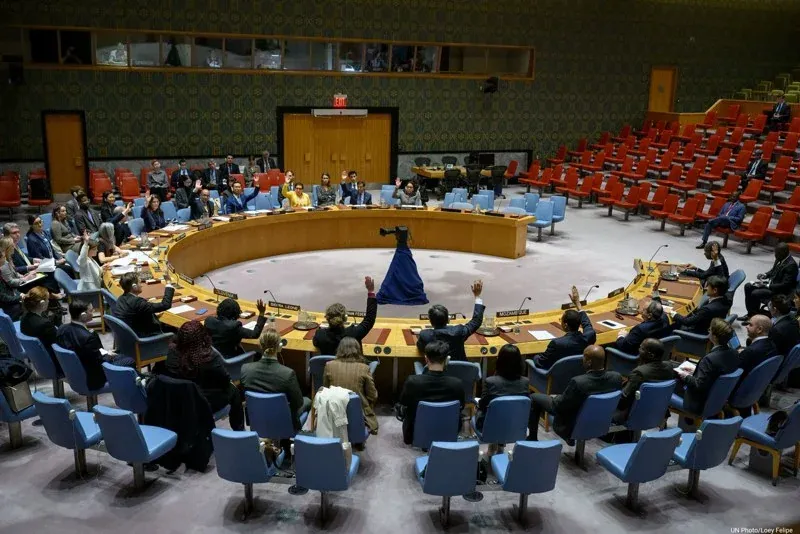
In recent discussions at the 2026 Global Governance Forum in Xiong'an, Chinese Foreign Minister Wang Yi emphasized the critical need for reforming the United Nations system to ensure permanent representation for Africa in the UN Security Council. This announcement has reignited a significant dialogue surrounding the prominent candidates vying for this coveted membership, a cause that has also garnered support from the United States, advocating for two permanent seats for the African continent without the veto power. The absence of African representation in the Security Council is seen as a glaring structural flaw in the contemporary international system. This political paradox traces back to the post-World War II context when most African nations were still under colonial rule. Today, however, Africa has transformed into a demographic and geopolitical force that cannot be overlooked, particularly as criticisms mount against the Security Council for monopolizing the management of the continent's security and political affairs without granting it a seat to advocate for its interests and aspirations.
While numerous international powers theoretically agree on correcting this political injustice—which would necessitate amending the UN Charter and securing the approval of two-thirds of the UN General Assembly members—the fundamental question arises regarding which country is qualified to bear this historic mandate. In this context, Morocco stands out as a strong candidate against traditional competitors burdened by structural crises and geopolitical weaknesses. The institutional legitimacy and stability doctrine underpin Morocco's bid; the kingdom exemplifies a model that combines internal stability and diplomatic reliability, alongside a robust track record in peacekeeping missions and extensive investments and projects across Africa. Morocco's constitution underscores its commitment to strengthening cooperative and solidarity relations with African nations, particularly those in the Sahel and Sub-Saharan regions.
Despite several countries, including South Africa, Algeria, Egypt, Nigeria, and Ethiopia, being mentioned as potential representatives for Africa in the Security Council, a closer examination of their policies and orientations reveals structural impediments that render their representation unlikely. For instance, Pretoria grapples with a severe economic crisis and sharp internal divisions exacerbated by ideological entanglements that have tarnished its international relations. Furthermore, its stances on various regional issues have created divisions within the African community, undermining its credibility as a reliable player for global consensus.
Moreover, human rights organizations such as Human Rights Watch and Amnesty International have leveled severe criticisms against South Africa due to rising waves of violence and hatred towards migrants, known as xenophobia, which have strained its relations with neighboring countries. The ruling African National Congress has maintained a dominant grip on the state apparatus for decades, coupled with extreme stances and a profound corruption problem plaguing the country’s economy.
In the same vein, Algeria, which failed to secure membership in the BRICS organization, finds its economy heavily reliant on the volatile hydrocarbons sector (oil and gas) and has not integrated into non-oil global supply chains. Additionally, its involvement in regional conflicts and interference in the internal affairs of neighboring countries—recently illustrated by its military deployment to Niger—could result in significant repercussions for the North African state.
Nigeria, another candidate, boasts a substantial demographic weight as Africa's most populous nation. Yet, the criteria for permanent membership in the UN Security Council extend beyond mere size and population; they require a demonstrated capacity to export stability and ensure regional and international security. Unfortunately, Nigeria is plagued by chronic structural security crises within its borders, facing ongoing terrorist insurgencies led by Boko Haram and the Islamic State in West Africa, alongside economic challenges that have increased unemployment and poverty levels in a region already riddled with ethnic and religious conflicts that have given rise to secessionist movements in the southeastern part of the country.
Media reports have also highlighted Ethiopia's candidacy, which derives its legitimacy from being the diplomatic capital of Africa. However, the internal instability resulting from ethnic civil wars, the fracturing of its federal system based on ethnic identities, and tensions with neighboring countries—particularly with Egypt over the Grand Ethiopian Renaissance Dam crisis—diminish Ethiopia's capacity to represent collective African interests in the Security Council.
Close to Ethiopia, Egypt emerges as a formidable competitor for a permanent seat in the UN Security Council, leveraging its strategic geopolitical position as a bridge between Africa and the Arab world, alongside its significant military presence in the region, coupled with a historic diplomatic record within the UN and the African Union. Despite Cairo's political capital, some analyses suggest a gradual erosion of Egypt’s regional influence in recent years in favor of emerging powers, particularly concerning its inability to resolve the Grand Ethiopian Renaissance Dam issue through a binding legal agreement, as well as a decline in its roles in stabilizing neighboring Libya and Sudan, where other regional actors have begun to assume the keys to political and military influence.
In comparing the candidacies of potential candidates for permanent membership in the Security Council, which bears the primary responsibility for maintaining international peace and security, it becomes evident that Morocco is not merely an additional name on the list, but rather, it is the most realistic option for representing the voice of Africa in this international body. Morocco's experience in diplomatic mediation, regional security maintenance, counter-terrorism efforts, economic openness, and balanced international relations positions it as the most deserving candidate to undertake this historic mandate.
As reported by hespress.com.
 News