Moroccan Government Plans Significant Budget Increase
The new Moroccan government has set ambitious goals for the upcoming fiscal year, targeting an increase in the budget to 825 billion dirhams (approximately 82.5 billion USD), which represents an annual growth of 8.44%. This strategic move is coupled with expectations of revenue growth by 10.39%, amounting to 786 billion dirhams, a plan designed to reduce the national budget deficit.
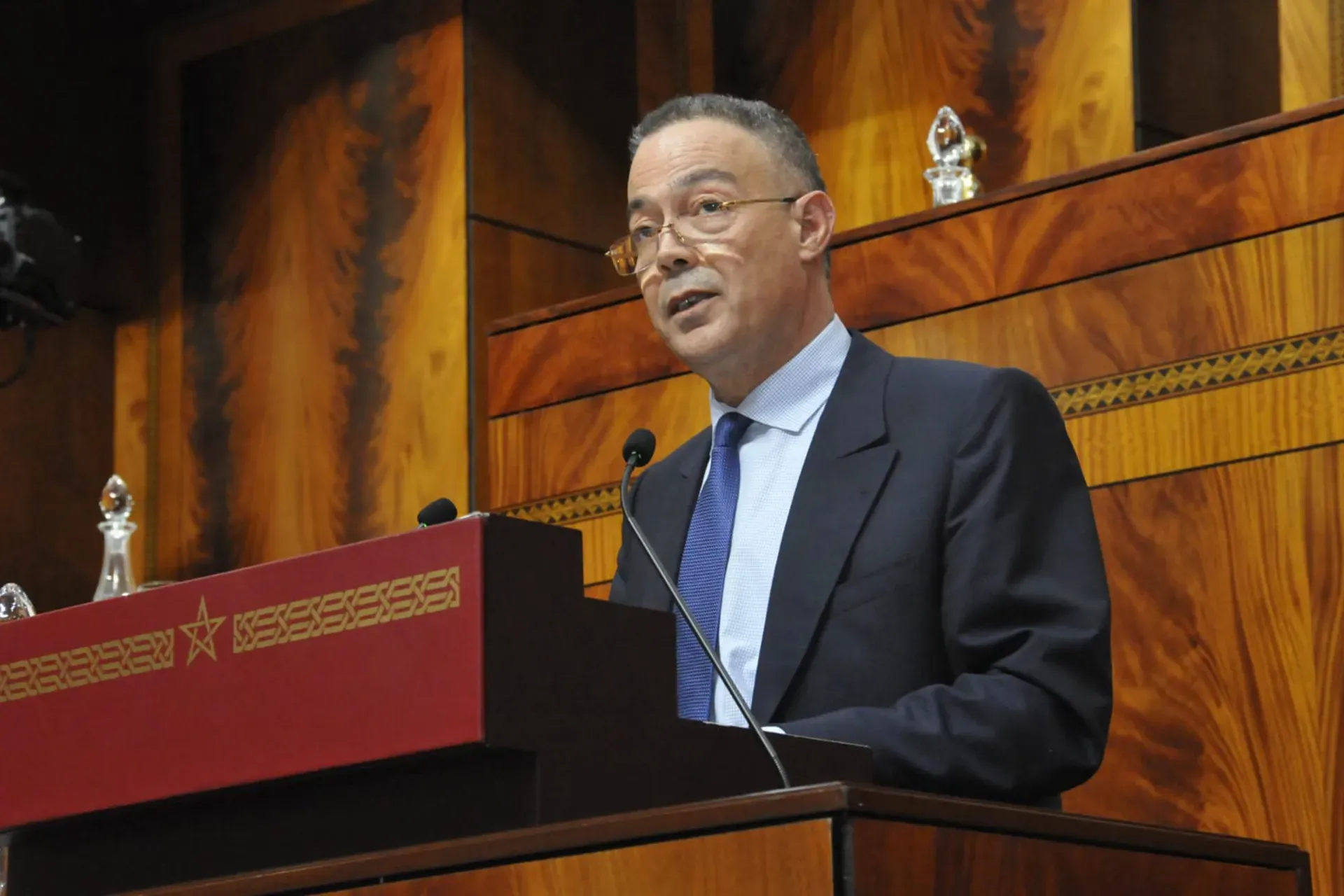
According to the proposed financial law for 2027, which was approved on Tuesday, the government anticipates a decrease in the deficit by nearly 20%, bringing it down to 38.9 billion dirhams, thereby stabilizing it at 3% of the Gross Domestic Product (GDP)—a target also aimed for this current year. The parliament began discussions on the proposal on Friday. During the presentation of the budget proposal to lawmakers, Minister of Economy, Finance, and Public Administration, Fawzi Lekjaa, stated that "this draft law aims to create a fundamental turning point that reconstructs the balance of the economic and social system while addressing existing imbalances."
Anticipated Economic Growth and Strategic Investments
Since assuming office on September 29, Fatima Zahra Mansouri has become the first woman to lead the Moroccan government, heading a coalition comprising four parties after her party, the Authenticity and Modernity Party, won the parliamentary elections held on September 23. Her term is expected to last five years until 2031.
The Moroccan government forecasts an economic growth rate of 3.7% for the upcoming year, a decrease compared to the 4.7% growth anticipated for the current year. This slowdown is attributed to the agricultural sector returning to its usual levels after an exceptional season. Moreover, the government projects increases in tax revenues and transfers from state-owned enterprises by up to 22% next year, with corporate tax revenues expected to rise by approximately 31% and income tax by 10.5%.
The International Monetary Fund (IMF) has recently adjusted its growth forecasts for Morocco's economy for 2026 downward by 0.4 percentage points compared to its estimates in April, now predicting a rate of 4.5%, while still positioning Morocco as having the third-best economic performance in the Middle East and North Africa region. The IMF has also reduced its projection for 2027 by 0.3 percentage points to 4.2%.
In terms of borrowing, the government plans to reduce its borrowing to 123 billion dirhams in the upcoming year, a decrease of 2.4% compared to last year. The budget proposal allows for borrowing up to 63 billion dirhams from the domestic market and 60 billion dirhams from international sources. In contrast, public investment is projected to reach approximately 400 billion dirhams for the first time, marking a 5.2% annual increase and accounting for 20.1% of GDP. State-owned companies and the Mohammed VI Sovereign Fund will be responsible for executing about half of these investments.
Minister Lekjaa emphasized that the proposal "combines mobilizing available financial resources to meet obligations and continuing to build financial margins in an international environment that demands vigilance and proper prioritization."
In light of economic challenges, the government has outlined several priorities for the upcoming year aimed at protecting purchasing power and stabilizing basic commodity prices, completing the rollout of social protection, and increasing budgets for health and education sectors, which will cost approximately 62 billion dirhams, as detailed in the budget text.
The minister noted that these measures come amid expectations of inflation being contained at 0.7% this year and 1.5% next year, with foreign reserves covering around six months of imports, which bolsters the economy's capacity to withstand external fluctuations. Consumer prices saw an increase of about 0.5% year-on-year in September after two months of contraction, and forecasts indicate a rise by the end of the year, driven by soaring transportation costs, especially as retail fuel prices have exceeded 1.5 USD per liter, marking some of the highest levels ever, given Morocco's reliance on imported fuels.
Among the key measures in the 2027 budget are:
- Raising the corporate tax rate from 35% to 40% for companies in the hydrocarbon sector with net profits of 100 million dirhams or more.
- Creating 34,454 government jobs, reflecting an annual decrease of approximately 6.6%, including 14,000 positions in the Ministry of Interior and 5,500 jobs in the Defense Administration.
- Increasing the minimum pension to 1,700 dirhams, benefiting half a million retirees, including over 150,000 widows.
- Raising the pension transfer rate for widows from 50% to 100% for around 431,000 widows.
- Covering the electricity bills for approximately 6 million customers whose monthly charges do not exceed 100 dirhams.
- Increasing direct financial support for needy families by 100 dirhams to 600 dirhams per month.
- Boosting the health sector budget by 3 billion dirhams to 45.4 billion dirhams.
- Increasing the education sector budget by 5.3 billion dirhams to 121.3 billion dirhams.
As reported by alborsaanews.com.