Understanding the Tomato Brown Rugose Fruit Virus in Morocco
A groundbreaking study conducted by the National Institute for Agricultural Research (INRA) in Agadir and the Spanish CEBAS-CSIC has shed light on the Tomato Brown Rugose Fruit Virus (ToBRFV) that poses a significant risk to Morocco's tomato exports. Published on September 17, 2026, in the scientific journal _Viruses_, this research, led by Ayoub Maachi, alongside colleagues Livia Donaire and Miguel A. Aranda, investigates the genetic characteristics of the virus found in tomatoes sold across the Souss-Massa region.
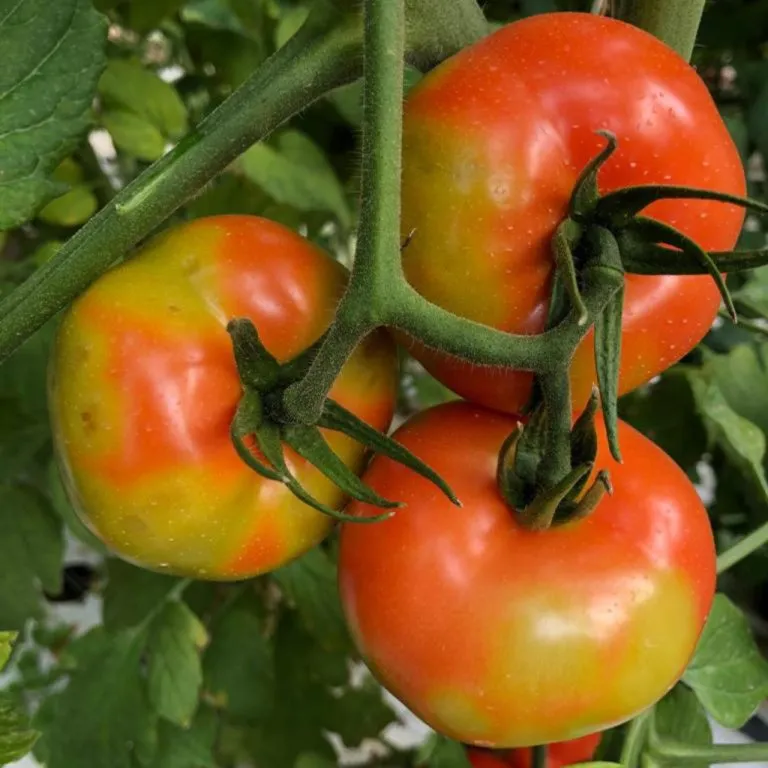
Over a two-month period from May to June 2025, the researchers collected 100 tomatoes from 18 different vendors across seven markets. The selected fruits exhibited irregular ripening and symptoms indicative of viral infection. Utilizing RT-PCR analysis, the team detected the presence of ToBRFV in 50 of the samples. However, it is important to note that this finding should be interpreted within the constraints of the sampling protocol, as the fruits were specifically chosen for their symptoms and do not represent a random sample of the overall production.
The 50% positivity rate observed does not allow for accurate estimations of the total proportion of contaminated tomatoes in the Souss-Massa region, nor does it indicate the extent of affected farms. Nonetheless, it effectively documents the presence of the virus in the analyzed fruits. Comparisons of the genetic material revealed a nucleotide identity ranging from 99.45% to 100% across the analyzed regions, indicating a high level of similarity consistent with the low global diversity of the ToBRFV.
Genetic Diversity and Implications for Agricultural Practices
Further analysis of the virus's genetic diversity led to the identification of 27 distinct haplotypes, categorized into four main groups. While some subgroups primarily consisted of samples from a single location, several genetic profiles were shared among different areas. The researchers speculate that geographic factors, possibly in conjunction with agricultural practices, play a crucial role in shaping the viral population dynamics.
The study also highlights a notable genetic relationship between the predominant Moroccan group and viral sequences from Jordan and Israel, as well as similarities with certain sequences from Italy. This suggests that the introduction of the virus into Morocco may have been limited in number, although these genetic similarities do not establish direct importation from these countries. Distinguishing between genetic relationships and tracing the pathways of contamination is complex and requires additional data.
Moreover, the study identifies a specific substitution, E132K, in the movement protein of some Moroccan variants, which is involved in the virus's spread within the plant. The authors call for biological testing to ascertain the functional implications of this variation, noting that current findings do not confirm whether it enhances the virus's aggressiveness or allows it to overcome new varietal resistances.
These findings build upon existing phytosanitary observations, with the ToBRFV first detected in October 2021 in Souss-Massa and subsequently in Dakhla in March 2022. As of October 2023, the virus's status is categorized as an organism present, with limited distribution under official control.
For local producers, ongoing genetic monitoring complements daily preventive measures. The INRAE technical sheet emphasizes the importance of hygiene practices in cultural operations to prevent the spread of the virus, given its stability on various surfaces. This Moroccan-Spanish research lays a scientific foundation for monitoring the evolution of ToBRFV in Morocco, indicating that broader sampling, including asymptomatic fruits and other production basins, is necessary to clarify the actual diversity present. Further experiments on the identified variants are essential to connect their genetic differences with their behavior in plants.
As reported by agrimaroc.ma.