The Houthi Takeover and Its Impact on Yemen's Political Transition
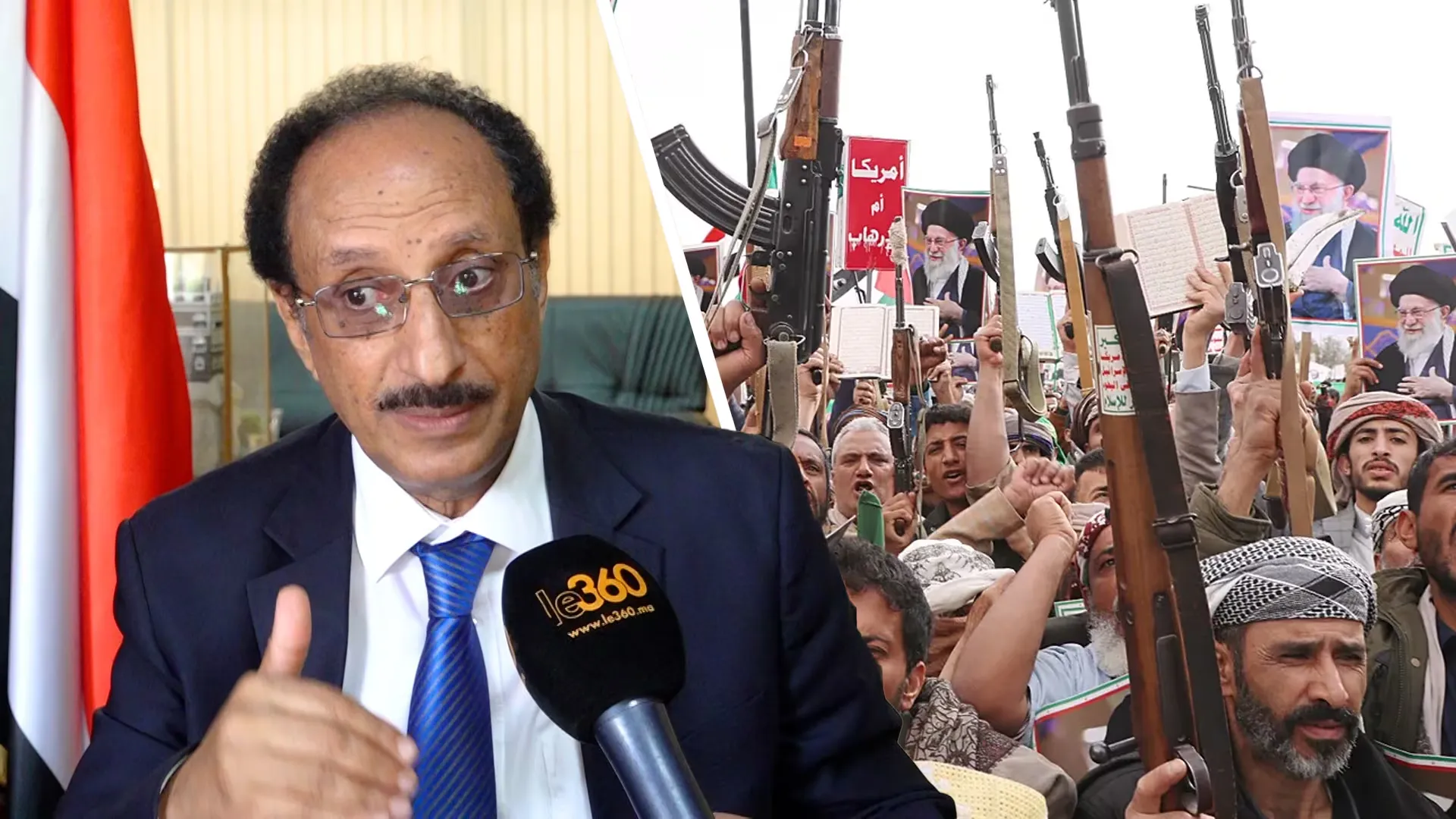
The takeover of Sanaa by the Houthis in September 2014 marked a significant halt to Yemen's political transition, asserts Ezzadin Saeed Al-Asbahi, Yemen's ambassador to Morocco. In an enlightening interview with Le360, the ambassador emphasized the need for restoring state authority and its monopoly on arms, framing these as essential prerequisites for achieving an inclusive political solution. Following the 2011 uprising, Yemen's transition was aimed at establishing a new constitution. The National Dialogue Conference, supported by the United Nations and held from March 2013 to January 2014, brought together key political and social factions, including the Houthis, and laid the groundwork for a federal state. However, the territorial divisions that emerged were met with backlash, particularly from the Houthi movement and southern representatives.
In September 2014, the Houthis, allied with military units loyal to former President Ali Abdullah Saleh, seized control of the capital, Sanaa. This escalation continued until March 2015, when a coalition led by Saudi Arabia intervened in support of the Yemeni government. The ambassador characterized this power grab as a "coup against legitimate institutions" and a direct challenge to the achievements obtained during the national dialogue and the federal state project.
The Houthi Movement: Origins and Regional Implications
Known as Ansar Allah, which translates to "Partisans of God," the Houthi movement derives its name from the Al-Houthi family, especially from founding figure Hussein Badreddine Al-Houthi. Emerging from the Zaydi religious revival in the 1990s in northern Yemen, the movement has evolved into a politico-military entity. However, its roots in this branch of Shia Islam do not imply that it represents all Zaidis. Ambassador Al-Asbahi criticized the Houthis for promoting a doctrine he describes as "religious and sectarian," which he claims asserts a divine right to rule, thereby disrupting the diverse confessional, cultural, and geographic fabric of Yemeni society.
The ambassador highlighted the connections between the Houthis and Iran, suggesting that these ties have added a regional dimension to the conflict. He accused Tehran of supplying the movement with missiles and drones, using it as a strategic leverage against neighboring countries and vital maritime routes in the Red Sea and the Bab el-Mandeb Strait. While experts from the United Nations have documented Iranian military support and the supply of military components, Tehran denies these accusations of violating the arms embargo.
Moreover, Al-Asbahi expressed skepticism regarding peace initiatives, noting that the Houthis have exploited periods of calm to bolster their military capabilities. The Stockholm Agreement, concluded under UN auspices in December 2018, primarily addressed a ceasefire in Hodeidah, troop redeployment in the city and its ports, prisoner exchanges, and arrangements concerning Taiz. However, it did not represent a comprehensive peace agreement to end the conflict.
The ambassador reiterated that the military actions undertaken by government forces aim to restore state authority and its control over arms, facilitating a return to an inclusive political process. He reaffirmed his commitment to the vision of a federal state.
As for the bilateral relations between Morocco and Yemen, Al-Asbahi characterized them as "historic, solid, and exemplary." He recalled Morocco's support for the internationally recognized Yemeni government, as well as its commitment to Yemen's unity and sovereignty. In return, Yemeni authorities have consistently reaffirmed their support for Morocco's territorial integrity and the legitimacy of its claims over the Sahara. Furthermore, the ambassador expressed Yemen's desire to draw inspiration from Morocco's experiences in transitional justice, reconciliation, and advanced regionalization. He hopes to enhance academic and cultural exchanges, particularly through scholarship programs for Yemeni students. Professional training also represents a vital area for collaboration, as exemplified by a delegation led by the ambassador's visit in August 2024 to the City of Trades and Skills in Tamesna to explore partnership opportunities with the Office for Vocational Training and Employment Promotion (OFPPT).
As reported by fr.le360.ma.