Exploring Mauritania's Independence and Historical Context
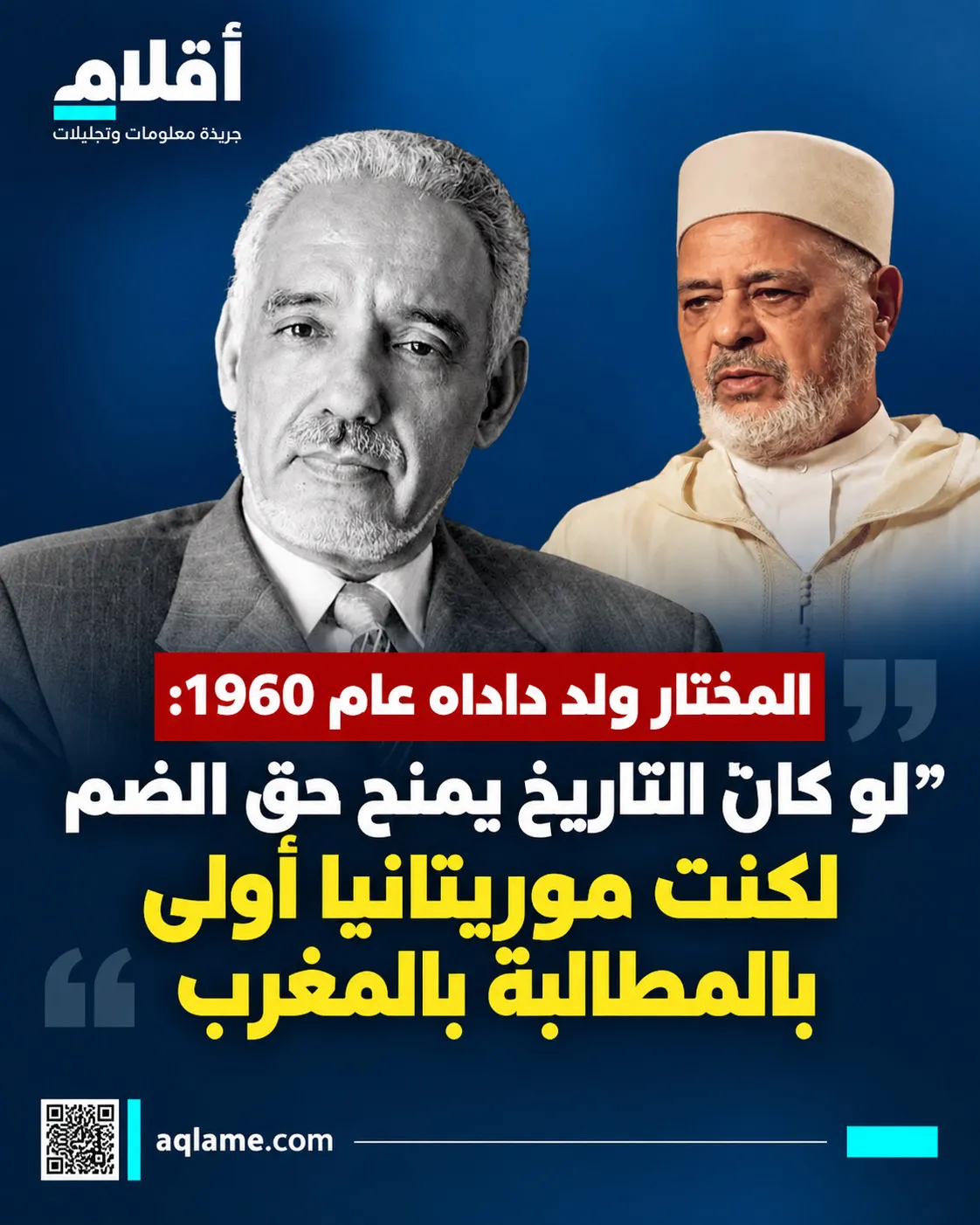
Approximately three months before Mauritania achieved independence, its founding father, Mokhtar Ould Daddah, articulated his position on Morocco's claims to annex the country, firmly rejecting the notion that historical ties or shared language and culture could serve as a basis for infringing upon Mauritania's sovereignty. This significant declaration was made during a radio interview broadcast on September 8, 1960, where Ould Daddah responded to questions posed by journalist Jean Lacouture regarding the arguments underpinning these territorial demands.
Ould Daddah asserted that invoking past events does not grant nations the right to claim the territories of others in contemporary international relations. To elucidate his viewpoint, he referenced the history of European empires and their expansive influence, questioning the enduring legitimacy of borders established during historical periods of domination. His reflections on the relationship between the Moroccan Sultan and Mauritania highlighted that the Sultan's proclamations, which were acknowledged in Timbuktu at certain points in history, did not extend recognition in the historic Mauritanian cities such as Oudane, Chinguetti, Atar, Tagant, Tichit, and Walata.
The Unique Identity of Mauritania
In contrast, Ould Daddah drew on the legacy of the Almoravids, who originated from what is now Mauritania, near the Senegal River and the current region of Nouakchott, before traversing the Sahara to establish Marrakech. He argued that while this historical logic could empower Mauritania to assert claims towards Morocco, he firmly emphasized that his nation does not harbor expansionist ambitions or seek to manipulate history for such purposes. Furthermore, he rejected the notion that a shared language serves as evidence of political dependency. He pointed out that he speaks French and has been influenced by French culture without being French himself, citing examples of Belgians and Swiss who speak French, as well as Americans who communicate in English while maintaining their distinct national identities.
Ould Daddah raised the pertinent question of why the linguistic argument was specifically directed at Mauritania, while numerous Arab countries, including Algeria, Tunisia, the United Arab Republic, and Iraq, share language and cultural ties yet assert their independence and sovereignty. He affirmed the pride Mauritanians take in their Arab culture, clarifying that this affiliation does not negate their unique identity. He recalled the presence of Mauritanians in the Arab East, especially in Mecca and Medina, where they were recognized for their distinct identity separate from that of Moroccans and the people of Marrakech.
In conclusion, Ould Daddah maintained that sharing religion, culture, and heritage does not equate to the dissolution of one people into another, nor does it justify the annexation of one state by another. His reflections remain a vital part of the discourse surrounding Mauritania's independence and its relationship with Morocco, emphasizing the importance of national sovereignty and unique cultural identity.
As reported by aqlame.com.