US Military Considers Strategic Options Against Iranian Nuclear Facilities
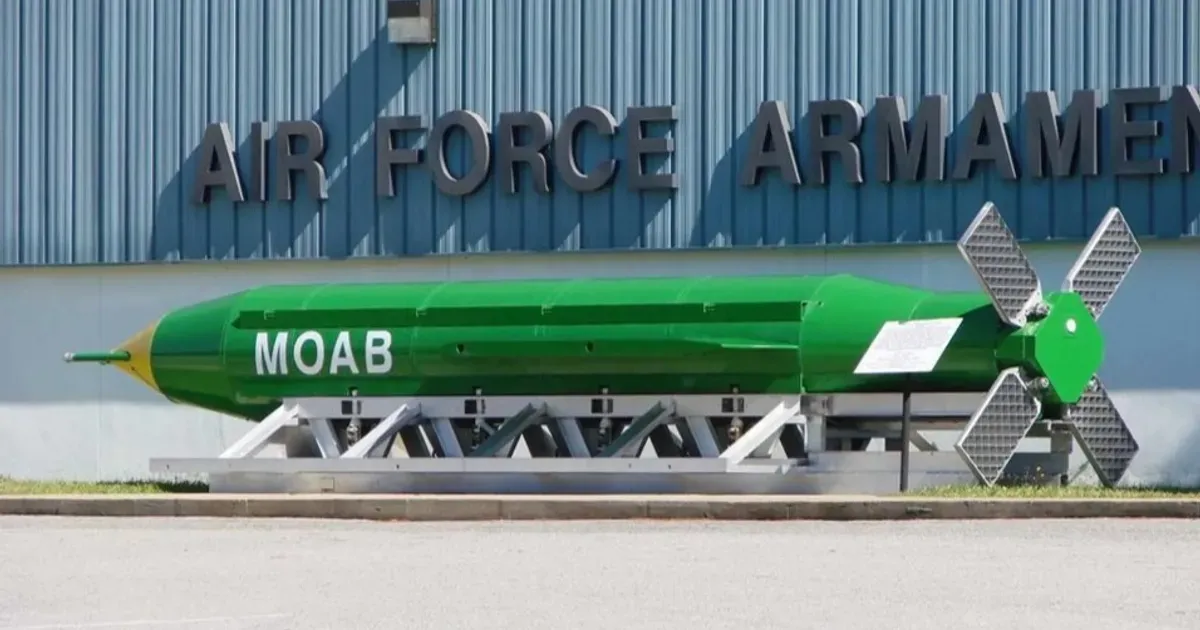
The United States military is reportedly devising new strike plans that include the potential deployment of the Massive Ordnance Air Blast (MOAB), commonly referred to as the "Mother of All Bombs," to target Iran's energy infrastructure and nuclear sites. This strategy hinges on whether President Donald Trump issues an order to resume military operations, as outlined by U.S. officials to CNN. The use of the GBU-43/B MOAB, the largest conventional non-nuclear bomb in the U.S. arsenal, would signify a notable escalation if employed against Iranian targets for the first time, even as questions linger about its effectiveness in achieving declared strategic objectives or altering the course of the ongoing conflict.
Amid considerable pressure to conclude an unpopular war, President Trump is preparing for potential backlash from voters in the upcoming midterm elections, with no indication that the United States and Iran are nearing a negotiated resolution after over six months of American airstrikes. In a recent interview with Newsmax, Trump remarked, "It’s not nuclear at all, it’s just a very, very large bomb… more like a small nuclear weapon, but it’s not nuclear." This statement underscores the ongoing debate surrounding military tactics and their implications.
Military Options and the MOAB's Effectiveness
A source disclosed to CNN that Trump has instructed the U.S. military to develop additional strike packages against Iranian targets, which include significant energy infrastructure, and the possibility of deploying the MOAB. This development suggests that such an attack could occur "before the withdrawal of U.S. forces from the area of responsibility of U.S. Central Command," indicating that the administration may seek to carry out further strikes, declare victory, and then swiftly withdraw troops.
Another military source confirmed that plans to strike Iranian nuclear sites, including the suspected facility at Mount Behistun, explicitly include the use of the MOAB. In recent months, Trump has repeatedly hinted at targeting Mount Behistun, where both the United States and Israel believe Iran may be stockpiling components related to its nuclear program, even after a reduction in large-scale combat operations earlier in the year.
Despite the destructive capability of the MOAB, there remain significant questions regarding its effectiveness against heavily fortified underground facilities. Although this GPS-guided bomb can obliterate an area equivalent to nine city blocks, it was not specifically designed to penetrate deep fortifications, raising doubts about its ability to destroy underground installations believed to be reinforced with layers of granite and other materials. A military planning discussion participant noted, "The MOAB is a specialized weapon for clearing large areas, but it has limited other applications, and it is certainly not designed to be a penetrative warhead." If deployed, the bomb would undoubtedly cause extensive surface-level destruction, raising concerns about civilian casualties, especially if aimed at Iranian infrastructure located near populated areas.
Developed in the early 2000s and revealed during preparations for the 2003 invasion of Iraq, the MOAB detonates in mid-air before impacting the ground, producing a massive explosion in all directions. Originally intended for use against large formations of troops and equipment or fortified surface bunkers, the target scope has since expanded to include buried targets, such as caves or tunnels. Trump was the first U.S. president to authorize the use of the MOAB during his first term, allowing the military to deploy this powerful non-nuclear bomb against ISIS positions in Afghanistan in 2017, which resulted in the destruction of three underground tunnels used by the group for carrying out attacks.
The MOAB has a total mass of 9,850 kilograms, with explosives comprising approximately 86.3% of that weight. Its aluminum casing weighs around 1,300 kilograms, leaving about 50 kilograms for other components, making it the largest conventional air-dropped bomb in terms of the explosive load. However, its operational launch constraints, specifically against Iran, raise practical questions about available aircraft and delivery arrangements that could support a new MOAB mission.
In conclusion, while the MOAB presents a formidable option in the U.S. military arsenal, its effectiveness against Iran's nuclear capabilities remains uncertain. The complexities surrounding its deployment reflect broader strategic considerations in U.S.-Iran relations that continue to evolve.
As reported by asharq.com.