
Unveiling the Royal Pledge Ceremony
In early March 1980, plans were set in motion for a significant royal pledge ceremony to be held at the Court of Oued Eddahab, with the stipulation that the details would remain confidential until just before the event. My role was to oversee extensive operations, but I was only briefed on the specifics of the ceremony a mere twenty-four hours prior, under the strict condition of keeping the organizational plan a secret. On the evening of March 3, members of the government, including senior officials and elected representatives, were invited to the city of Marrakech. The following day, before nine in the morning, I was under the impression that the pledge ceremony would take place there, as the government officials and military figures had already arrived.
The Arrival and Celebration in Dakhla
On the morning of March 4, guests were transported to Marrakech Menara Airport by bus, awaiting their departure on two Royal Air Maroc flights headed south, with the destination concealed from everyone. From the dawn of this unforgettable day, the city of Dakhla was adorned in its finest attire, featuring floral garlands, welcoming banners in national colors, and other decorative elements. Large portraits of King Hassan II, Crown Prince Sidi Mohammed, and Prince Moulay Rachid enhanced the festive atmosphere, while national music filled the air, transforming the day into a national celebration.
A gentle breeze swept through the city that morning, adding an exhilarating touch to the event as it welcomed the king’s guests. Around eleven o'clock, a Boeing 747 landed at Dakhla Airport carrying His Majesty the King. As he descended into the streets, public squares, and roads, the royal procession was met with applause, cheers, and ululations, accompanied by an indescribable outpouring of popular joy. From the moment the king arrived at the airport until he reached his residence, Dakhla, a unique city with its beautiful surroundings and natural resources, witnessed some of the most delightful moments in its history.
When the king appeared riding a white horse in the designated square for the pledge of allegiance, a sea of people surged forward, eager to catch a glimpse of their king. Representatives from the Saharan regions, all clad in white or blue attire, were the first to approach the king to perform the pledge before stepping aside to make way for subsequent waves of enthusiastic citizens. The ceremony was not only a significant historical event but also attracted attention from both national and international media, much to the dismay of those opposed to our territorial unity. They were compelled to witness the loyalty of the Sahrawi tribes and their pledge to the Alaouite throne, which was met with astonishment and concern.
As the process of completing the liberation of the Sahara progressed hierarchically, a few months later, the architect of the Green March met once again with the people of the Oued Eddahab region during an official visit on March 4, 1980, marking the 19th anniversary of the Throne Day. This visit renewed the strong bonds and solid ties between the Alaouite throne and the people of these resilient regions, paving the way for development and integration of the southern provinces into the national effort for comprehensive and sustainable development.
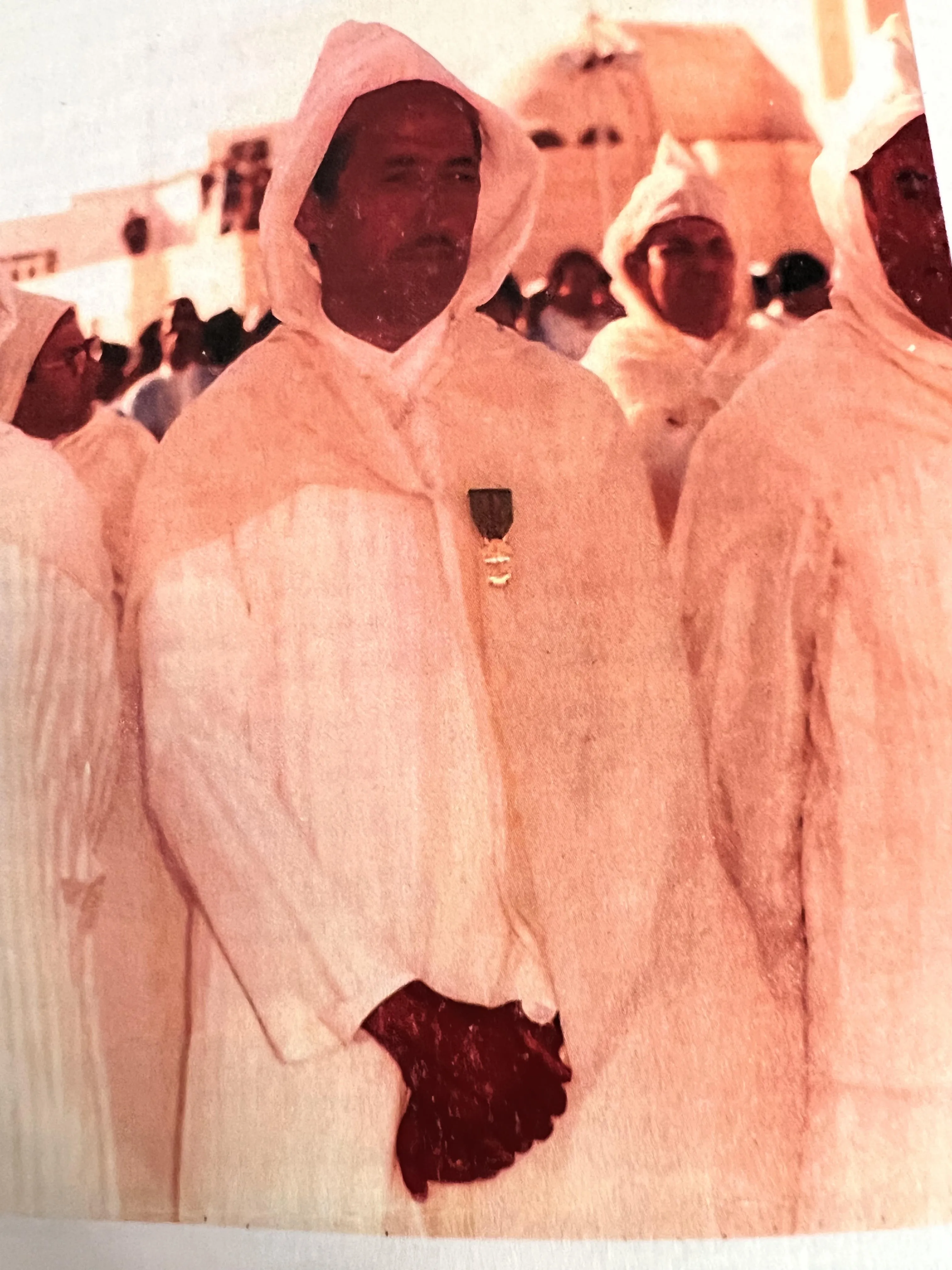
The grand celebrations held in Oued Eddahab on March 4, 1980, only concluded with the departure of the official guests, who were joyfully accompanied by large crowds to the aircraft. In those historical moments, I had the honor of being a witness to the era and contributing to the writing of our kingdom's history. I was privileged to be among a select group of recipients of the Dakhla Medal, commemorating this historic event. This honor was added to the Green March Medal, which I had received a few years earlier from His Majesty the King. Both accolades represent a recognition of my humble yet effective contributions to the Green March and the celebrations of the pledge in Dakhla. Additionally, throughout my professional journey, I have been honored with ranks of Knight, Officer, and Commander, honors I take pride in having earned through my service to my country, my king, and the citizens of this blessed land.
As reported by alakhbar.press.ma.