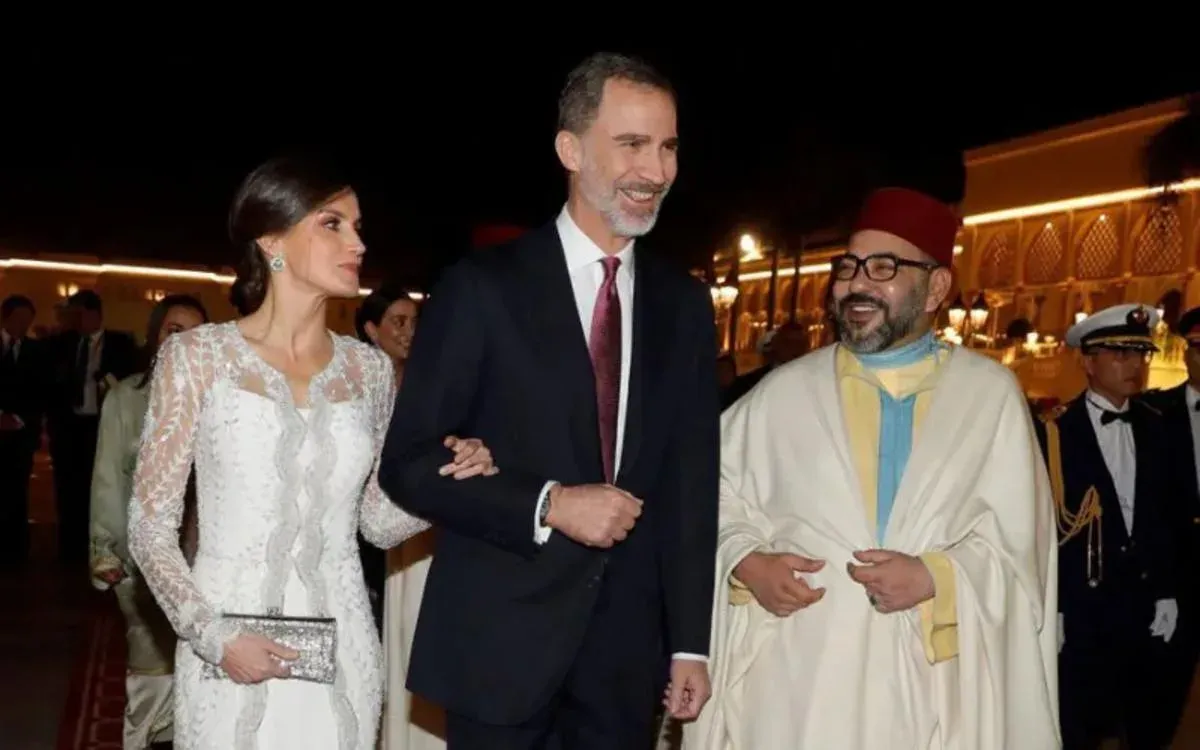
The recent formalization of a future "exceptional treaty" between Paris and Rabat, alongside the state visit of King Mohammed VI to France, signifies a remarkable culmination of a lengthy diplomatic evolution. This relationship has transformed from a personal friendship during Jacques Chirac's presidency to overcoming various crises under Emmanuel Macron's leadership, establishing itself as a vital strategic axis between Europe and Africa.
On May 21, 2026, during the second Ministerial Conference on Peacekeeping, French Foreign Minister Jean-Noël Barrot expressed optimism alongside Moroccan Foreign Minister Nasser Bourita. Barrot underscored what many are now calling **"the major pivot"** in officializing preparations for a bilateral treaty of exceptional status—marking the first of its kind with a non-European nation. This move, coupled with the state visit of King Mohammed VI to France, highlights an unprecedented convergence between the two nations.
The Legacy of Closeness: From Chirac to Sarkozy
This new era is deeply rooted in a rich history that began in July 1999. Upon ascending the throne, King Mohammed VI chose France for his first state visit in March 2000, where he was welcomed by President **Jacques Chirac**. This visit laid the groundwork for a privileged relationship, strengthened by the personal friendship between the two heads of state. This **“golden era”** was marked by Chirac’s historic address to the Moroccan Parliament on October 11, 2003, where he expressed unwavering support for Morocco, praising it as a model of stability and reform in the Arab world, especially in light of the Casablanca bombings that had occurred just months prior.
Chirac highlighted the progress made under King Mohammed VI, notably the **Moudawana reform**, and reaffirmed the strategic proximity between Paris and Rabat, along with France’s traditional support regarding the Sahara issue. This warm address solidified the peak of bilateral relations during Chirac's presidency, which continued to be well-regarded in Morocco.
The arrival of Nicolas Sarkozy in May 2007 sustained this momentum. By placing Morocco at the heart of his Mediterranean Union project and launching significant infrastructure initiatives, Sarkozy embedded the relationship in a robust economic and industrial context, exemplified by the establishment of the **Renault factory in Tangier**, which has become a cornerstone of Moroccan industrialization.
Challenges and Transformation: The Moroccan Experience
However, the Franco-Moroccan partnership has not always been smooth sailing. Under **François Hollande**, shortly after a state visit in April 2013, a judge attempted to summon the head of Morocco's national security, Abdellatif Hammouchi, over unfounded allegations of torture made by Moroccan opposition figure Zakaria Moumni. Although this complaint was eventually dismissed years later, the diplomatic fallout led to a suspension of judicial cooperation between Rabat and Paris starting in February 2014, further distancing Morocco from its former colonial power as it sought to diversify its partnerships with sub-Saharan Africa and BRICS countries.
By the end of his term, Hollande, who had developed a personal rapport with King Mohammed VI, navigated a complex relationship, passing the baton to Emmanuel Macron, who also exhibited notable sympathies towards Algeria. Although Macron inaugurated the **Al Boraq high-speed train** in November 2018, a diplomatic chill from 2021 to 2023, marked by visa crises, the Pegasus affair, and French ambiguities regarding the Sahara, nearly disrupted the dialogue.
The real turning point came in July 2024 when France recognized Morocco's sovereignty over its Sahara territory, lifting the last barrier to full reconciliation. Macron's state visit to Rabat in October 2024 served as a launchpad for this renewed relationship. Today, France is transitioning from words to action, as a source from the Quai d’Orsay stated, "France aims to make up for lost time in the southern provinces since 2020." This commitment is evidenced by Paris's enhanced presence in the Sahara through institutional initiatives like the opening of a visa center in Laâyoune, significant investments via the French Development Agency (AFD), and a diplomatic pledge to engage more aggressively on the ground, sidestepping the delays often associated with UN processes.
The highlight of this transformative phase will be King Mohammed VI's state visit to France, termed a “historic milestone,” which will provide the platform to sign this exceptional treaty formalizing a comprehensive cooperation framework. Over 27 years of rule, King Mohammed VI has successfully reshaped Franco-Moroccan relations from a traditional emotional bond rooted in history to a pragmatic partnership based on mutual strategic interests. By 2026, Morocco no longer merely stands as a French ally but as a pivotal partner for dialogue with Africa, while France emerges as an unwavering supporter of the Kingdom’s territorial integrity.
As reported by medias24.com.