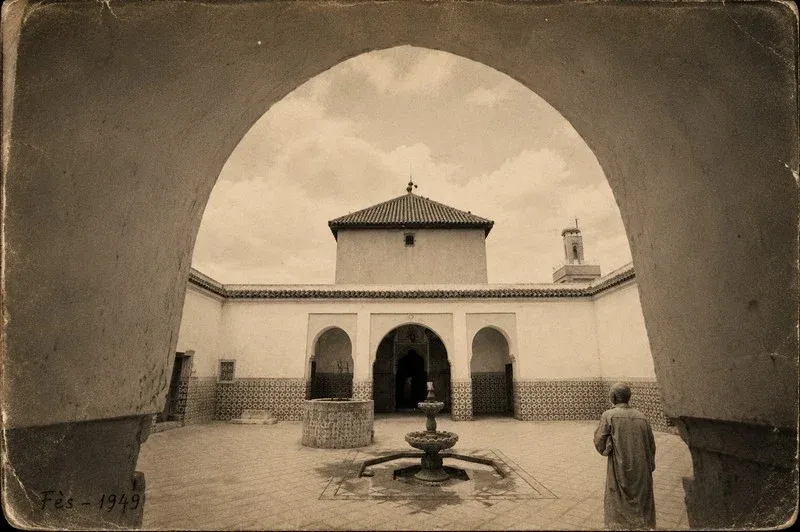

A Unique Glimpse into Moroccan Society and Education
In 1949, Moroccan scholar Abdullah Al-Jrari embarked on a journey that was not only a quest for relaxation but also a profound exploration of knowledge, society, and the pressing issues of his time. His narrative serves as both a personal travelogue and a critical examination of the cultural and educational landscape of Morocco under foreign occupation. Al-Jrari reflects on various authors he encountered, the libraries that piqued his interest, and his staunch defense of educational reform, which he deemed a national duty towards the people. He passionately advocated for modern education and the establishment of national private schools, recognizing the significant role education plays in uplifting society.
This narrative is part of a new publication by Dar Al-Aman, which features a series titled "Moroccan Travel Texts During the French Protectorate." Edited by the academic Abdul Majid Benjellali, who is deeply invested in travel literature and Al-Jrari's contributions, the book is entitled "My Summer Journey: Fez, Sefrou, Imzar, Ait Youssef." Al-Jrari begins his account by stating, "I intended to visit Fez accompanied by my sons for the purpose of their relaxation," emphasizing that such a health-oriented journey allows students to rejuvenate, regain their strength, and prepare themselves for academic pursuits with renewed vigor.
Critique of Societal Norms and Advocacy for Women's Education
Throughout his travels, Al-Jrari engaged in enlightening discussions with fellow scholars, including Abdel Salam Ibn Souda, the author of a historical guide. He extolled the treasures found within Ibn Souda's manuscript collection and highlighted the urgent need for historical research committees in Morocco. Delving into the realm of mysticism, Al-Jrari distinguished between two types of Sufism: the first being genuine Islamic Sufism, characterized by asceticism, patience, and spiritual devotion, while he criticized a second form that devolved into mere performance art, involving dance and frivolity.
In his observations, he lauded the efforts of figures like Abu Abbas Al-Nasiri, who confronted the proponents of superficial Sufism, leading to significant cultural tensions. Al-Jrari's critique extended to those he deemed purveyors of superstition disguised as scholarly pursuits, including a man he referred to as "the charlatan," who misled students with teachings that contradicted the principles of free Islam. He lamented the detrimental impact of such figures on society, particularly their influence on the education of women, urging that educating girls was essential for their empowerment and the betterment of society.
Al-Jrari's reflections were not merely academic; they were deeply rooted in a desire for societal progress. He argued that Moroccan society had evolved since the past, filled with a renewed sense of dignity and faith, no longer susceptible to the nonsensical claims of charlatans. He vividly documented his encounters, including a significant site in Sefrou, a cave attracting both Jewish and Muslim visitors, each group seeking blessings and fortune from the experience, highlighting the intertwined cultural fabric of Moroccan society.
His narrative also captures vibrant literary discussions, such as those surrounding a poem by Mohammed Al-Mokhtar Al-Soussi, emphasizing the dynamic literary scene in Morocco. Al-Jrari expressed a fervent hope for the University of Al-Qarawiyyin to be populated with capable scholars who would steer the institution towards modern educational practices that resonate with the aspirations of enlightened youth. He poignantly critiqued the need for reform in educational structures across Moroccan universities, advocating for a departure from archaic methodologies while promoting a modern curriculum aligned with global standards.
Ultimately, Al-Jrari's journey was a clarion call for action directed at the affluent, encouraging them to fulfill their responsibilities towards the nation by supporting educational initiatives aimed at safeguarding children from the perils of ignorance and societal neglect. His insights from the summer of 1949 resonate with timeless relevance, as they reflect the ongoing struggle for educational reform and social justice in Morocco.
As reported by hespress.com.