Strengthening Ties and Economic Aspirations
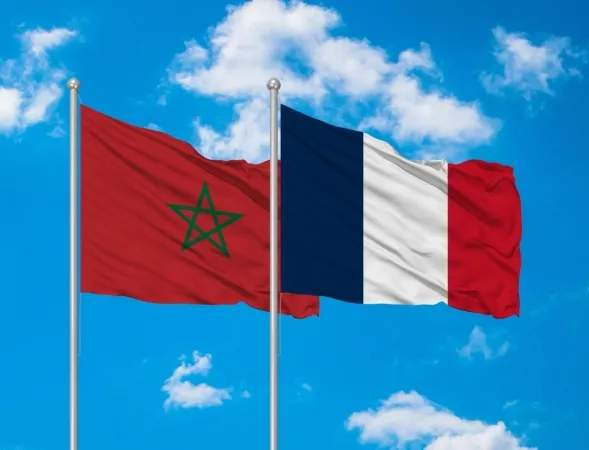
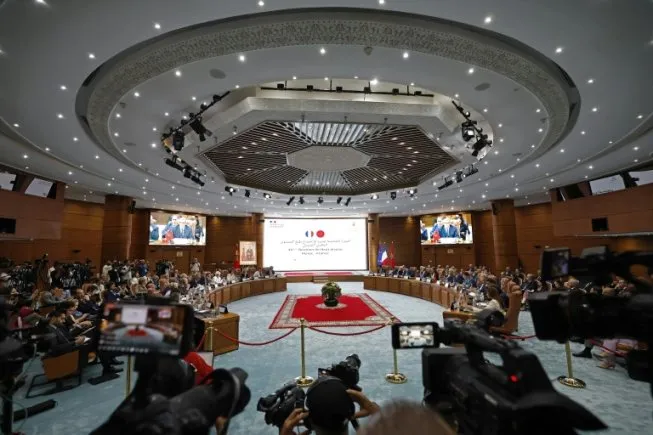
The relationship between French and Moroccan authorities is experiencing a significant revitalization. During his inaugural foreign trip as Prime Minister, Sébastien Lecornu visited Rabat on Thursday, accompanied by a delegation of twelve ministers, including Jean-Noël Barrot, the Minister of Foreign Affairs; Laurent Nunez, the Minister of the Interior; and Roland Lescure, the Minister of Economy. In a heartfelt address, Lecornu expressed the sentiment, "From the bottom of our hearts—protocol-wise, diplomatically, but also very personally—we are delighted to be here with you." His Moroccan counterpart, billionaire Aziz Akhannouch, praised the "renewed trust" and acknowledged the opening of a "new chapter" in relations between Paris and Rabat.
During this visit, eleven agreements were signed, notably in the areas of security and economy. A significant call for expressions of interest has been launched for the construction of an underwater electricity interconnection cable with Marseille. Additionally, these discussions have yielded an "exceptionally positive" assessment of previous agreements announced during President Macron's grand visit to Morocco in October 2024. However, certain partnerships are still lagging in implementation. For instance, the desalination plant project led by Veolia in Rabat is facing tariff disputes, as reported by Africa Intelligence. Furthermore, a final investment decision is pending between Engie and the Moroccan phosphate giant OCP regarding renewable energies and energy storage.
Challenges and Diplomatic Hurdles
It is noteworthy that there has not been an intergovernmental meeting of this nature since 2019, a gap that can be attributed to the COVID-19 pandemic and a serious diplomatic crisis between the two nations. The core issue was the Pegasus spyware scandal in 2021, which severely damaged the trust between King Mohammed VI and President Macron. Allegations surfaced that Macron's phone had been tapped by Moroccan intelligence services. A judicial investigation in France confirmed traces of the spyware on the devices of seven current or former ministers, including Lecornu and Florence Parly. Despite a wealth of evidence, including new findings disclosed recently by Forbidden Stories and Amnesty International, Morocco has consistently denied these allegations.
Further complicating relations was the "visa crisis" that occurred the same year, which was perceived as a humiliation on the Moroccan side. The number of Schengen visas issued to Moroccan citizens was halved in retaliation for Morocco's refusal to provide the necessary consular passes for the expulsion of its nationals in irregular situations facing deportation from France.
Amidst these challenges, the issue of Western Sahara has also crystallized tensions, although it ultimately served as a backdrop for reconciliation. In July 2024, the Elysée Palace made a pivotal decision to recognize Moroccan "sovereignty" over this disputed territory, risking discontent from Algeria, which is a principal supporter of the Polisario Front's independence movement. An observer of bilateral relations noted, "In trying too hard to get closer to Algeria, without receiving a positive response, Macron realized that he was jeopardizing relations with Morocco—a country that has seen remarkable economic growth and has regained influence in Africa, while maintaining close ties with France."
Another significant milestone in this renewed relationship is expected with the forthcoming visit of King Mohammed VI to France, anticipated in the fall. His last official visit dates back to 2000, despite numerous private trips to France. During this visit, a "remarkable friendship treaty," as described by Lecornu, is expected to be signed. Eleven prominent figures from both nations have been appointed to contribute to the drafting of this largely symbolic agreement. Hubert Védrine, a former Foreign Minister who is overseeing the French side of the discussions, explained that the work should be concluded by the end of summer; the aim is not to create a detailed program but to establish a framework for Franco-Moroccan relations across all aspects.
As reported by lesechos.fr.