
Exemplary Organization for Eid al-Fitr Prayers in Marrakech
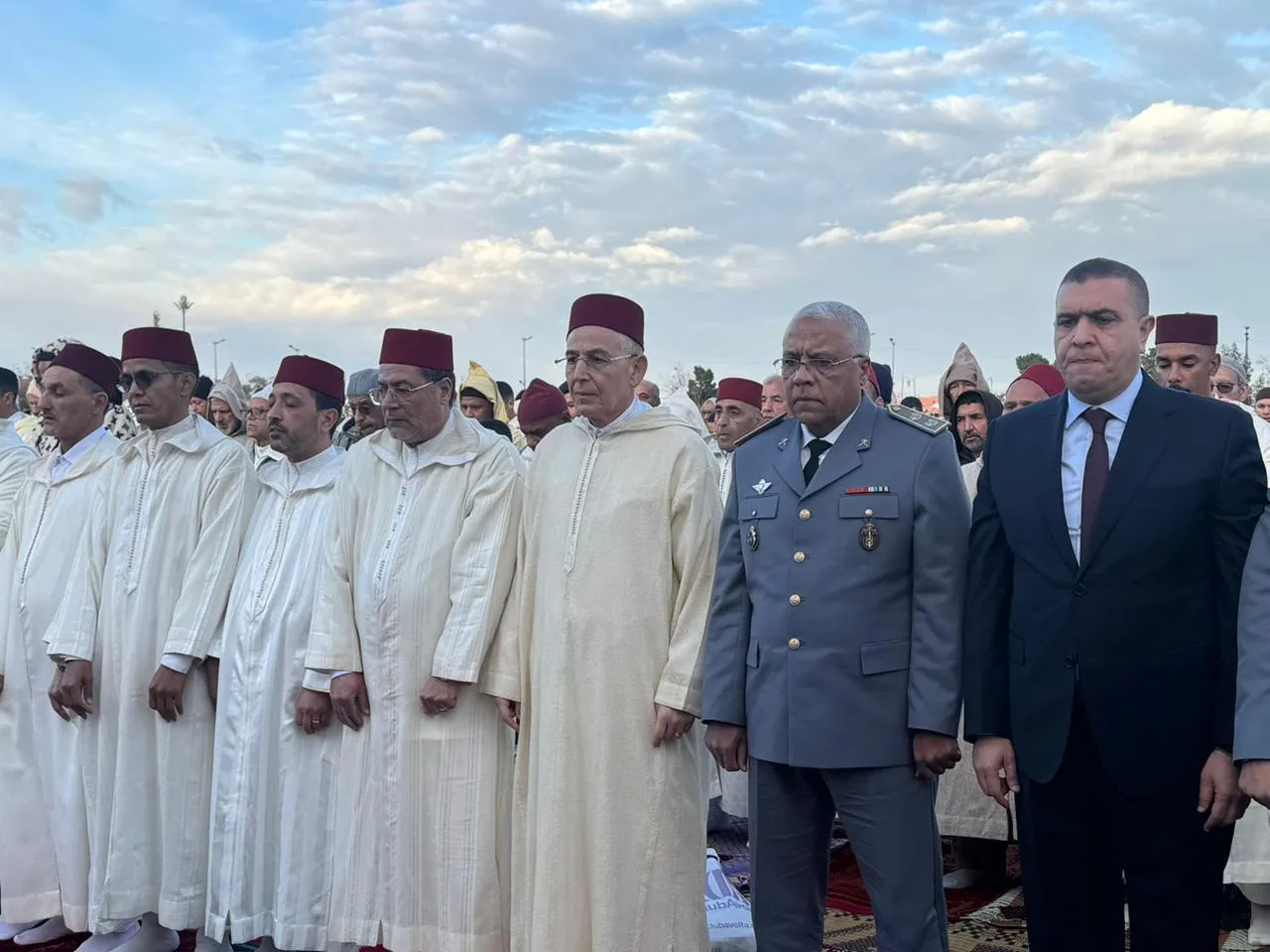
This year's Eid al-Fitr prayers in Marrakech transpired under exceptionally organized conditions, reflecting a high level of readiness and coordination among various participants. The atmosphere was marked by smoothness and tranquility across different prayer sites, creating a civilized scene that embodies respect for the sanctity of the occasion and effective management of public spaces.
The quality of the organization was notably impressive, particularly in terms of the preparation of the prayer areas and the management of their surroundings. The logistical aspects stood out significantly, especially in terms of sound quality, which was clear and of high fidelity. This contributed to enabling the crowds of worshippers to follow the sermon and perform their prayers in a spiritually comfortable environment. Moreover, the effective organization helped avoid congestion and facilitated a seamless entry and exit process without confusion.
The Role of the Al-Manara District Council
At the heart of this success is the pivotal role played by the Al-Manara District Council, which was a key player in this organizational endeavor. It is noteworthy that the district hosted seven out of thirteen prayer sites in the city, accounting for more than half of the total number, which reflects the significant responsibility shouldered by the council and its ability to manage this organizational burden with high efficiency.
The Al-Manara District Council demonstrated advanced managerial skills through its meticulous follow-up of various preparation stages and its commitment to providing suitable conditions for welcoming worshippers, both in terms of equipment and field coordination. This was in complete harmony with other stakeholders, confirming that the district was not just a geographical area hosting the largest number of prayer sites but also a genuine catalyst for the success of this religious occasion.
This level of success would not have been achieved without the active presence of civil society components, which engaged with a high spirit of volunteerism in guiding worshippers, ensuring cleanliness of the spaces before and after the prayers. Local associations and volunteer networks exhibited a heightened civic awareness, making them true partners in the success of this religious occasion through their quietly yet decisively impactful roles in ensuring smooth organization and fostering a spirit of cooperation.
What has been achieved today reflects a successful model of local governance, where institutional partnerships translate into tangible results on the ground. Citizens become the primary beneficiaries of quality organization and effective management during a collective spiritual moment that encapsulates the essence of belonging to the noble Kingdom of Morocco.
As reported by jamaalfnapress.ma.