
African Lion 26: Pioneering Military Exercises in Africa
From April 20 to May 8, over 5,600 personnel from approximately 40 countries came together to engage in cutting-edge military technology during the African Lion exercise, held across Ghana, Morocco, Senegal, and Tunisia. Brigadier General Reda Shuaib of the Moroccan Armed Forces highlighted the exercise's strong emphasis on innovation and advanced technology, alongside humanitarian assistance, stating that this dynamic approach transformed African Lion into a genuine opportunity for all participants.
African Lion stands as the largest multinational military exercise on the African continent and represents the most significant annual joint drill organized by the United States Africa Command (AFRICOM). Coordinated by the U.S. Army Southern European Task Force, this year's iteration focused on innovation, interoperability, and regional security led by partner nations. A Moroccan military planner noted that the participation of over 40,000 troops in the last five iterations of this exercise underscores the commitment of our partners and the significance of this annual event.
Enhancing Military Readiness through Modern Technology
During the opening ceremony at the Southern Command Headquarters in Agadir on April 27, Lieutenant General Mohammed Benlouali, commander of the Southern Zone, remarked on the importance of the exercise in strengthening military cooperation between Morocco and all participating nations. He emphasized that the exercise aims to enhance partnerships and integration in planning to upgrade operational readiness, which will lead to gradual improvements in operational performance, expanded cooperation areas, and development of expertise across various levels and specialties.
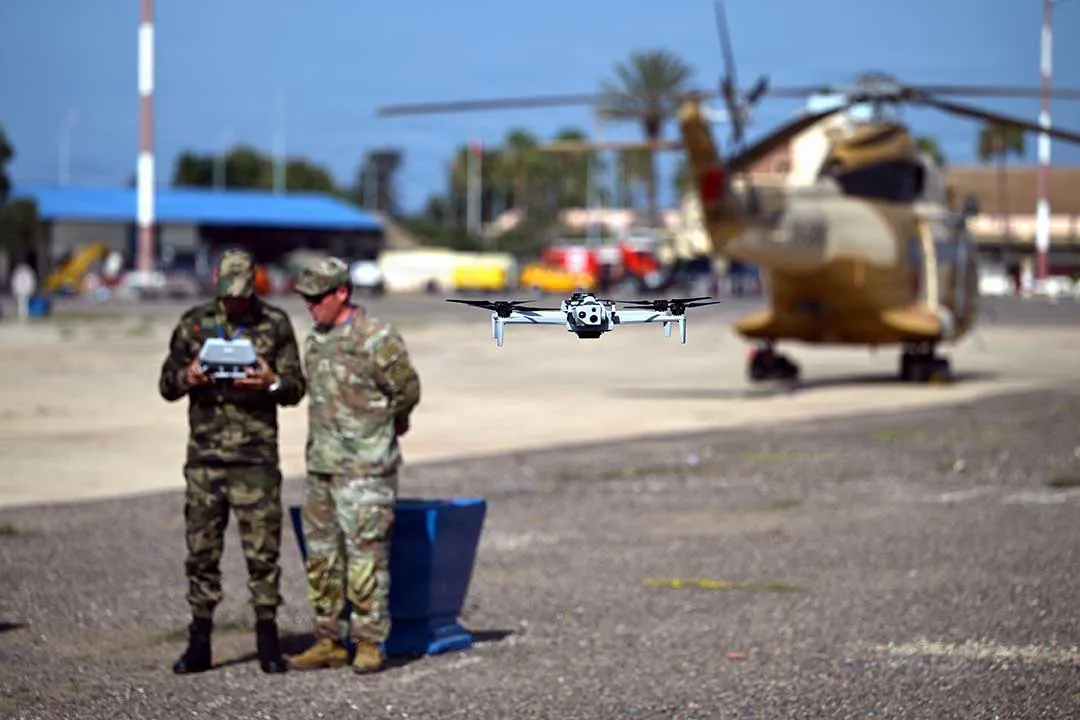
The 22nd iteration of African Lion signifies a shift from traditional firepower tactics to advanced command and control systems that incorporate modern technologies such as drones, autonomous vehicles, remote-controlled weapons systems, and artificial intelligence. In addition to advanced surveillance and reconnaissance systems, planners integrated new technologies into the planning and execution of training exercises. The scope of African Lion 26 also expanded into sectors such as cybersecurity, electromagnetic warfare, and space operations.
The study phase from April 20 to 30 supported command and field exercises, involving 20 special units employing emerging technologies, including drones, cybersecurity tools, and space-related operations. More than 40 military technology providers participated, allowing attendees to utilize the exercise as a testing ground for specific needs, such as mission command systems, deep strike capabilities, deep defense engines, and counter-attack integrators.
Located at Cap Drâa near the city of Tan-Tan, modern military technology was prominently showcased during a large-scale attack simulation that marked the conclusion of African Lion in Morocco. Lieutenant Colonel Yassine El Semlali, deputy commander of ground operations at Ras Drâa, emphasized the practical value of this fundamental event in an interview with Moroccan television network Medi 1. He stated, "All these technologies confirmed the strategic nature of these exercises as they provided significant capabilities, such as reducing decision-making time and increasing targeting accuracy, ultimately saving lives. The tactical exercise at Cap Drâa assessed the readiness and effectiveness of these systems and their potential integration into real battlefields."
The demonstration tested the forces' capabilities to repel an assault and transition into a full counter-offensive. Combatants utilized early warning systems and drones to locate enemy positions before shifting from defensive to offensive operations. Moroccan ground units, employing tanks, artillery, other armored vehicles, and infantry, neutralized enemy resources and advanced to destroy incoming columns. They received support from seven newly acquired Apache attack helicopters, highlighting the enhanced integration of modern technology with AI-driven command and control systems.
Captain Adnan Ma al-Aynayn of the Royal Moroccan Air Force expressed his excitement in leading his Apache helicopter squadron alongside the U.S. Air Force for the first time. He shared on Medi 1 TV, "We exchanged our expertise and modern tactics on the ground. This exercise provided us the opportunity to operate in a multinational environment while always prioritizing security and the precise and effective execution of missions." In a symbolic gesture, several Moroccan F-16 fighter jets escorted two U.S. Air Force B-52 bombers as they flew over Cap Drâa on April 23. General Dagvin Anderson, commander of AFRICOM, remarked that their visible presence over Morocco, alongside Moroccan Royal Air Force fighters, signifies credible deterrence and strengthens the U.S. commitment to regional security.
General Anderson noted, "The nature of warfare, no longer confined to land, sea, and air, is rapidly evolving. African Lion serves as a laboratory for innovation, where we test, learn, and adapt in real-time to be prepared for the challenges of tomorrow." In Tunisia, Lieutenant General John Brennan, deputy commander of AFRICOM, reported that over 500 military personnel from Africa and allied nations participated in an intense multi-week training focused on large-scale combat operations, crisis response, and humanitarian assistance. In his closing remarks on April 29, he stated, "As a collective trial involving over 40 nations, African Lion this year demonstrates the continued growth and relevance of this premier exercise. The true scale of this combined, joint, and inter-agency exercise showcases the degree of unity and diversity of capabilities that our coalition of volunteers may be called upon to employ against common threats."
As reported by adf-magazine.com.