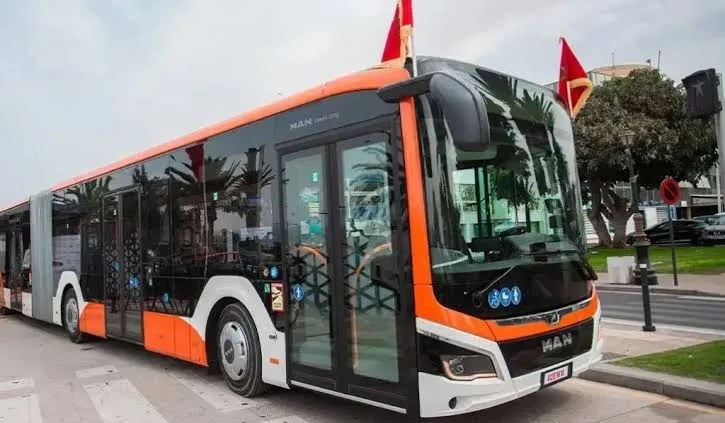

Agadir's New Bus Line: A Milestone in Urban Mobility
Agadir, a vibrant coastal city in Morocco, has recently inaugurated its first rapid bus line, known as the Amalway TRAMBUS, after several years of delays. This new transportation service connects the port area to Tikiouine, covering a distance of 15.5 kilometers and has the capacity to transport up to 60,000 passengers daily. The launch of this bus line represents a significant leap forward in Agadir's public transportation infrastructure, which has been a long-awaited development for the city.
The new bus line features 35 strategically positioned stops and primarily operates on dedicated bus lanes, ensuring efficient travel times. During peak hours, buses are scheduled to depart every five minutes, with the total journey taking approximately 45 minutes. This service is set to serve as a backbone for the urban transport network in Agadir, enhancing connectivity and accessibility for residents and visitors alike.
Project Background and Development
The proposal for this bus line was initially included in Agadir's mobility plan back in 2014, but the project faced numerous delays, with anticipated launch dates pushed from 2022 to 2023 and ultimately to 2024. Following a trial period that began in April 2026, the bus line has officially commenced operations this month, marking a significant achievement for the city's development goals.
The route of the Amalway TRAMBUS runs from the fishermen's port and the Marina, passing through key streets such as Avenue Mohamed V, Avenue Kettani, Avenue Hassan II, and Dakhla, and connecting to essential locations like Ibn Zohr University and various neighborhoods before reaching the Tikiouine market. Notably, the line intersects with existing and future transfer points, including significant hubs like Vallée des Oiseaux and Souk El Had, which will facilitate easier transfers for riders.
The fleet consists of 30 articulated buses ranging between 18 to 21 meters in length, manufactured in Poland by MAN and equipped in Casablanca with systems tailored for Moroccan use. Each bus stop is fitted with digital screens providing real-time travel information, enabling online ticketing and ensuring safety through surveillance systems.
This ambitious project is part of Agadir's broader urban development program, which began in 2020 with a revised budget increasing from 1.2 billion dirhams (approximately 111 million euros) to around 1.4 billion dirhams (roughly 130 million euros). Financial backing has come from various sources, including the national transport fund, the Souss-Massa region, Agadir municipality, and the French Development Agency (AFD).
In addition to the bus line, urban enhancements along the route include widened sidewalks, renovated facades, and the creation of green spaces, alongside a modern maintenance and storage facility for the bus fleet. The existing urban bus services, currently operated by Alsa, transport approximately 150,000 passengers daily across 36 lines, and there are plans for a new tender that will integrate both the BRT line and the conventional bus network to streamline operations.
Recently, Agadir has made substantial investments in public transportation, allocating over 1 billion dirhams (about 93 million euros) for urban mobility initiatives in 2025 alone, along with the addition of 169 new buses to the existing fleet. Moreover, another 78 new buses are set to be introduced in 2026, demonstrating the city's commitment to enhancing its public transport system.
As reported by nieuws.marokko.nl.