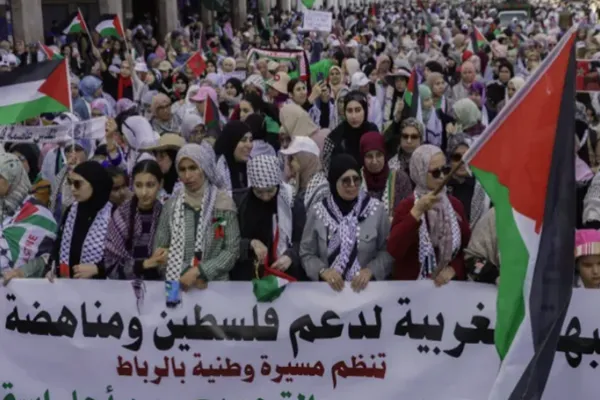

In a significant display of public sentiment, pro-Palestine protests have erupted across multiple cities in Morocco, with demonstrators passionately advocating for an end to the diplomatic normalization with Israel. This surge in activism comes as Rabat seeks to further solidify its official relationship with Tel Aviv, following a recent agreement to elevate their diplomatic missions. On September 27, the latest wave of mobilization took place, following three consecutive days of organized protests by groups vehemently opposing normalization.
Reports indicate that these demonstrations were sparked by a September 16 agreement between Morocco and Israel that aimed to upgrade their diplomatic missions to full embassies and exchange ambassadors. The Moroccan Committee for Supporting the Nation’s Causes claimed to have orchestrated 76 events across 45 cities on September 25 under the banner "Friday for Al-Aqsa and against normalization". However, independent verification of the turnout was not available, raising questions about the accuracy of these figures.
Protests were notably reported in major urban centers including Rabat, Casablanca, Marrakesh, and Tangier, among others. In Rabat, demonstrators gathered outside the Parliament building, while a protest in Marrakesh transformed into a march, winding through several main thoroughfares. However, Moroccan media also highlighted instances of government restrictions and arrests during these gatherings. In Tangier, a planned demonstration on September 27 was met with a ban, and security forces reportedly dispersed hundreds of participants, resulting in the detention of more than a dozen individuals.
The backdrop to these protests is Morocco’s renewed diplomatic relations with Israel, which were restored in December 2020 as part of the US-brokered Abraham Accords. Alongside this, the United States recognized Morocco's sovereignty over Western Sahara. The recent agreement to enhance diplomatic ties was solidified during a trilateral summit in New York involving Moroccan and Israeli foreign ministers and the US Ambassador to the United Nations.
Despite the government's moves towards a closer alliance with Israel, there is a noticeable disconnect between official policy and public sentiment. Kathya K. Berrada, a senior programs manager at the Arab Center for Research, noted the changing political landscape, emphasizing that normalization is occurring amid escalating public anger due to the ongoing conflict in Gaza, which has brought intense images of Palestinian suffering to the forefront.
Moroccan activist Mouna Rahiani highlighted this divide by referencing the latest Arab Opinion Index, which revealed that an overwhelming 89 percent of Moroccans surveyed opposed recognizing Israel, with only six percent in support. She argued that while the state forges deeper ties with Israel, the Moroccan populace continues to rally in solidarity with Palestine, emphasizing that the Palestinian cause is intrinsically tied to Morocco's political and moral obligations.
Moreover, Berrada pointed out the need for clear distinctions between governmental policy and public opinion, noting the lack of reliable data to accurately gauge Moroccan attitudes toward normalization. She stressed that while normalization represents an official state decision, it is challenging to determine the extent of popular support or opposition due to limited public data.
The protests also coincided with Morocco’s parliamentary elections on September 23, where the Authenticity and Modernity Party emerged as the leading party. The party previously held power during Morocco's initial normalization with Israel, and despite their electoral success, they have continued to voice opposition to diplomatic ties with Israel, reiterating their stance against any agreements with the Israeli government.
As Morocco navigates its evolving relationship with Israel, opposition groups remain steadfast in their resistance to normalization. The recent agreement also intertwines with broader foreign policy considerations involving the United States and the issue of Western Sahara, with the UN Security Council set to review the mandate of the UN Mission for the Referendum in the region in October.
For now, the ongoing protests underscore a persistent mobilization against normalization, though the ultimate impact of these demonstrations on government policy remains uncertain. As Berrada aptly noted, it is challenging to ascertain whether a majority or minority of Moroccans endorse the current diplomatic approach.
As reported by tvcnews.tv.