
Agadir Port's Commitment to Environmental Safety
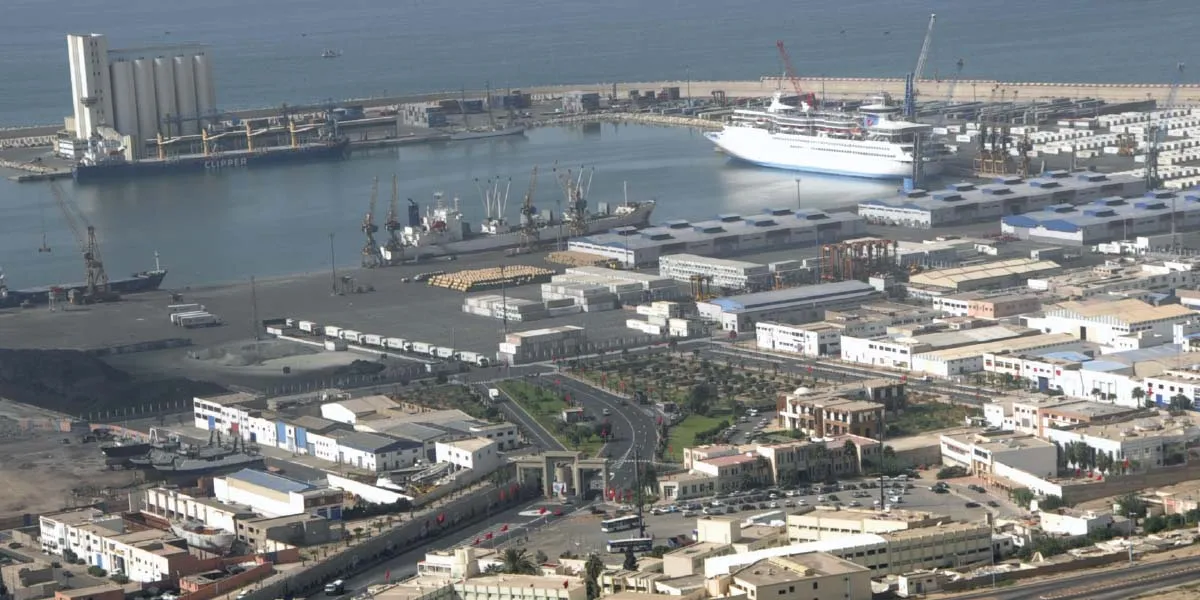
The National Ports Agency (ANP) has launched a crucial initiative aimed at acquiring advanced equipment designed to neutralize hydrocarbon spills at the source within the Agadir port area. This comprehensive strategy incorporates mobile skimmers, underwater intervention technology, and digital awareness campaigns to safeguard the port basins against operational risks. This operation aligns with the port's growth, which has seen overall traffic surpass 7.5 million tons in 2025.
It is widely acknowledged that the Agadir Bay is subjected to pollution from various sources, jeopardizing its ecosystem, even though the water quality remains compliant with swimming standards. According to a vulnerability profile established by the Ministry of Energy Transition and Sustainable Development, the risk level for the bathing area of Agadir is classified as 'high.' This exposure is primarily attributed to port activities concentrated within the maritime precinct of the city, which includes the fishing port, commercial port, and marina, all of which are marked by recurrent risks of hydrocarbon contamination.
The intensity of commercial flows, fuel transfer maneuvers, and the concentration of the fishing fleet—comprising offshore, coastal, and artisanal vessels—especially during biological rest periods, contribute to potential accidents that lead to diesel spills, bilge water discharges, or contaminated sludge. It is precisely in response to these challenges that the ANP has initiated a project dedicated to the provision and operationalization of marine pollution control equipment. This initiative aims to neutralize any accidental spills directly at their source within the port basins before pollution can drift towards the tourist coastline.
Comprehensive Intervention Arsenal
From a technical standpoint, this intervention arsenal combines both surface and underwater capabilities tailored to address a wide range of oil pollutants. The skimming device is based on a modular and portable polyethylene unit, weighing less than 35 kg for easy handling. This equipment ensures a minimum recovery capacity of 15 m³/h under a pressure of at least 100 bars. The transfer of viscous fluids and contaminated sludge will be managed by a self-priming volumetric pump that provides an adjustable flow rate of 15 to 30 m³/h, capable of evacuating solid debris with a diameter of up to 6 mm.
Moreover, recognizing that significant pollution incidents often occur below the waterline due to hull breaches or defective submerged valves, the ANP has included two complete sets of professional diving equipment in the project specifications. This allows teams to intervene underwater and seal any breaches responsible for the incident.
Additionally, the operation includes a preventive and educational digital component, exemplified by the installation of two professional screens operating continuously within the port area. These screens will loop a selection of at least twenty official animated films from the 'NAPO' series, which focus on hygiene, safety, and environmental practices, supplemented by at least two hours of local video clips highlighting best practices and the efforts of the Agadir security teams.
By the end of 2025, the total traffic passing through the Agadir port is projected to handle a volume set at 7.5 million tons, representing a growth of 9.3%. This upward trajectory is primarily driven by coastal shipping, which has surged by 71.1% over the year. International trade has also supported this momentum with a 7.9% increase in exports and a 4.5% rise in imports. Nautically, the Agadir basins recorded 925 commercial calls, reflecting an annual increase of 2.9%. Direct maritime connectivity now links the port to 17 destinations across 12 countries via 8 regular routes.
In terms of land transport, goods flows remain heavily reliant on road transport, with trucks accounting for 87% of freight. Pipeline evacuations complement this multimodal framework, contributing 13%, while all containers transit via road. The types of goods reveal a significant predominance of bulk items, which alone represent 71.7% of the overall port traffic. General merchandise totals 2.1 million tons, driven by containers that constitute a quarter of the total.
In the mineral and heavy goods sector, clinker reaches 1.3 million tons, buoyed by a rebound in coastal shipping to the South and the Oriental regions. In terms of livestock inputs, imports of animal feed show a 10.9% increase, amounting to 351,990 tons processed. Regional energy security is reflected in the reception of 953,155 tons of refined hydrocarbons, marking a 3.1% rise.
Conversely, coal imports have seen a sharp decline of 57.1%, limiting their annual tonnage to 116,310 tons. The fishing sector has experienced a notable slowdown, with landings reduced by 13% to 39,002 tons, valued at 358 million MAD. However, cruise tourism has recorded a substantial increase, with 91,345 passengers disembarking in the bay, up by 54.2%. The container sector, a flagship of the port, has exceeded the threshold of 189,361 TEUs handled, showing an 18% increase. In equivalent tonnage, containers account for 1.8 million tons, marking a significant improvement of 13.5% compared to the previous year.
As reported by leseco.ma.