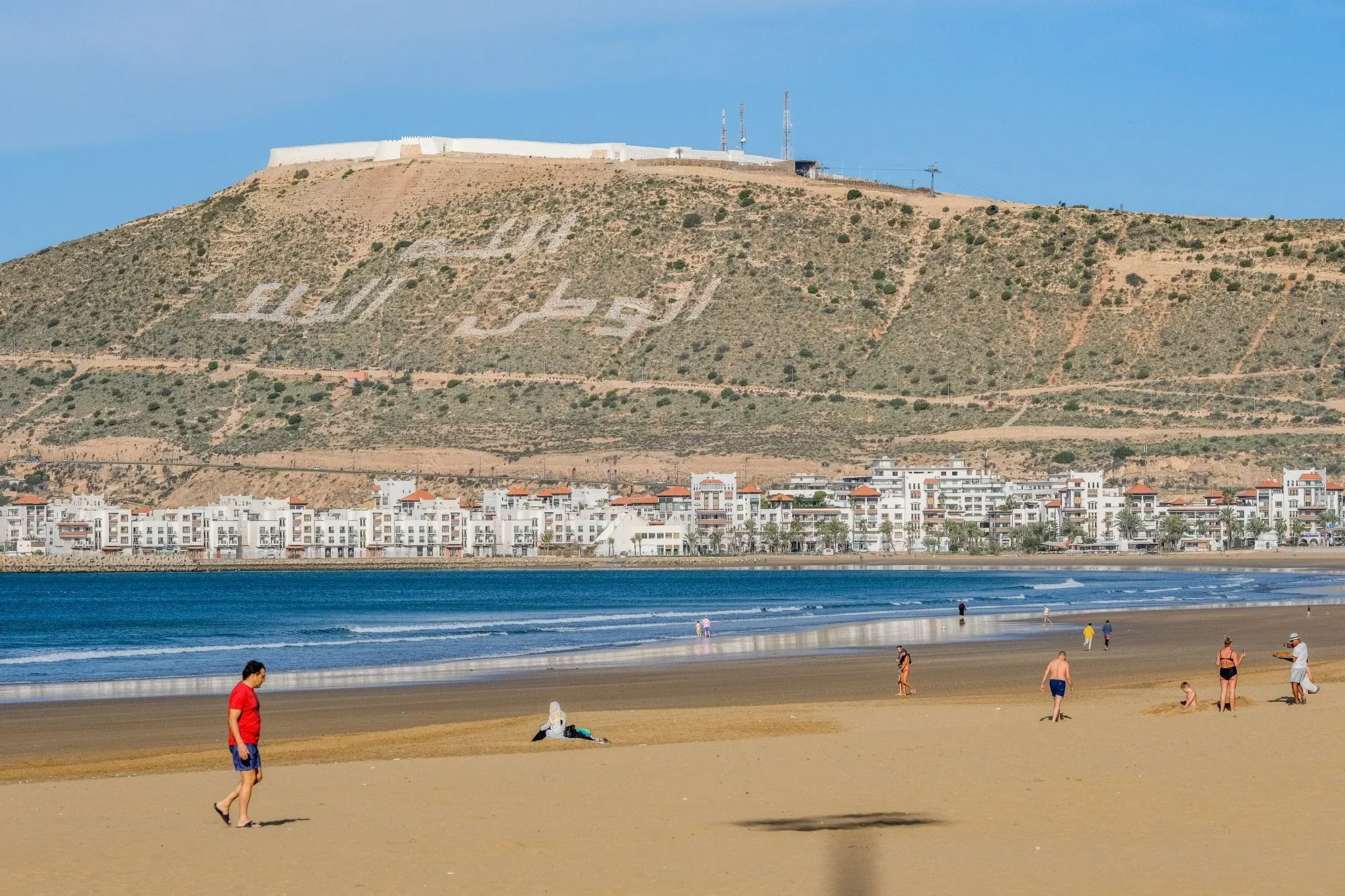

Agadir: A Traditional Destination with Modern Aspirations
Agadir continues to preserve its historical foundation, characterized by its abundant sunshine, stunning beaches, favorable climate, and a range of seaside hotels that cater to relaxation. This invaluable base allows the destination to attract a diverse clientele, including families, retirees, European tourists, Moroccans, and those in search of extended stays. However, the tourism landscape is undergoing a significant transformation. Today's visitors are in search of engaging activities, an urban vibe, immersive experiences, local cuisine, and a more direct connection with the region they are exploring.
The region boasts a unique advantage that is rarely found elsewhere: a diverse offering that combines beach activities, sports, nature, Amazigh culture, local products, and mountainous landscapes. Taghazout presents a youthful and international image, while Imi Ouaddar enhances the coastal appeal. The nearby towns of Taroudant, along with its valleys, cooperatives, villages, and mountainous scenery, provide opportunities for enriching excursions. Consequently, Agadir has the potential to serve as the gateway to a broader territory, rather than merely a stopover for tourists.
Challenges and Opportunities for Agadir's Tourism Sector
One primary challenge is the need for vibrant entertainment options, as some visitors still perceive Agadir as a tranquil destination that can be overly quiet outside of hotel grounds and beaches. Recent urban developments, the enhancement of the historic Kasbah Agadir Oufella, cultural tours, events, restaurants, markets, and public spaces are all initiatives that can shift this perception. However, this transformation must be visible, continuous, and effectively communicated to the public.
Connectivity remains a central issue. Agadir's airport must attract more direct flights, particularly from European markets with high potential. Without robust air travel options, the destination remains reliant on longer circuits or redistributions from other cities. The anticipated expansion of airport capacity by 2030 could play a crucial role in this regard.
The Souss-Massa region also faces its own set of challenges. Water stress significantly impacts any tourism strategy in an area where hotels, golf courses, green spaces, and urban activities are water-intensive. Other sensitive topics include service quality, workforce training, availability of skilled labor, and the integration of local populations into the tourism sector.
Agadir and Taghazout are now experiencing a dynamic shift. However, the risk lies in complacency with the return of visitor volumes. The challenge is more demanding: to increase expenditure per visitor, ensure a better distribution of economic benefits, enhance quality, and establish the destination as a true gateway to the entire Souss-Massa region. Competition among Moroccan destinations is also driving Agadir to better define its unique offerings. While Marrakech remains the cultural and event hub, Tangier thrives on urban and port dynamics, and Dakhla has carved out a niche in water sports, Agadir must clarify its own narrative: a prominent Atlantic destination that is accessible, family-friendly, sporty, and rich in Amazigh cultural identity. This narrative needs to be championed by both industry professionals and public promotion.
While major events can contribute positively to visibility and hotel occupancy, they are not a panacea. The real question lies in what remains after these events conclude. If the infrastructure, training, tours, and entertainment developed for these events continue to serve both tourists and locals, the region will have gained a sustainable advantage. Otherwise, it risks merely witnessing a peak in visitor numbers without any profound transformation.
As reported by fnh.ma.