
Significant Budget Increase for the Taghazout Road Extension
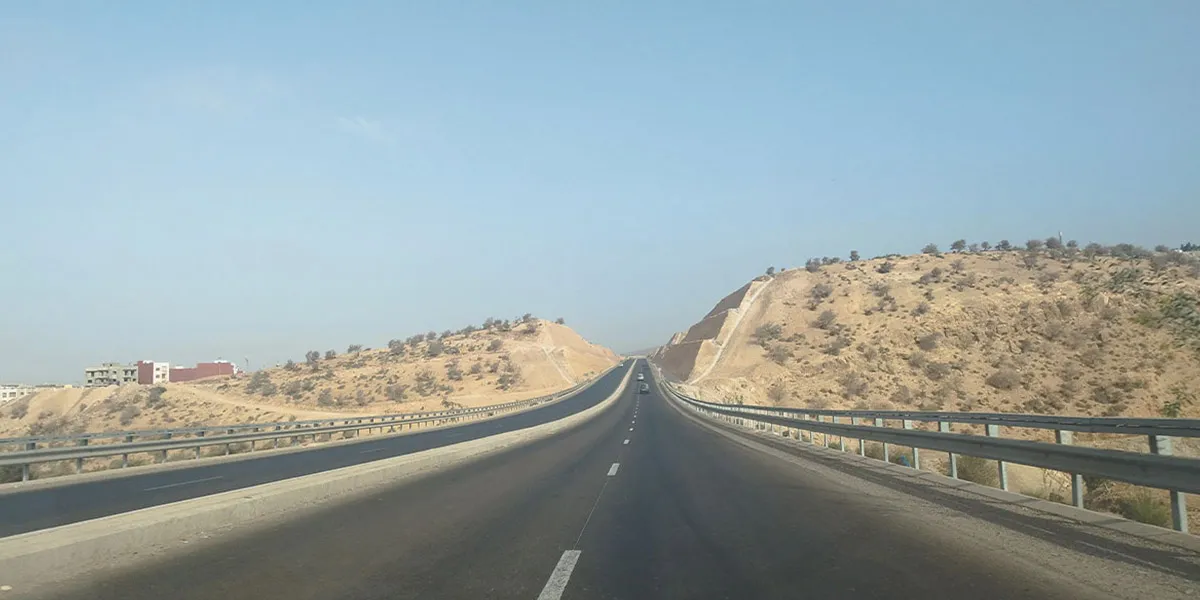
The ongoing developments regarding the North-East Bypass of Agadir are noteworthy, particularly with the recent announcement that the budget for the study aimed at extending the road towards Taghazout has been increased from 4.99 million dirhams (MDH) to 9.04 MDH. This significant financial boost is designed to enhance the technical engineering and traffic projections over the next two decades. The project encompasses four key missions, which include the design of the roadway and intersections, as well as traffic forecasting, and will also address the construction of essential infrastructure over the Asserssif and Tamraght rivers. Ultimately, these efforts are directed towards compiling a consultation dossier for contractors, paving the way for the commencement of construction work.
As progress continues on the third section linking Agadir's port to Al Massira Airport—spanning 5 kilometers and backed by an investment of 171.7 MDH—attention now shifts to the studies concerning the extension to the north. This expansion towards Taghazout is critical to alleviating the severe traffic congestion that plagues the area during the summer months. Beyond merely reducing congestion, this new infrastructure aims to enhance access to four major tourist destinations along the northern coast: Taghazout, Imi Ouaddar, the upcoming Aghroud resort, and Imsouane. This will significantly boost the appeal of the Atlantic coastline in the Souss-Massa region.
Structured Study Approach and Long-term Traffic Analysis
The study has undergone several revisions since its inception, first initiated by the provincial directorate for equipment, transport, and logistics of Agadir Ida-Outanane with an initial budget of about 5 MDH. However, the financial recalibration has nearly doubled the estimated costs, reflecting the administration's commitment to securing technical expertise amid the complexities associated with the future roadway alignment. It is noteworthy that despite the budget increase, the duration of the study remains unchanged at nine months.
The structured approach of the study is divided into four distinct missions. The first mission ensures a solid technical foundation through comprehensive topographic work, including aerial photogrammetry, ground surveys, and parcel plans for expropriations. The second mission focuses on the design of the roadway and intersections, which encompasses geometry, drainage systems, environmental impact assessments, and traffic forecasts for a span of 20 years. The third mission is dedicated to engineering the necessary infrastructure, particularly the crossings planned over the Asserssif and Tamraght rivers. Lastly, the fourth mission involves geotechnical expertise to validate soil stability and foundation sizing. Collectively, these services aim to culminate in the establishment of a contractor consultation dossier (DCE) for the upcoming construction phase.
This comprehensive study also integrates a forward-looking perspective regarding investment sustainability. It encompasses not only topographic and geological assessments but also environmental impact studies and traffic analyses projected over five, ten, fifteen, and even twenty years. This analytical approach is designed to anticipate the increase in traffic associated with the future Aghroud resort, ensuring that the roadway integrates seamlessly into its natural environment. In essence, this road continuity project transcends basic civil engineering; it is poised to serve as a structural pivot that will redefine mobility and economic prospects in northern Agadir for the next two decades.
Furthermore, the third section of the North-East Bypass, a crucial 5-kilometer stretch connecting Agadir's port to Al Massira Airport, has been officially awarded to the Atlas Travaux Publics and GITP consortium, with an investment of 171.7 MDH. This segment is scheduled for completion within 24 months and is vital for the overall 29-kilometer bypass, enabling direct connectivity between Agadir Al Massira Airport and the port area, particularly through the third access point to the port. This connection is expected to significantly streamline heavy truck traffic, reduce travel times, and help decongest the main arteries of the city, thereby enhancing the overall capacity of the Grand Agadir road network.
As reported by leseco.ma.