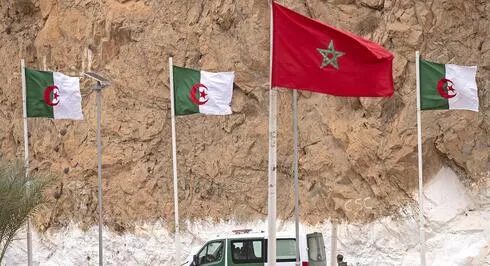

On September 10, 2026, Algeria's decision to expel the UAE ambassador within forty-eight hours and impose restrictions on UAE-registered military and civilian aircraft, while allowing commercial flights to continue until year-end, marked a significant diplomatic rupture that underscores a broader regional realignment. Official statements from Algeria cited a series of "provocative and hostile" actions from the UAE, yet failed to specify any particular incident that could be seen as a catalyst for such drastic measures. This lack of a distinct crisis suggests that the conflict is less about an isolated bilateral dispute and more indicative of a profound clash between two divergent models of power in North Africa, the Sahel, and the wider Middle East.
In response to the diplomatic fallout, Abu Dhabi expressed regret over the situation and expressed hope for a potential reconciliation. The absence of a specific trigger for the rift emphasizes the underlying tensions that have been escalating as Algeria and the UAE pursue conflicting interests across various regional platforms. This clash is especially evident in Morocco, where the longstanding rivalry between Algiers and Rabat, particularly over the Western Sahara issue, has evolved. The UAE's support for Morocco, evidenced by its establishment of a consulate in Laayoune in November 2020, marked a strategic pivot that occurred concurrently with Morocco’s normalization with Israel under the Abraham Accords and U.S. recognition of Moroccan sovereignty over Western Sahara.
This evolving relationship does not merely signify an anti-Algerian military alliance, but rather illustrates the development of a complex network of overlapping partnerships that includes significant UAE-backed investments in Moroccan infrastructure and energy projects. These initiatives not only bolster Morocco's economic capacity but also enhance its defense-industrial collaboration with Israel, thereby complicating Algeria's position in the region. Morocco is no longer isolated in its rivalry with Algeria; instead, it finds itself embedded within a growing network of alliances that extend from Rabat to Abu Dhabi, Jerusalem, and Washington, creating a strategic environment that is increasingly difficult for Algeria to navigate through traditional diplomatic channels.
Further south, Algeria has historically viewed the Sahel region as a vital arena for diplomatic engagement, particularly following the 2015 Algiers Agreement on Mali. However, recent military coups in Mali, Burkina Faso, and Niger have disrupted the institutional landscape that Algeria relied upon for mediation, pushing these new military governments toward partnerships that offer resources without the political constraints typically associated with Algerian mediation efforts. The UAE's ability to provide capital, commercial opportunities, and logistical support in these regions has enabled it to establish influence where Algeria's traditional approach has faltered.
In the Horn of Africa, Emirati investments in ports and security infrastructure have further solidified its position, creating channels of influence that bypass conventional diplomatic frameworks. The divergent approaches of Algeria and the UAE are also evident in Libya, where Algeria’s preference for formal institutions contrasts sharply with the UAE’s strategic support for eastern military factions led by Khalifa Haftar. This reflects a broader trend where informal networks and swift capital mobilization can exert influence more effectively than established diplomatic processes.
While the Israel factor plays a significant role in the geopolitical landscape, it is crucial to clarify that Israel did not instigate the diplomatic split between Algeria and the UAE. Instead, the rift has reinforced a regional dynamic in which Morocco and the UAE have forged closer ties with Israel, leaving Algeria at a distance from this emerging network. The Abraham Accords have laid the groundwork for comprehensive partnerships across various domains including intelligence, maritime security, and defense technology, establishing a dense web of cooperation that Algeria finds itself excluded from.
It is essential for U.S. policy to recognize the distinctions between Algeria and the partners of the Abraham Accords, avoiding the oversimplification of treating them as interchangeable components of North African strategy. Algeria remains a critical energy supplier to Europe and plays a role in counterterrorism efforts, yet its strategic autonomy is hampered by a reliance on non-Western defense suppliers, with a significant proportion of its arms imports coming from Russia. As the geopolitical landscape shifts, the U.S. must recalibrate its approach, placing greater emphasis on the collaborative frameworks emerging from the Morocco-UAE-Israel nexus while maintaining necessary engagement with Algeria.
In conclusion, the rupture between Algeria and the UAE does not signify the demise of Arab diplomacy, but rather highlights a transformation in how regional influence is exercised. While Algeria possesses substantial assets—territory, energy resources, and a robust military—these traditional forms of power are becoming less effective in a landscape where influence is increasingly derived from capital mobility and strategic partnerships. The evolving dynamics illustrate that Algeria's position is becoming more contested, as the UAE and Morocco deepen their ties with Israel, further isolating Algeria from this newly emerging order. Thus, in the current geopolitical context, Israel emerges as a quiet victor, not due to the establishment of a new alliance, but through the continuous expansion of its strategic network across North Africa.
As reported by ynetnews.com.