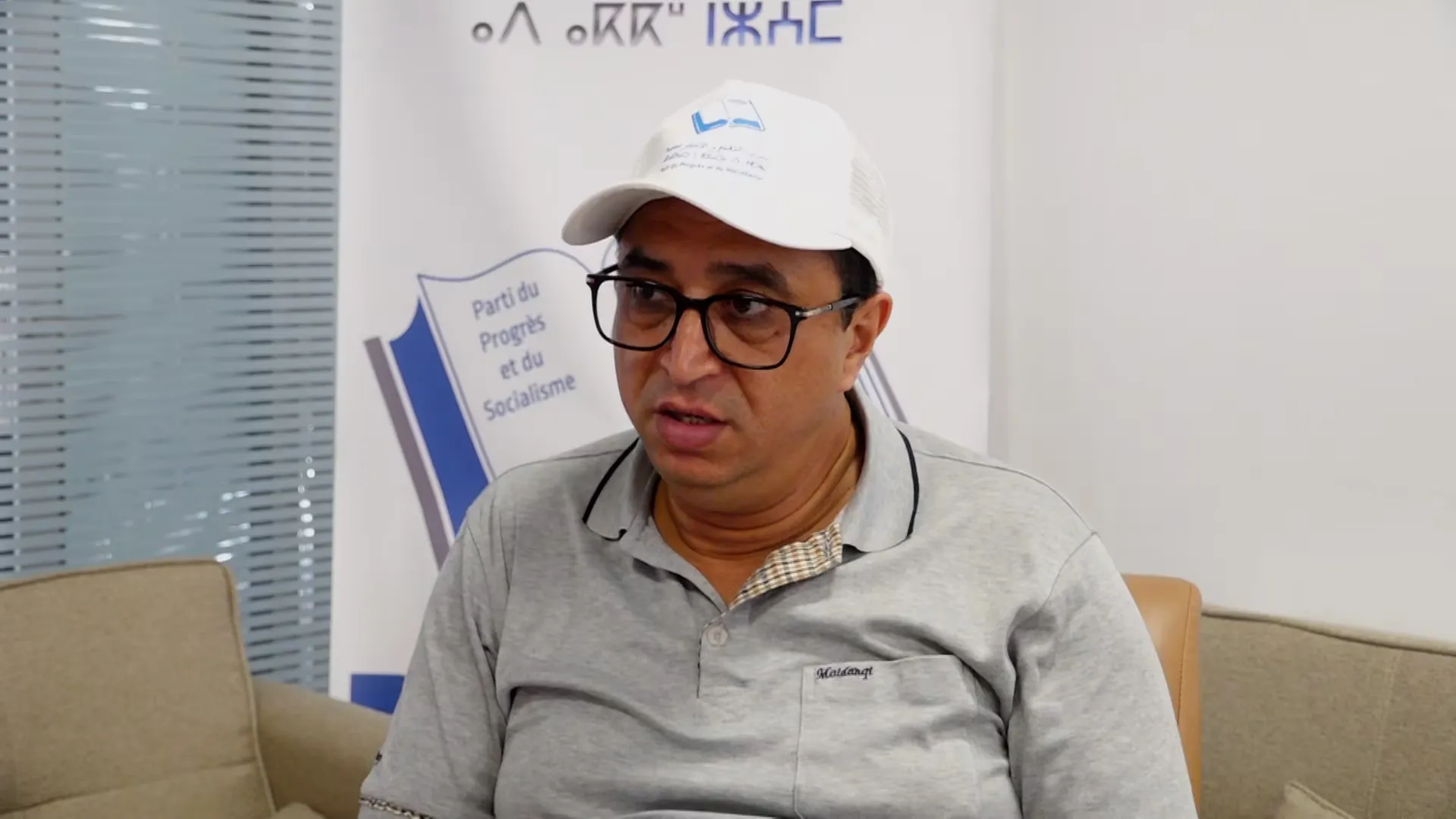

Facing the Challenges Ahead in Rabat-Chellah
As the legislative elections scheduled for September 23 approach, Jamal Karimi Benchekroun is acutely aware of the significant challenge that lies ahead in Rabat-Chellah. The former deputy and member of the Political Bureau of the Party of Progress and Socialism (PPS) is leading the party's list in this constituency, where three seats are up for grabs and competition is expected to be fierce. He faces off against several prominent political figures, including Adib Benbrahim, the Secretary of State for Housing and a candidate from the PAM, El Hassan Lachgar, the incumbent MP from the USFP, Alaa Eddine Bahraoui (RNI), and Abdelaziz Derouich (Istiqlal). The PJD has nominated Mohamed Tahiri, while the Left Alliance is represented by Mohamed Aouni.
Education and Local Concerns at the Forefront
In an interview with _Le360_, Benchekroun expressed his awareness of the electoral battle's complexities, noting that the Rabat-Chellah constituency features a diverse demographic, encompassing both working-class neighborhoods like Mabella, Youssoufia, and Takaddoum, as well as parts of Souissi. Beyond the electoral contest, the PPS candidate emphasizes education as one of his primary concerns. He references the PISA 2025 survey results, released on September 8 by the Organisation for Economic Co-operation and Development (OECD), which reveal a troubling decline in the educational achievements of Moroccan students aged 15. With scores of 358 in science, 355 in mathematics, and 321 in reading comprehension, Morocco significantly lags behind OECD averages. Alarmingly, 73.2% of evaluated Moroccan students fall below the minimum proficiency level across all three subjects.
Benchekroun asserts the necessity for genuine educational reform, highlighting issues such as school dropouts and the growing number of young people who are neither in education, employment, nor training (NEET). He firmly believes that these statistics directly call into question the responsibility of all stakeholders in the sector. Furthermore, he aims to address local issues that directly impact residents' daily lives. In Rabat-Chellah, many citizens are concerned about the potential implications of urban planning documents on their homes. “We must listen to the citizens, as their concerns are directly tied to their everyday lives. Some residents live in fear of possible demolitions of their homes due to provisions outlined in the urban planning plan,” he explains.
For Jamal Karimi Benchekroun, the upcoming election on September 23 transcends mere political formality; it represents a crucial opportunity for citizens to select their representatives for the next five years. He emphasizes the vital constitutional responsibilities of a deputy, which include representing citizens, legislating, monitoring government actions, and evaluating public policies. Additionally, he stresses the importance of combating corruption and opposing the use of money for electoral gain. “A deputy must be able to represent citizens with dignity, oversee government actions, propose initiatives, and contribute to the evaluation of public policies. They must also actively fight against corruption and resist those who exploit vulnerability and precariousness to buy votes,” he asserts.
Concluding the interview, Benchekroun planned to continue his grassroots mobilization efforts alongside PPS activists and youth. The party is organizing an electoral meeting on Sunday at Bab El Had in Rabat, designed as a large halqa to engage directly with voters.
As reported by fr.le360.ma.