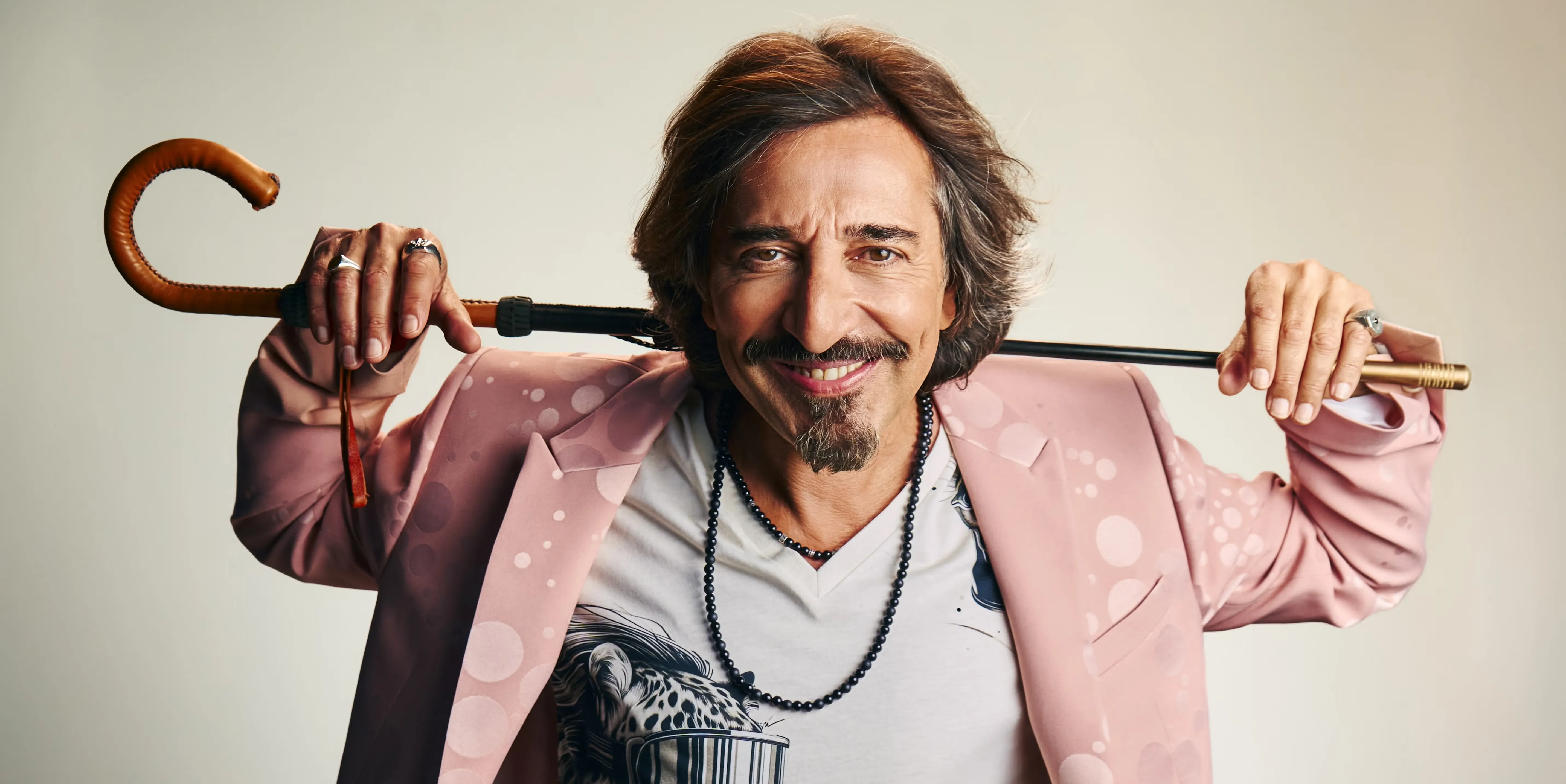

Antonio Carmona: A Legacy of Innovation in Flamenco
Antonio Carmona, born in Granada in 1965, hails from one of the most influential dynasties in flamenco history, known as Los Habichuela. This legacy began with his grandfather, "Habichuela el Viejo," and continued through his father and uncles, who notably elevated the flamenco guitar from the caves of Sacromonte all the way to the White House. At the Universal Music store on Carretas Street in Madrid, where we meet him, images of his family adorn the walls. In connection with the release of his upcoming album, Baro Drom, there is a small exhibition showcasing personal photographs: snapshots of his family, friends, his wedding to Mariola Orellana in Gibraltar, and his daughters. These images encapsulate the journey of a life that has been both a musical odyssey and a personal exploration.
As he turns sixty, Carmona reflects on his lifelong trajectory as a rebel and innovator. Four decades ago, he was already challenging norms by marrying outside of traditional boundaries and fusing flamenco with pop through his band, Ketama, formed with his cousins. Today, he continues to break barriers with a new album that traverses genres, featuring everything from traditional Tangos Candongos with his uncle, Pepe Habichuela, to jazz influences in his track El punto sobre la i, and even a rap collaboration in La Paz with the French duo Bigflo & Oli.
A Brave Artistic Expression
In discussing his latest work, Carmona expresses gratitude for the recognition it has received, stating, "Thank you. Yes, I have done it without fear. I have lived this album as an act of bravery, but towards myself." He acknowledges the diversity of the tracks, which include collaborations that might seem unconventional to some, but for him, everything is interconnected. "The important thing was to express it: those who understand it, great, and those who don’t, that’s okay. I have been attentive to everything: the productions, the music... I put in countless hours, and I am very proud of it." The collaboration with Bigflo & Oli emerged through Instagram and streaming platforms, which allowed him to discover their work and connect over their shared Latin American roots.
As urban music has taken the world by storm in recent years, Carmona acknowledges the vibrant landscape of urban musicians in Spain, noting that his album captures sounds reflective of his life and the evolving music scene in the country. He emphasizes that while he doesn’t produce urban music, this album marks a departure from the traditional recording methods he once employed, favoring an approach that embraces programmed beats and synthesizers.
Discussing the current state of flamenco, Carmona expresses a dire need for a dedicated space that honors its rich cultural heritage. He envisions a flamenco museum that showcases iconic artifacts, such as the dresses of Lola Flores and guitars from legendary players like Sabicas and his father. "Our country has not valued these figures as it should," he asserts, lamenting the lack of visibility for flamenco in contemporary media. He critiques the programming choices on national television, suggesting that flamenco deserves a more prominent platform, akin to the 24-hour tango programs found in Argentina.
Reflecting on his childhood, Carmona fondly recalls growing up in a musical family, acknowledging both the joys and challenges he faced. Despite the absence of his father, who was performing for the Kennedys when he was born, he found solace and expression through music. "I have always filtered my experiences, both my struggles and joys, through music," he states, highlighting the significance of his upbringing in shaping his identity as an artist.
As he contemplates his journey and the future of flamenco, Carmona recognizes the potential for cultural exchange as Spain becomes increasingly diverse, welcoming influences from Morocco, Venezuela, Colombia, and beyond. He perceives this as an enriching force for the music scene and expresses hope for greater understanding and appreciation of the Romani culture, which is interwoven into the fabric of flamenco. "I hope to bring people closer to our culture and reduce confrontation," he concludes, emphasizing the importance of unity in a world of differences.
As reported by esquire.com.