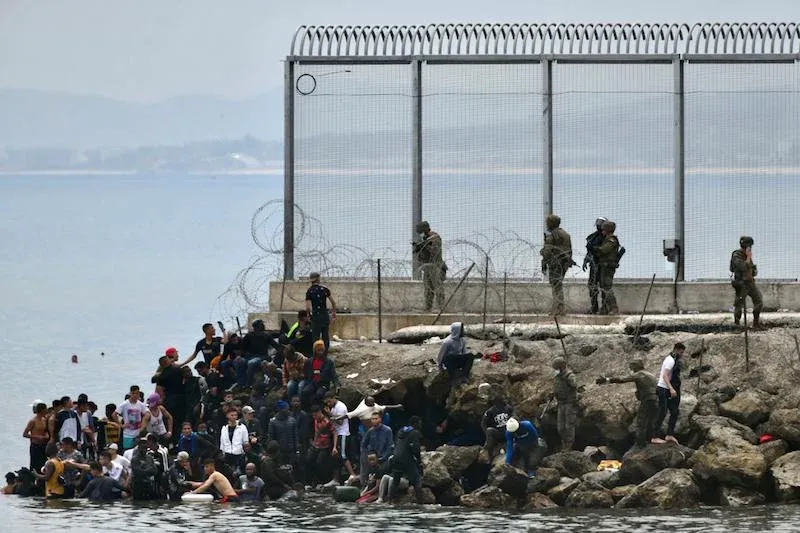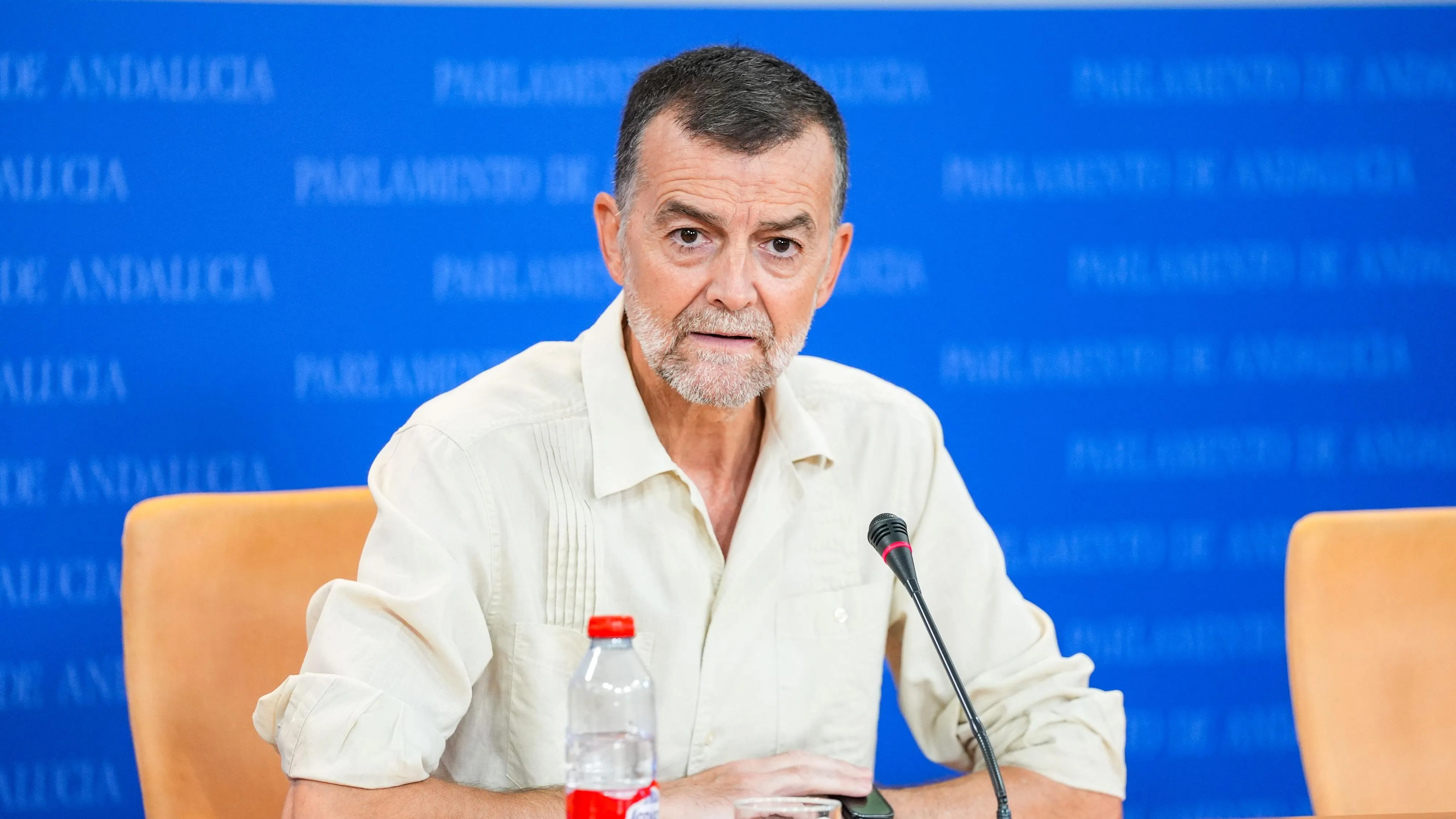

Antonio Maíllo, the federal coordinator of Izquierda Unida (IU), has made a compelling demand for the Spanish Prime Minister, Pedro Sánchez, to urgently reassess the nation’s diplomatic relations with Morocco following a significant influx of immigrants into Ceuta. He criticized Sánchez for seemingly prioritizing political campaigning for the People's Party (PP) and Vox during this crisis rather than addressing the pressing humanitarian issues at hand. During his political report presentation at the Federal Coordinator meeting, Maíllo focused heavily on the situation in Ceuta, condemning the government for its slow, erratic, and opaque response to what he termed a humanitarian tragedy that has claimed the lives of 145 individuals. He underscored that while Morocco bears 'criminal responsibility' for the hybrid attack on Ceuta, aided by the United States and Israel, the PSOE's strategy towards the neighboring country has been ineffective and poorly managed, particularly highlighting the failures of Spanish intelligence in anticipating the crisis and asserting a need for accountability.
Maíllo, whose party is part of the Sumar coalition within the government, argued that the recent events in Ceuta demonstrate the failure of the appeasement policy towards Morocco that has been advocated by Sánchez and the PSOE. He insisted that this situation necessitates an urgent reevaluation of Spain's relationships with Morocco, emphasizing the desire for a neighborly relationship built on loyalty and adherence to agreements. Furthermore, Maíllo did not reserve his critique solely for the national government; he also directed his ire at the President of Ceuta, Juan Jesús Vivas, whom he accused of irresponsibly shifting from a collaborative stance to serving as a mouthpiece for incendiary rhetoric, effectively holding his own population hostage. He condemned the ongoing practice of keeping migrants in Ceuta instead of relocating them to the mainland, warning that such pressure on the local population is breeding violence and tension, which parties like PP and Vox are exploiting to undermine the government.
As the crisis in Ceuta continues into its fiftieth day, Maíllo has urged compliance with legal frameworks to resolve each asylum and reception case, advocating for the immediate transfer of minors and other migrants to the mainland. He lamented that the ongoing situation is hindering the necessary momentum for the government's social agenda, calling for ambition and concerted efforts to achieve legislative successes, including the recently approved reform of the Dependency and Disability Law, as well as legislation that would grant Spanish nationality to the Sahrawi people. He also emphasized the need for enhanced feminist public policies, increased awareness and support for victims of gender-based violence, and the implementation of new strategies for fire prevention and suppression.
In light of these developments, Maíllo proclaimed that IU is 'prepared' to tackle the upcoming electoral processes by presenting candidacies that blend 'experience and renewal,' ensuring generational change and reflecting the diversity within the working class. This Sunday, Izquierda Unida initiated the primary process to select a candidate for the presidency in the forthcoming general elections, anticipating a consensus among left-leaning parties to create a unified state candidacy. Although Maíllo has ruled himself out as a potential candidate for the left coalition, he reaffirmed IU's commitment to being a leading force in shaping the next state candidacy. IU will conduct primaries to select a candidate, which will then be offered to the coalition aimed at forming an alliance with Movimiento Sumar, Más Madrid, and Comuns. Maíllo emphasized the importance of democratic processes within organizations through primary elections, noting that IU approaches this initial phase 'without nostalgia or melancholy,' focusing on collaboration instead of internal disputes. He believes that the key to the upcoming elections lies in forming a 'broad left front' dedicated not only to countering the far-right and traditional right but also to constructing a responsible and visionary national project. 'In critical moments, such as the Ceuta crisis, it is essential to demonstrate whether an organization is capable of rising to the historical occasion and specific circumstances,' he stated.
As reported by rtve.es.