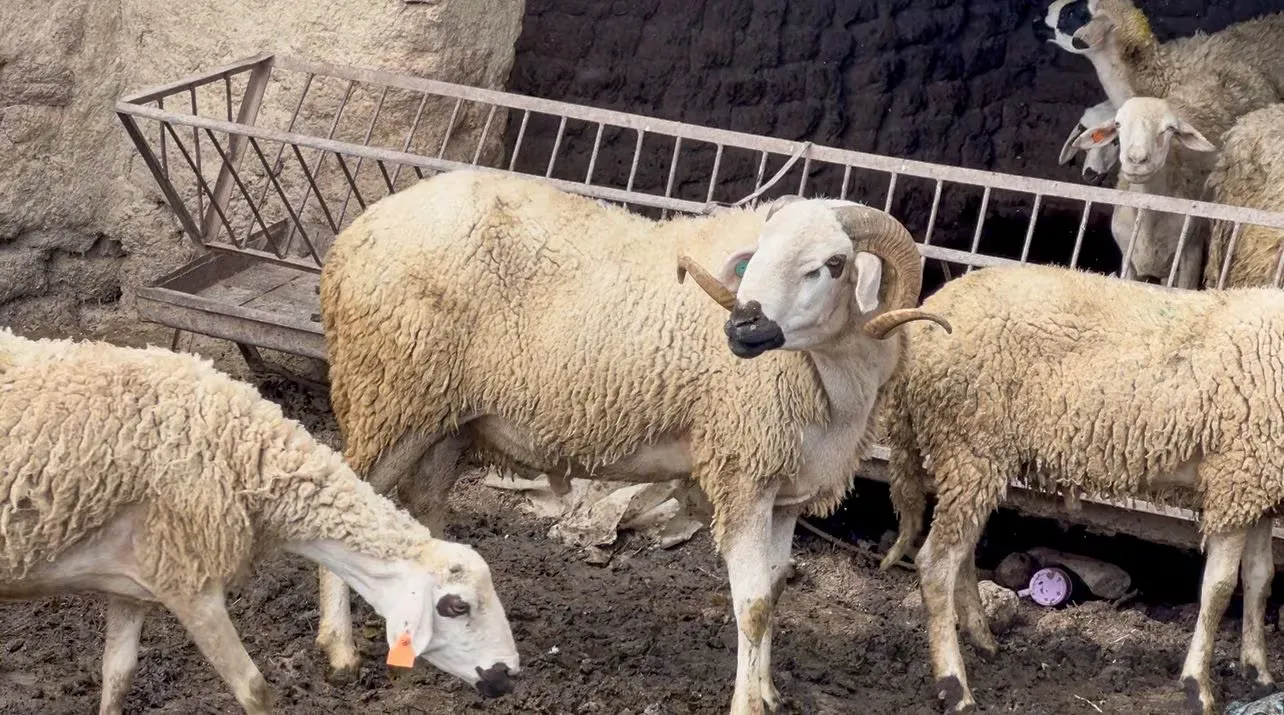

Positive Indicators for Livestock and Price Stability Ahead of Eid al-Adha
With the arrival of Eid al-Adha just around the corner, the Fes-Meknes region is witnessing promising developments in the livestock sector, as local farmers report a significant increase in sheep availability and overall stability in prices. This year’s favorable conditions have been attributed to improved production circumstances compared to previous seasons, largely due to recent rainfall that has revitalized pastures and enhanced forage availability.
The Le360 team observed firsthand in the rural commune of Ain Qansara, located in the Moulay Yacoub province, that sheep herds are noticeably abundant, grazing freely and vibrant within the fields. This scene is reflective of a revitalized livestock sector, supported by an increase in vegetation resulting from recent rainfall, which has contributed to a more dynamic farming landscape.
According to field data, the improvement in livestock conditions is a result of a combination of natural and economic factors, which have collectively reduced production costs and enhanced livestock raising conditions. Furthermore, various support programs directed at farmers are expected to have a direct positive impact on supply availability and price stability for the current season.
Jouad Al-Mostaidi, a local farmer, highlighted the significant role that this season’s rainfall has played in improving the circumstances for livestock breeders. He noted that the enhanced vegetation cover has decreased reliance on compounded feed and lowered raising costs. Coupled with governmental support, these improvements are anticipated to positively affect herd availability and quality.
Regarding pricing, Al-Mostaidi indicated that prices are expected to remain relatively stable due to the ample supply and improved production conditions, which will help maintain market equilibrium. He further mentioned that this favorable situation could make sacrificial animals accessible to a wider segment of the population, with prices expected to range between 2000 and 4000 dirhams for standard breeds, while top-quality animals may reach up to approximately 6000 dirhams, depending on the breed quality and raising method (pasture or fattening).
Mohamed Mazour, the regional director of agriculture in Fes, confirmed that the current season has been marked by favorable climatic conditions. He emphasized that the rainfall experienced across various regions of the kingdom has directly contributed to a resurgence in vegetation and the provision of natural forage resources, positively impacting the livestock sector.
Moreover, Mazour pointed out that the livestock reformation program has also played a critical role in maintaining female sheep and goats, which has enhanced supply and ensured the herd's readiness to meet the demands of Eid al-Adha. He stressed that this confluence of factors has positioned the market favorably, anticipating that it will reflect in price stability at appropriate levels, while the quality of sacrificial animals will depend on the types of feed used, whether natural or supplemental, which have also improved productivity and reduced production costs.
Specifically concerning the livestock characteristics in the Fes-Meknes region, Mazour highlighted that it is distinguished by the presence of two nationally recognized breeds: the "Tamhdite" known as "Baraki" and the "Beni Kil" known as "Daghma." These breeds are among the most prominent native Moroccan varieties and are highly prevalent, especially in the Middle and High Atlas regions, constituting significant components of the national herd due to their quality and adaptability to diverse climatic conditions. This is facilitated by the efforts of the National Association of Sheep and Goat Breeders, which continues to strive towards preserving and enhancing these breeds’ productivity.
In preparation for Eid al-Adha, the Ministry of Agriculture has implemented several measures, including the establishment of organized sales points in the form of model markets. The Fes-Meknes region will benefit from two such markets, one in the city of Fes and the other in Meknes, each covering an area of approximately one hectare. These spaces aim to regulate the sales process by overseeing the movement of livestock and ensuring quality control, along with subjecting the sacrificial animals to a tagging process as part of the herd reformation program.
In conclusion, Mazour reiterated that these various measures and interventions aim to ensure that Eid al-Adha proceeds smoothly, with a sufficient supply exceeding demand, while maintaining the quality of sacrificial animals, which will positively affect price stability and render them accessible to various social strata.
As reported by ar.le360.ma.