
Asilah Hosts a Significant Book Presentation on Mauritania's Democratic Transition
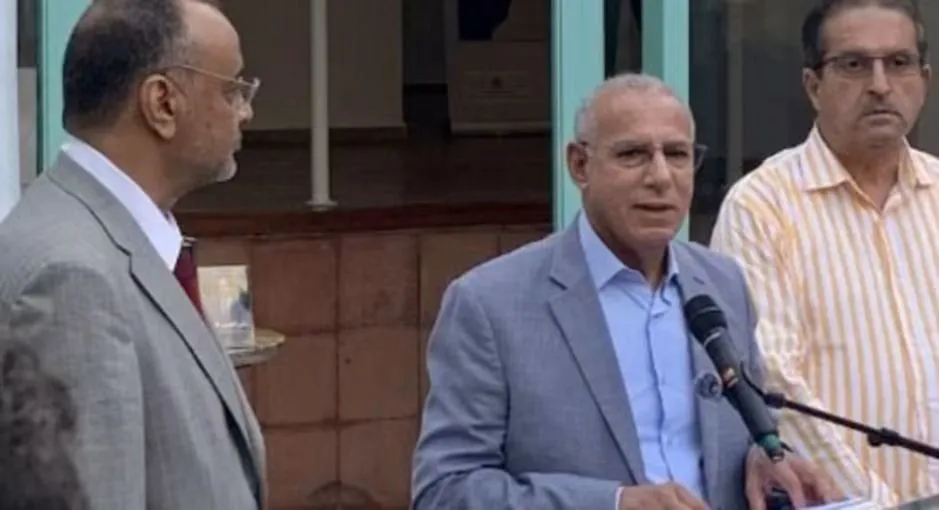
In a remarkable event during its 47th cultural season, the city of Asilah recently hosted the presentation of a new book that chronicles one of the most pivotal political eras in modern Mauritanian history. The gathering took place at the Hassan II Center for International Meetings, attracting numerous individuals interested in political and cultural affairs.
The book titled "The Era of a Calm Transition" is authored by former Mauritanian Prime Minister Sidi Mohamed Ould Boubacar, who chose this work as a medium to revisit the democratic transition that occurred in Mauritania in 2005. Drawing from his experiences, Ould Boubacar provides readers with intricate details about a period he was actively involved in managing.
Ould Boubacar emphasized that the purpose of his book extends beyond merely recounting his personal experiences. He aims to document a political period he deems significant for the Islamic Republic of Mauritania, particularly given the scarcity of existing literature on the topic and the variety of interpretations surrounding it. The author reflects on a variety of key moments from that time, alongside the positions and decisions of various officials and stakeholders who contributed to the political transition, thereby allowing readers to gain insights into the challenges faced by the nation during that era.
In this context, Hatem Al-Batiwi, Secretary-General of the Asilah Forum Foundation, pointed out that the book's significance lies in the fact that its author experienced this period from a position of responsibility, having twice served as the head of the Mauritanian government, including during the 2005 democratic transition. He further noted that documenting the testimonies of officials who participated in political transformations helps preserve the political memory of nations, enabling future generations to better understand the circumstances surrounding institutional building and decision-making during transitional periods.
Moreover, Moroccan journalist and cultural figure Abdelilah Al-Tahani highlighted the Moroccan-Mauritanian dimension of the gathering, asserting that such events strengthen the communication bridges between the two countries. He also called for greater attention to Mauritanian affairs in Moroccan media.
The book essentially offers a testimony regarding a political experience through which Mauritania transitioned into a new phase of governance, characterized by collaboration between the military establishment and a civilian government, as well as the emergence of agreements and decisions that defined the transitional period.
This meeting is part of the broader program of the Asilah Cultural Season, which currently gathers notable political, intellectual, and cultural figures from Morocco and various Arab and African countries.
As reported by marrakech7.com.