
China's Auspicious Ark Arrives in Dakar: A Humanitarian Mission
On September 25, the Chinese naval hospital ship Auspicious Ark docked in Dakar, Senegal, marking a significant milestone as it became the first Chinese naval vessel to visit the country. The arrival of the ship resembled more of a public health initiative than a standard military deployment, as the port was filled with eager Senegalese citizens and members of the Chinese community who came to witness this momentous occasion. The Auspicious Ark, part of the People's Liberation Army (PLA) Navy, represents a broader Chinese maritime strategy in Africa that emphasizes humanitarian aid alongside traditional naval operations.
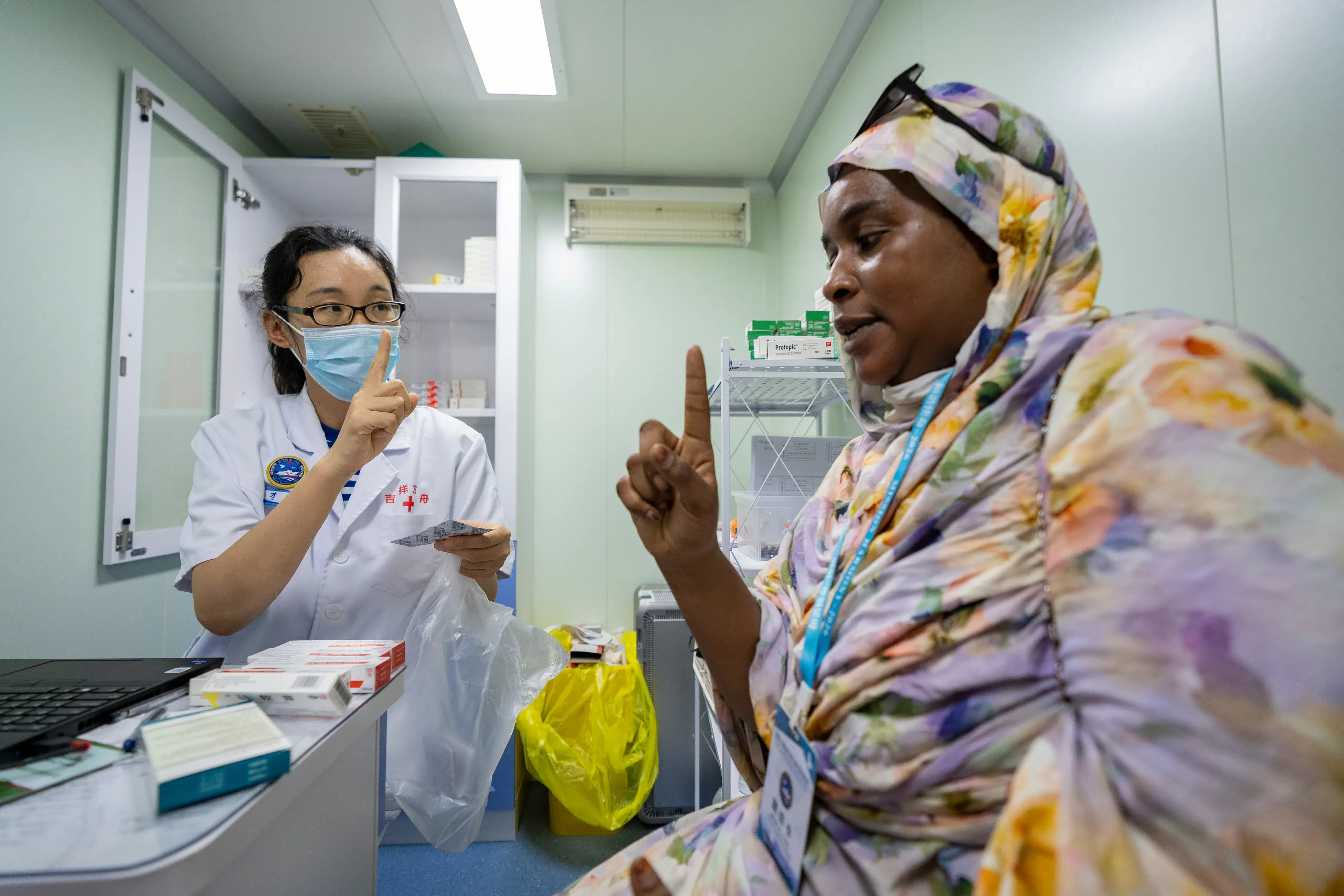
This mission diverges from the typical portrayal of Chinese naval activities, often associated with anti-piracy efforts and military training. Instead, the Auspicious Ark is focused on offering medical consultations, surgeries, and collaborative training with local health professionals, thereby facilitating a more personal and compassionate approach to China's naval engagement in the region. This shift in strategy was already evident during the ship's previous stop in Mauritania, where it provided essential medical assistance to a woman experiencing a high-risk pregnancy, who successfully gave birth aboard the vessel. During its stay in Mauritania, the ship managed to accommodate over 1,600 patient visits in just one day, showcasing its capacity to address urgent health needs.
Impact of Medical Diplomacy on Sino-African Relations
The Auspicious Ark is equipped with a comprehensive medical system that can initiate treatments shortly after docking, which is a crucial asset for communities in need. With 18 clinical departments, eight operating rooms, and a medical team exceeding 100 personnel, the ship can conduct over 60 types of medical examinations and procedures. Furthermore, its onboard helicopter extends its emergency capabilities, enabling rapid responses to critical situations. This mission marks the 12th deployment in a series of humanitarian missions that began with the Peace Ark in 2010, which has since treated over 370,000 individuals across 49 countries.
China's medical initiatives in Senegal date back to 1975, with Chinese medical teams having treated approximately 3.5 million patients throughout the years. The current program in Senegal not only includes hospital exchanges but also community engagement activities, fostering a beneficial relationship between Chinese medical professionals and local health systems. This type of medical cooperation is politically less contentious than military agreements or arms deals, allowing for regular interactions between Chinese personnel and local officials, hospitals, and communities. For Senegal, the appeal lies in receiving valuable medical support that aligns with its needs, while for China, these missions serve to strengthen diplomatic ties and enhance its presence in West Africa.
As the Auspicious Ark continues its journey, it underscores the importance of humanitarian missions in China's naval diplomacy. Although the visits are temporary and the local health systems still face challenges such as staff shortages and inadequate resources, the impact of these medical missions can create lasting memories and foster goodwill long after the ship departs. The potential benefits of these operations, exemplified by personal health successes and community interactions, are immeasurable, transcending mere political calculations and contributing to a more profound understanding between nations.
As reported by scmp.com.