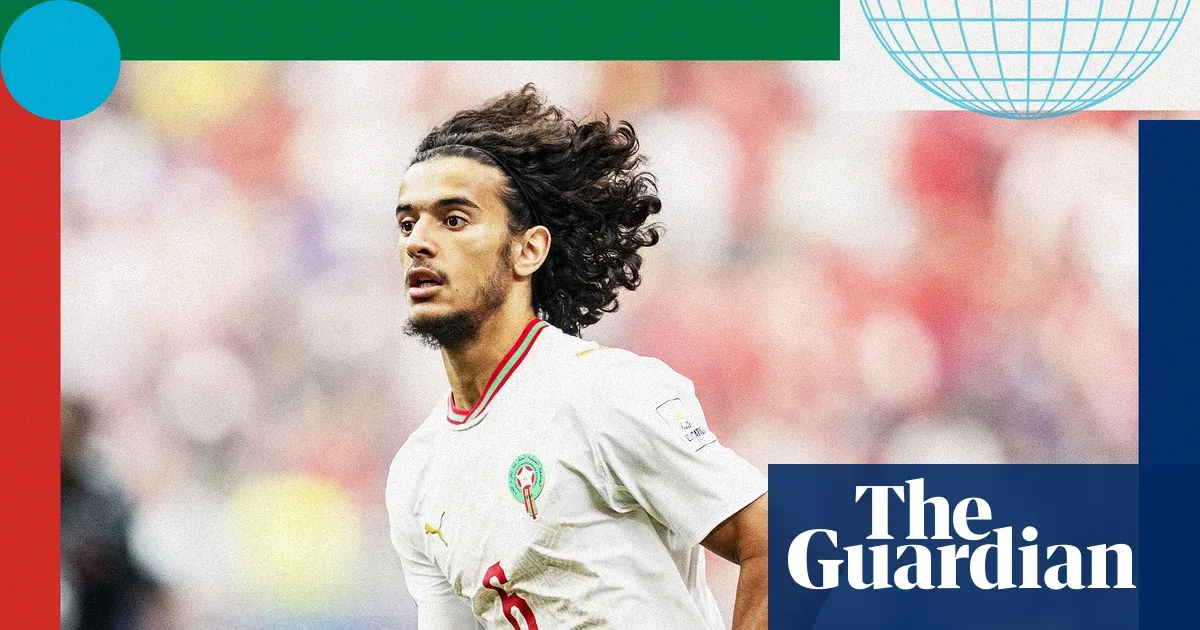

Ayyoub Bouaddi's Journey from France to Morocco
When Ayyoub Bouaddi takes to the field in Boston donning a Morocco jersey for the World Cup quarter-final, it will mark a pivotal moment in his young career. Just over three months ago, Bouaddi was captaining the French under-21 team, leading them to a 2-1 victory over Iceland in a European Championship qualifier while proudly wearing the French kit. The Lille midfielder has been a highly sought-after talent, with Morocco keen to secure his services. Prior to that match, Bouaddi expressed the need for time to contemplate his international allegiance, stating, “I don’t want to rush things.” However, just six weeks later, he found himself named in Morocco's World Cup squad, a decision that echoed through the French football community. Hubert Fournier, the technical director of the French national team, lamented the loss, calling it “a lost treasure,” while Guy Stéphan, France’s assistant manager, acknowledged Bouaddi’s choice, indicating a growing acceptance of dual nationalities in the realm of football.
The situation surrounding Bouaddi is not unique; he is one of 99 players at the World Cup born in France, significantly outnumbering other nations, with the Netherlands trailing with only 32 such players. Interestingly, only a handful of those in the Moroccan squad were born in the country, showcasing the multicultural nature of the team. Following Morocco's thrilling penalty shootout victory against the Netherlands in the last 32, midfielder Azzedine Ounahi humorously remarked that the “providers” had triumphed, referring to the French heritage of many Moroccan players. With 52 of the 99 players born in France hailing from the Île-de-France region, it is clear that this area is a hotbed of football talent.
The Impact of French Football's Diversity
The trend of international players originating from France is not a recent phenomenon; it reflects a growing recognition of the rich talent pool available. Paris Saint-Germain, for instance, has begun to prioritize the development of local academy players, integrating them into the first team, which represents a shift in strategy after years of overlooking homegrown talent. This increasing competition at the club level has resulted in an abundance of skilled players, creating a surplus that foreign clubs are eager to tap into. The situation extends to the international stage, where nations like Morocco are reaping the benefits of the talent nurtured in France. Bouaddi’s choice to represent Morocco has been met with understanding, despite efforts from the French football federation and figures like Zinédine Zidane to persuade him to stay with the French national team.
In the upcoming quarter-final, Bouaddi will not be alone in facing his birth country, as several other players, including Neil El Aynaoui and Samir El Mourabet, are also set to participate. This multicultural aspect of the Moroccan squad, which features 19 players born abroad from various countries, exemplifies the broader trend in football, where approximately 23% of players in the tournament are not representing their country of birth. Morocco's efforts to attract talent extend beyond emotional ties; the establishment of the Mohammed VI Academy, a state-of-the-art training facility, reflects their ambition and vision for the future.
France's colonial history has fostered a significant Maghrebin diaspora, contributing to the diverse makeup of its population. This diversity has historically been a strength for the French national team, as seen during their World Cup victory in 1998. However, recent tensions surrounding national identity and race have sparked controversies, further emphasizing the intricate relationship between politics and sport. As the French national team prepares to clash with Morocco, the ongoing dialogues about identity and representation in football remain at the forefront.
As reported by theguardian.com.