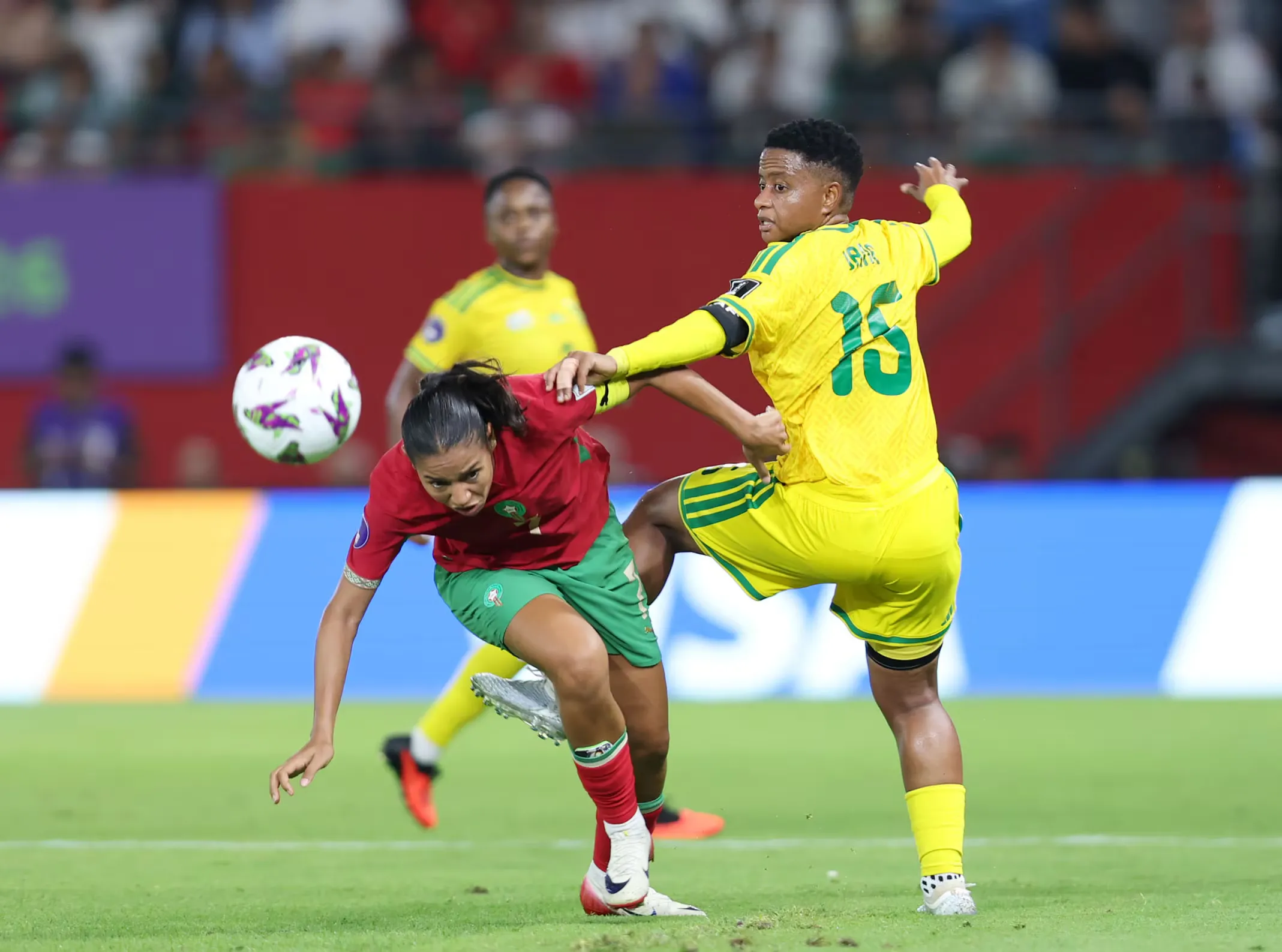

Banyana Banyana's unexpected and lackluster performance during this year's Women's Africa Cup of Nations (WAFCON) in Morocco culminated in a disappointing elimination at the hands of the host nation. The decisive match took place at the Moulay El Hassan Stadium in Rabat on Saturday evening, where Morocco triumphed with a score of 2-1, thereby advancing to the semifinals and securing their place in the upcoming World Cup set to occur in Brazil next year.
For Banyana Banyana, this exit comes after a dismal showing in the group stages, where they managed to secure only one victory out of three matches, alongside a draw and a loss. As the team prepares for their next challenge, they will be facing the loser of the quarterfinal clash between Malawi and Ghana on Thursday. This match presents one of the two opportunities allocated by the Confederation of African Football (CAF) to qualify for intercontinental playoffs, which could potentially pave their way to the global tournament.
The atmosphere at the stadium was intensely charged, with Moroccan fans creating a decidedly hostile environment for the South African team, frequently expressing their discontent by whistling at Banyana players whenever they gained possession. This fervent support undoubtedly played a role in Morocco's ability to control the flow of the match from the outset. Key players such as Sakina Ouzraoui and captain Ghizlane Chebbak consistently operated in the attacking third, stringing together effective passes just outside the Banyana penalty area. Banyana was forced to adopt a more defensive posture, which ultimately left their forward, Thembi Kgatlana, isolated and unable to contribute effectively to their offensive efforts.
During the first half, Banyana Banyana appeared most threatening when Bambanani Mbane and Karabo Dhlamini attempted to connect with Kgatlana through long balls. However, Morocco's defense remained vigilant, effectively neutralizing Kgatlana's attempts to capitalize on these opportunities. The hosts struck first in the 31st minute when Ouzraoui executed a stunning first-time finish from just outside the box, leaving Banyana's goalkeeper, Kaylin Swart, in a state of disbelief as she attempted to recover from the strike. This goal was set up by a well-placed diagonal ball from Hanane Ait El Haj, showcasing Morocco's tactical acumen.
Throughout the match, Moroccan coach Jorge Rodriguez was animated on the sidelines, constantly urging his players on, while Banyana coach Desiree Ellis remained relatively passive. Instead, it was fitness coach Ridhaa Allie and goalkeeper trainer Lucky Shiburi who took charge of the instructions from the bench, a dynamic that seemed to reflect the team's struggles on the pitch. Just minutes into the second half, Banyana's troubles compounded when Noxolo Cesane committed a clumsy foul on Chebbak, resulting in a penalty kick. Ait El Haj confidently converted this opportunity in the 52nd minute, extending Morocco's lead to 2-0.
In the wake of this second goal, Banyana appeared disorganized and disheartened, even as Morocco's initial momentum began to wane. However, the introduction of substitute Robyn Moodaly injected a renewed sense of energy and urgency into Banyana's play. It came as no surprise when Kgatlana, demonstrating her remarkable speed and skill, managed to evade the offside trap and score in the 67th minute, following a well-timed through pass from Dhlamini. This goal, however, was not without its controversy, as it necessitated a thorough VAR check after the assistant referee initially flagged it for offside.
As reported by sowetan.co.za.